

In the run-up to 2026 I’ve found myself seeing pavement cracks and roadside verges in a whole new light as I prepare for a marathon wildlife watching challenge. This year, I’ve set myself a goal to find, identify and record 2026 species of plant, animal and fungi in 365 days, with all funds raised going to support the Mammal Society.
After I’d committed to the challenge, I couldn’t help but spend a bit of time really noticing the different species I see living and growing wild every single day. It turns out that with a bit of attention, a simple patch of grass becomes positively kaleidoscopic with shapes and colours (or at least different shades of green)! I’m looking forward to getting better acquainted with the common plants, birds and invertebrates populating my local parks and nature trails.
That said, I don’t think it will take me long to tick off most of the usual suspects…and that’s when things will start to get interesting! To record 2026 species in a year, I’ll need to record between 4 and 5 every single day. Over the last few weeks, I’ve been compiling lists of habitats, bird migrations, species lists and travel plans – I’ll be snorkelling up and down coastlines and rivers, finishing up the Mammal Society’s annual conference in Inverness with a few frantic days of wildlife spotting, and searching for a very special snake in an urban canal in central London!
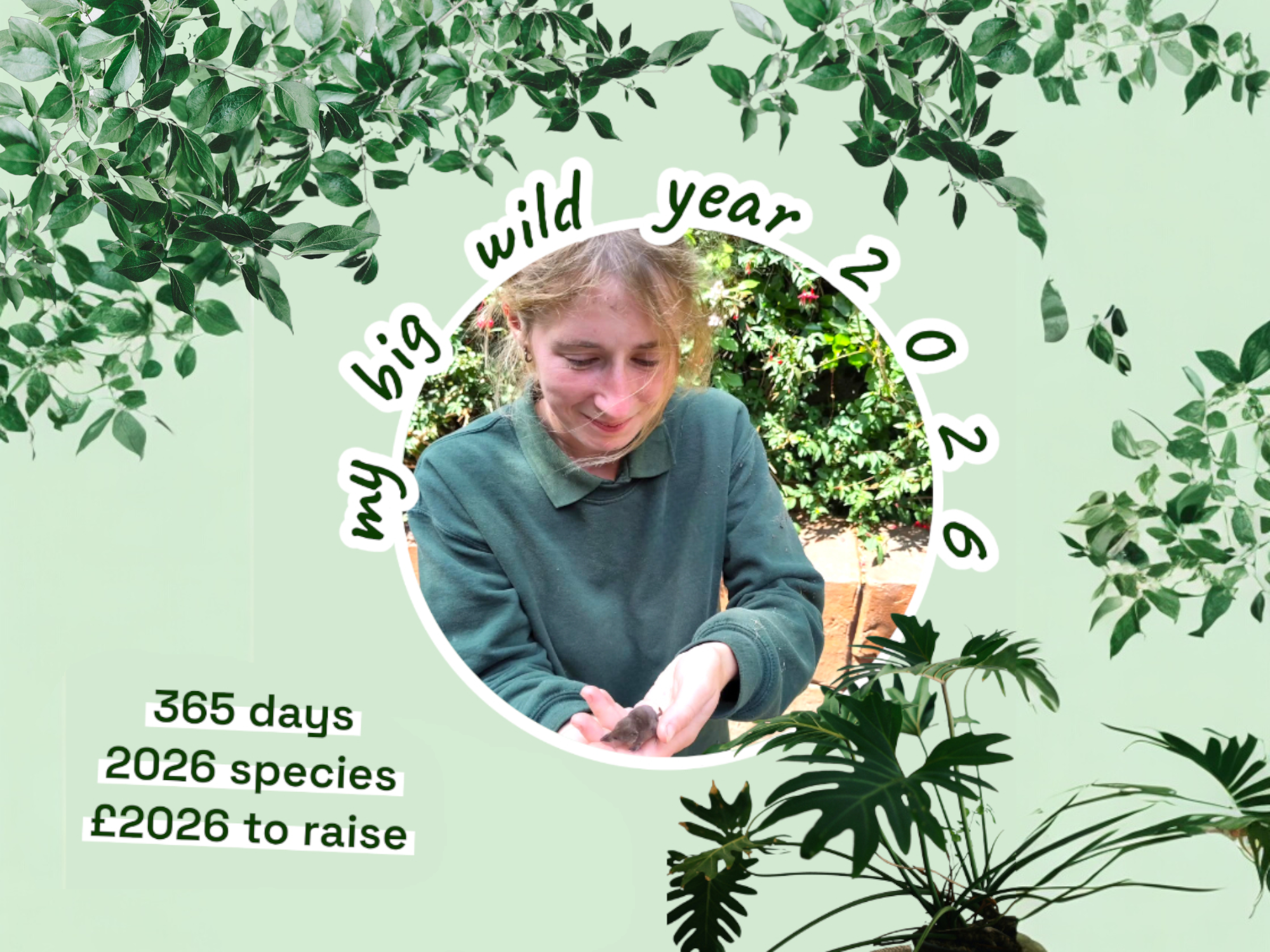
Dylan Beckham is raising money for the Mammal Society
Trying to figure out what species can be found where – and when – has given me a new appreciation for the importance of geography and seasonality in the world of wildlife watching. I’m determined to tick off a chough next time I visit my family in Cornwall, and as I’m currently based in Bristol, I’ll be keeping an eye out for the Bristol rock-cress, a small white flower that can only be found in one place in the UK: the Avon Gorge. With such a massive goal, I can’t afford to be picky, but I do have a few special targets in mind. I’ve ticked off most British mammals now, but otters are the one species that constantly eludes me…will 2026 be the year my luck finally changes?
Spotting things is only half the battle – I’m hoping I’ll come away from this challenge with a deeper understanding of the features that can be used to tell different groups apart. I see gulls and crows every time I step outside, but to make a conclusive identification for the list, I have to pay attention to what makes a crow a crow. And growing up in Cornwall, I thought I was pretty well versed in everything herring gull, but preparing for this challenge has taught me two things: gull ID is trickier than I thought, and even the ubiquitous herring gull is easily confused with the closely related common gull! (Don’t get me started on wood versus yellow-necked mouse…)
If you’d like to support the mission, you can find my JustGiving page here. I’ll also be sharing regular video updates on my Instagram @thecobraeffect – or you can keep an eye out for the highlights right here on the Mammal Society blog!