

Photos and text by Mammal Society Volunteer, Dylan Beckham
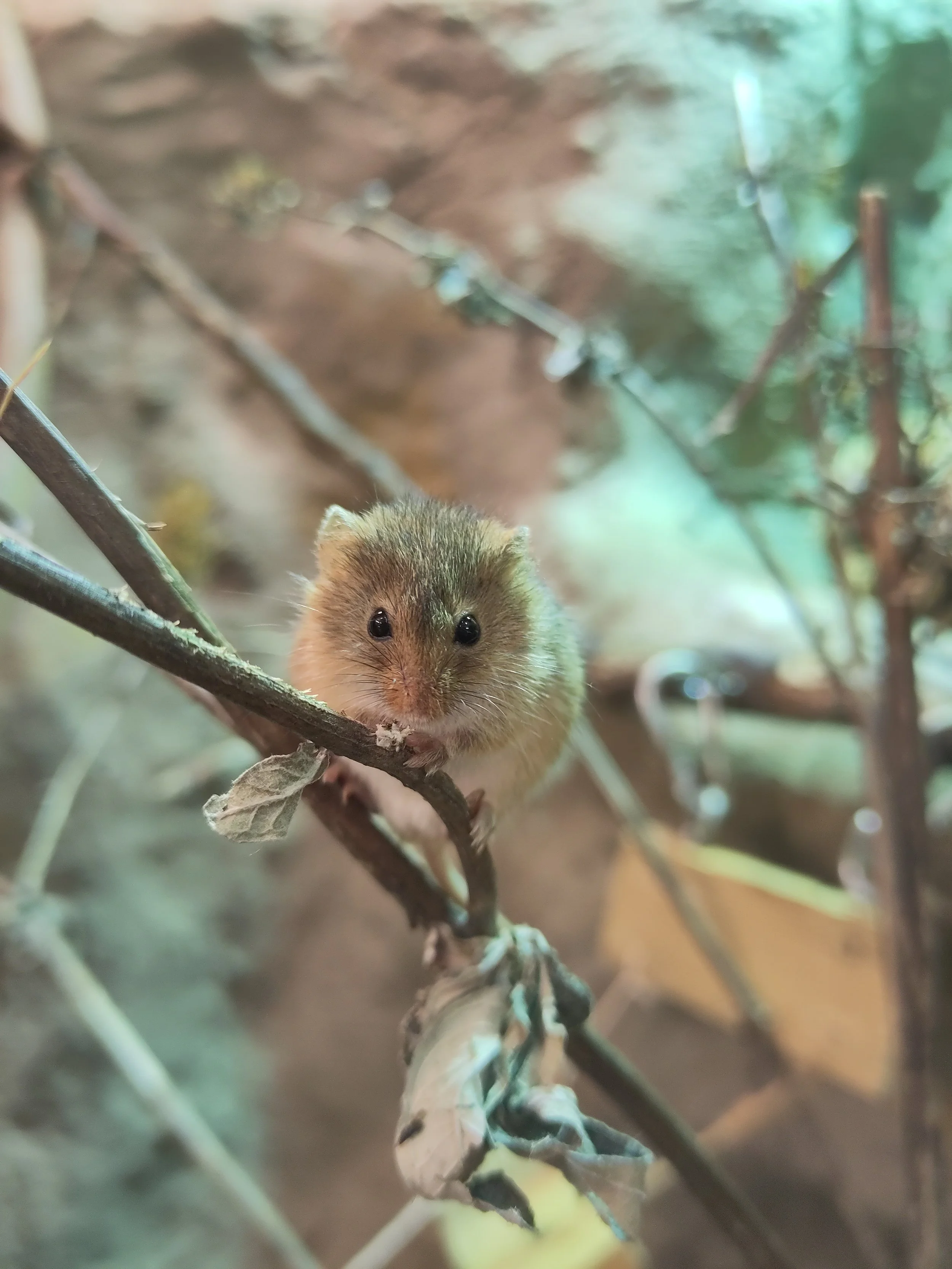
Harvest mouse (Micromys minutus)
Spring
As the weather warms up after a difficult winter, food becomes abundant and life becomes easier for the harvest mice, who struggle in the cold, wet weather. While they might be pre-occupied with feeding at the beginning of spring, May marks the beginning of their breeding season, and the otherwise solitary females are starting to think about choosing a mate. For a harvest mouse, this is all about smell – potential partners will leave special scent marks that help the females decide which male to mate with.
They hold loose, overlapping territories which they will defend viciously if they have to. These showdowns usually begin with a quick nose-to-nose sniff test, which might be enough to scare off a weaker opponent. If the mice are evenly matched, this will progress into intimidating mouth gapes, and then into a fully-fledged battle for dominance. A fight between two animals that weigh just a few grams each may not sound very impressive, but their teeth are sharp, and mice may lose parts of their tail or even limbs in the process!
Summer
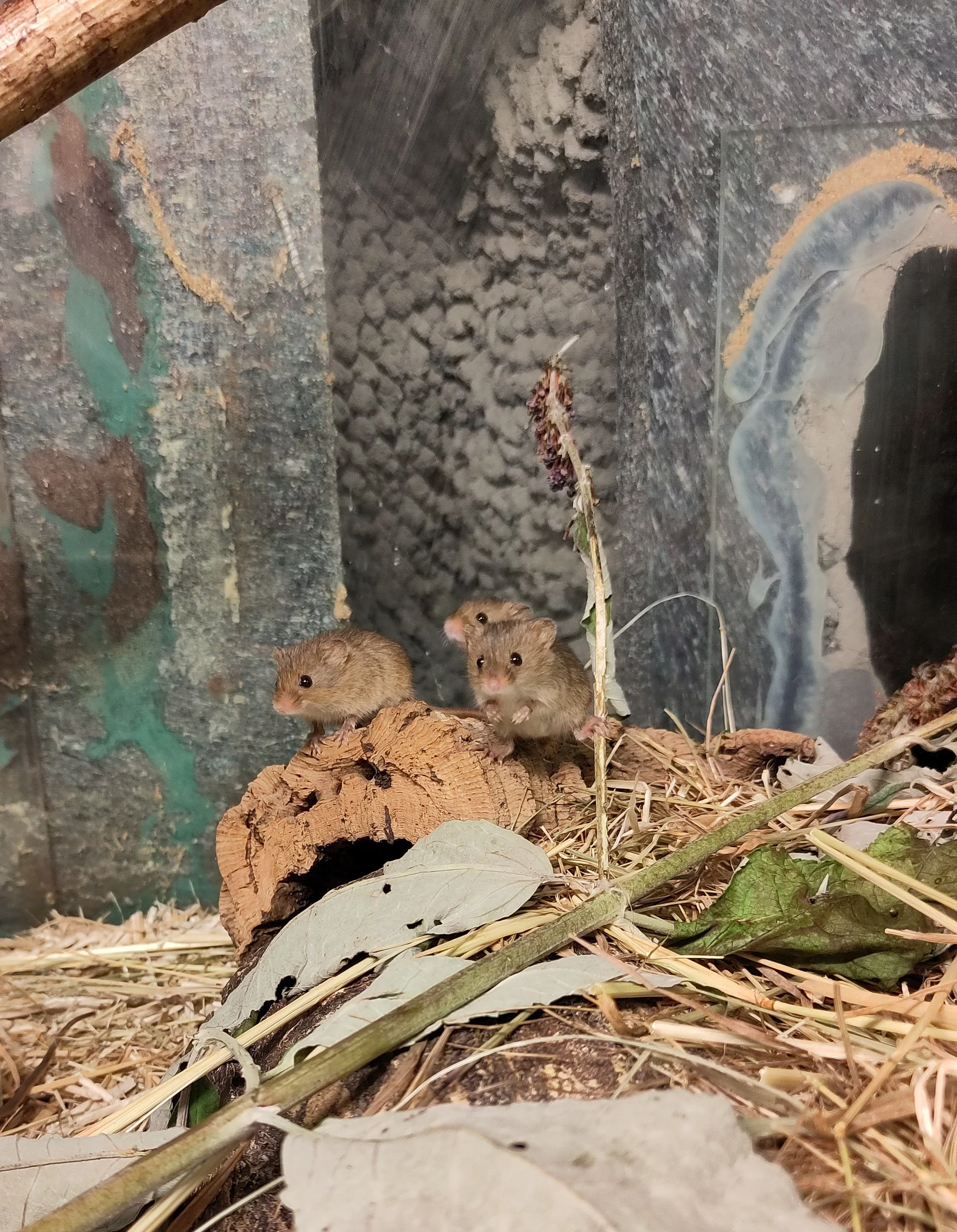
The females will spend most of their summer tucked away in their breeding nests, woven high above the ground in tall vegetation. They are pregnant for less than three weeks, giving birth to between 1 and 8 pink, hairless babies. At just three days old, the pups are growing fur and already have enough strength to grip on to grass stems with their hands – a vital skill for these little acrobats! Their tiny incisor teeth poke through their gums after about a week, and by nine days old, their eyes and ears are open.
By now, the weaning process has begun, and the babies are learning to eat solid food. Instead of foraging for themselves, their mother regularly leaves to find food, which she will eat right away and then throw back up (regurgitate) in the nest for her babies. Most birds use this strategy, but it’s rare in mammals – other than harvest mice, it’s only been recorded in dogs and their relatives, proboscis monkeys, and a few nectar-eating bats.
Autumn
Autumn is mushroom season, and all kinds of weird and wonderful fungi are pushing up out of the ground, while glossy blackberries sprout in the brambles and the oaks and beeches cover the ground in calorie-rich nuts. Harvest mice will take advantage of all these seasonal food sources, along with their usual diet of seeds, fruits and insects! The summer babies have grown quickly and now look no different to the adults, climbing, finding food and evading predators with just as much skill as their parents.
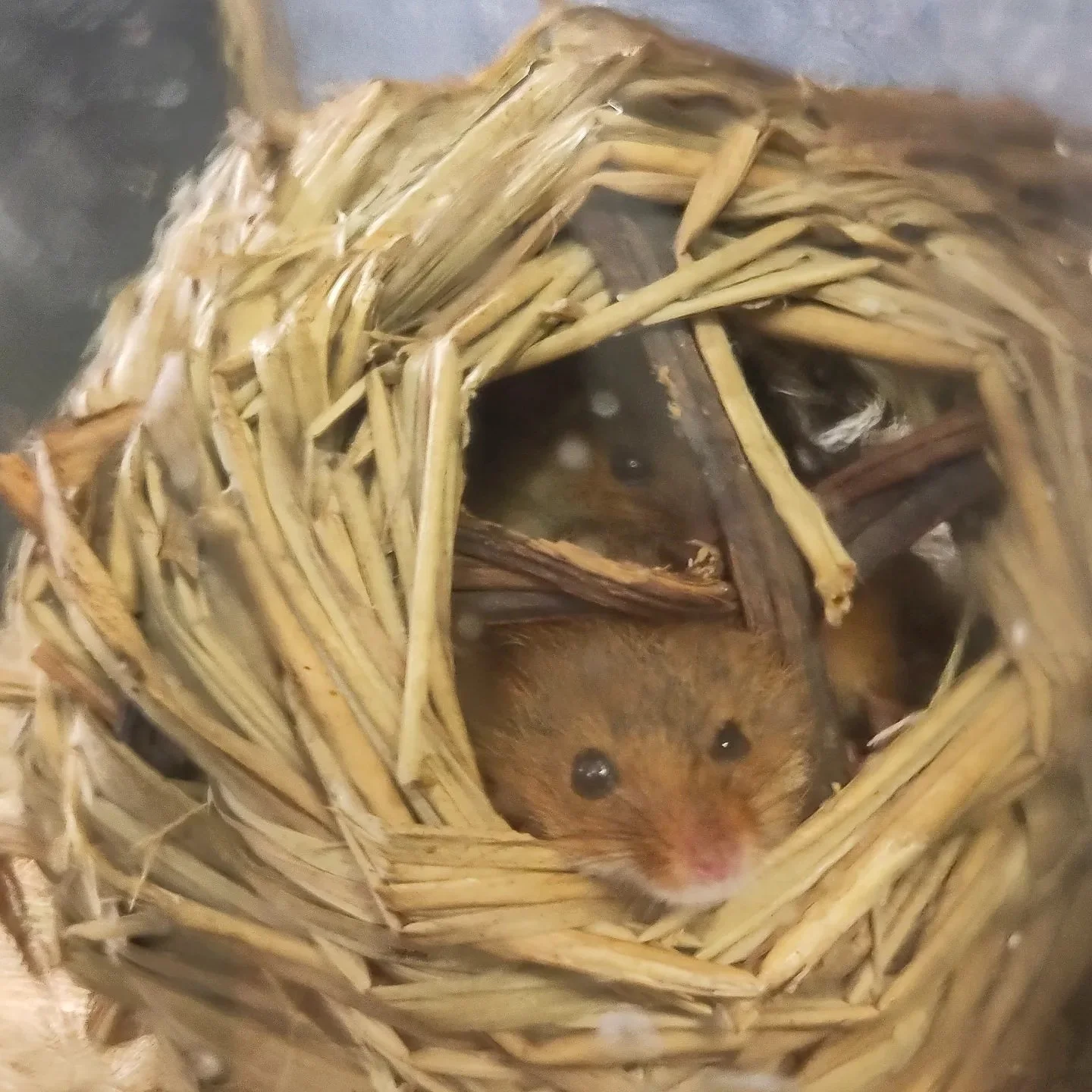
Nests from earlier in the year sit empty and begin to turn brown as the chewed, woven grasses die. The breeding season is coming to an end, but a few are still green, hiding patient mothers who may nurse litters well into September. A harvest mouse will have several litters of babies in a breeding season, and she can mate right after giving birth – by the time her litter is weaned, she could be almost ready to give birth again!
By November, breeding is mostly done, and this means the harvest mouse survey season can begin. Across the country, surveyors go looking for empty nests to help us understand where the mice are and what habitats they prefer. Meanwhile, the young mice are busy establishing territories of their own, and some adults start to move away from their breeding grounds. One radio-tracked individual travelled over 350m in a single day! It’s impossible to know what drives these miniature migrations, but he might have been searching for a better place to spend the colder months.
Winter
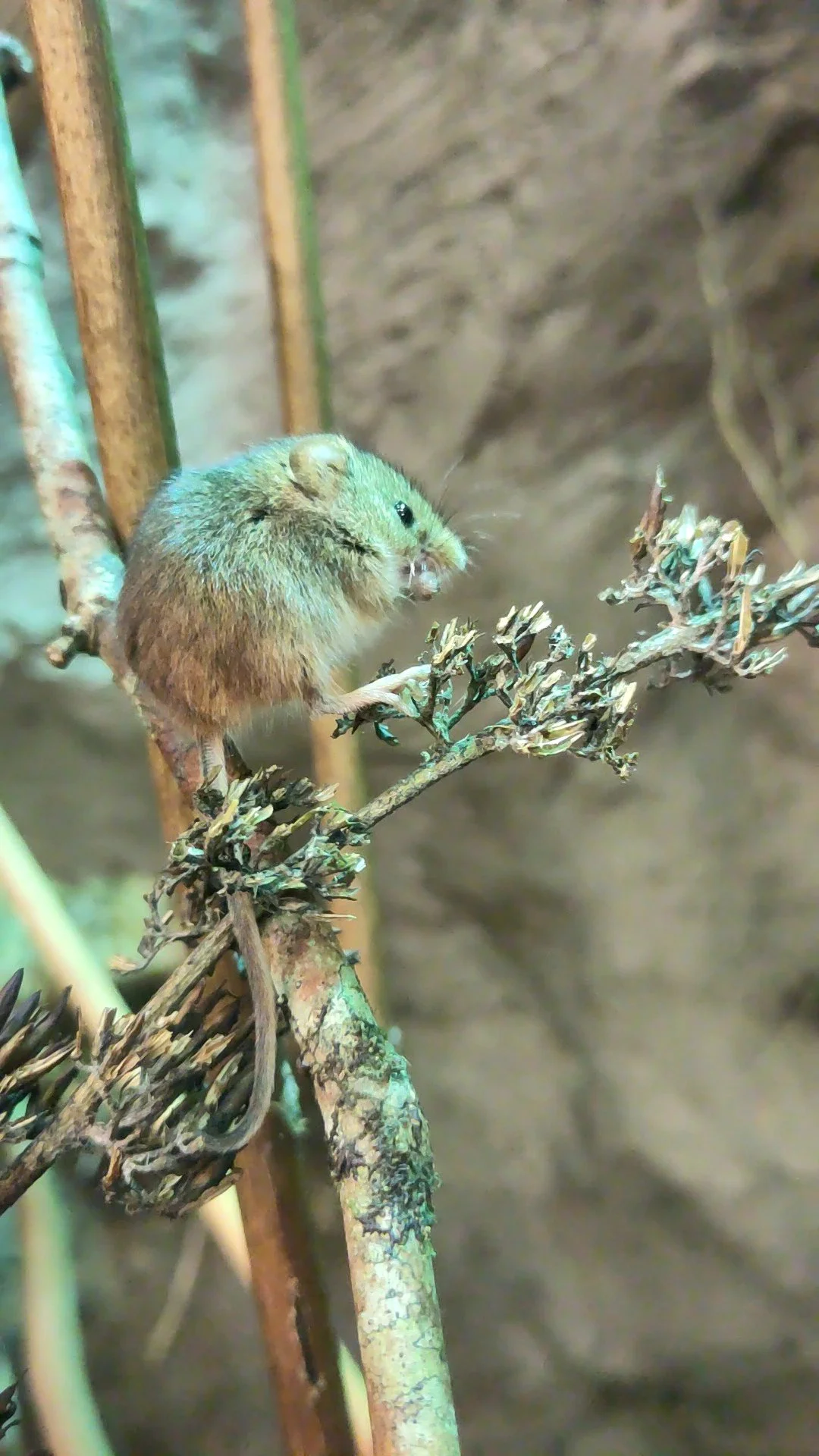
Cold, wet weather is the biggest challenge harvest mice face in the winter. Because they’re active all year round, they have to stay warm and find enough food, even as the temperatures at night begin to drop below freezing. And they aren’t the only ones struggling to find food – the mice are keeping a keen eye out for predators, who might be hungrier and more desperate with other food sources gone. Although the mice themselves are hard to spot, harvest mice in zoos will often pile into nests together, and while most winter nests are barely big enough to fit a single mouse, it’s possible that sibling groups do this in the wild to keep warm. Some mice have even been seen hiding underground to escape the cold!
But things are starting to change, both for us and for harvest mice – climate change means that our winters are already warmer and wetter than they were a few decades ago. Many harvest mice live and breed in reedbed habitats, in and around wetlands, which means they and their homes are particularly vulnerable to flooding from increased rainfall. It’s not all bad news, though – the warmer winters mean that harvest mice can keep breeding for much longer. By using thermal cameras to detect body heat, surveyors are now finding nests still in use as late in the year as December!