

Home / British mammals / Barbastelle bat
Barbastelle bat
Scientific name: Barbastella barbastellus
Conservation status: UK Red List
GB: Vulnerable
England: Vulnerable
Scotland: Not Assessed
Wales: Vulnerable
Global: Near Threatened
Habitat: Broadleaved Woodlands, Floodplains, Meadows, Improved Grasslands, Open Areas, Hedgerows
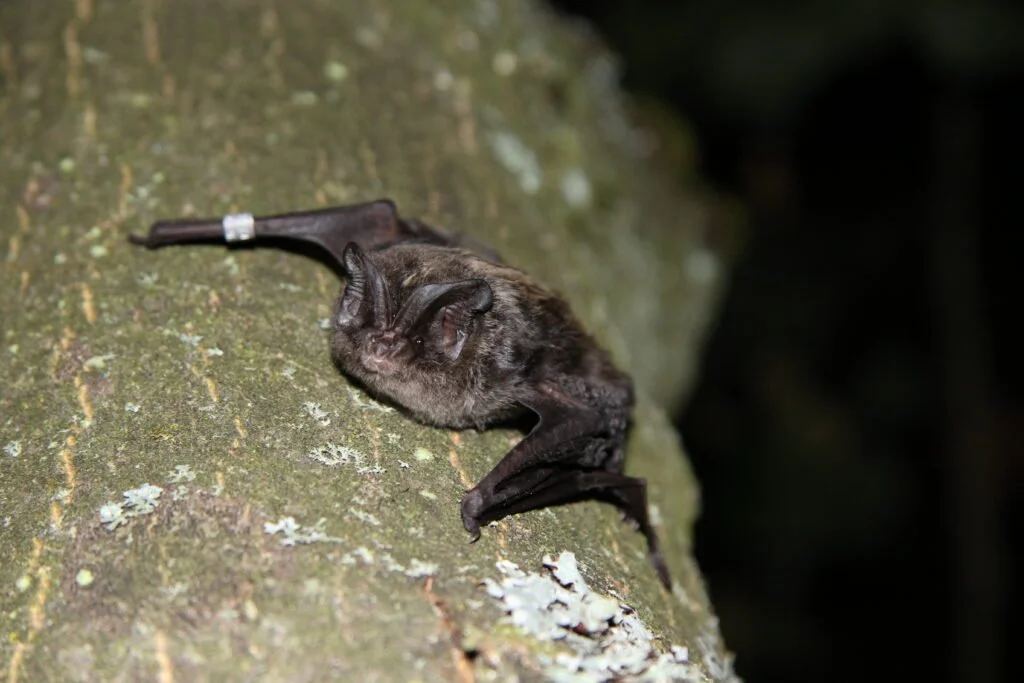
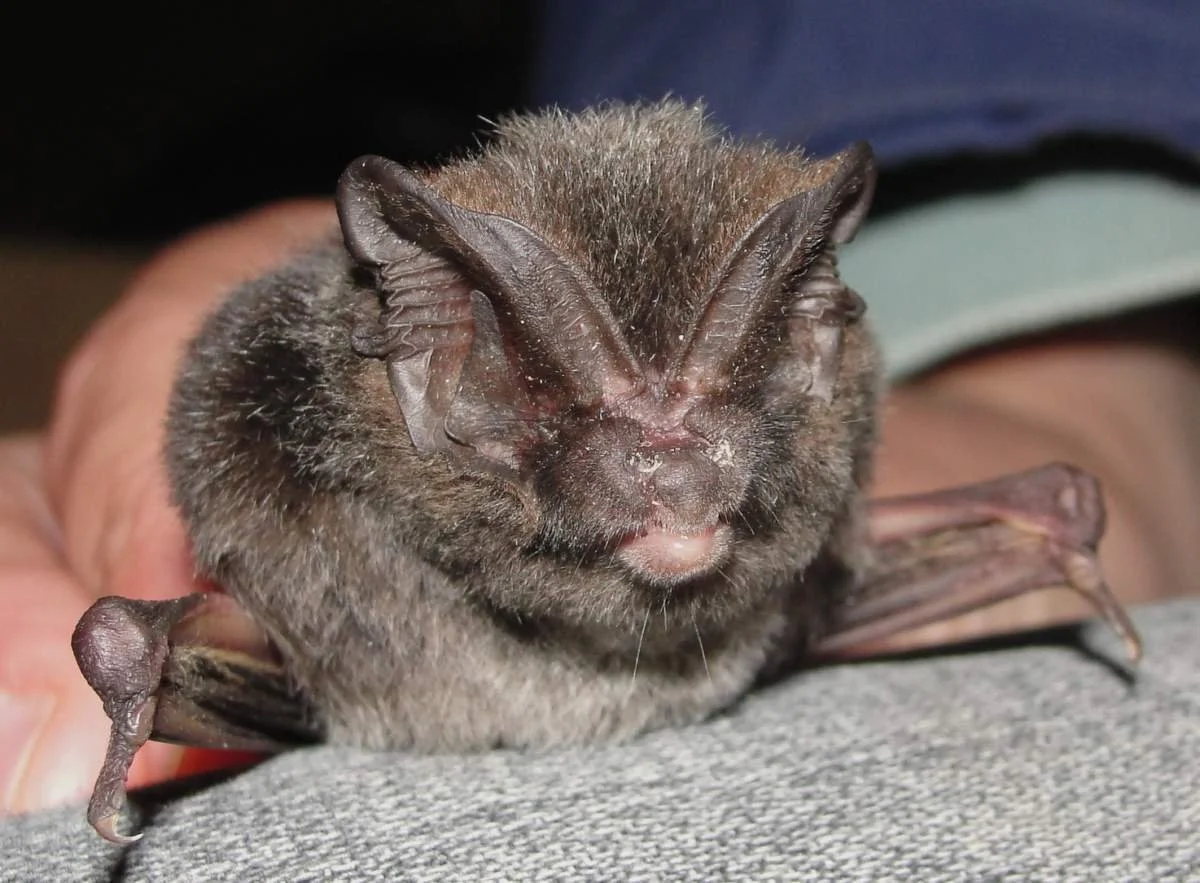
Description: Medium-sized bat with dark coloured skin and fur, and a short ‘pug’-shaped nose.
Size: Medium-sized UK bat.
Origin and distribution: Native. Found throughout the southern half of the England, reaching to North Wales and across to Lincolnshire. Historically reaching North Yorkshire. Absent from northern England, Scotland, and Northern Ireland. Live at low population densities and are infrequently encountered in trapping surveys, therefore, they are likely under-recorded.
Diet: Specialist moth feeder, although, occasional feeds on other prey during winter. Feeds during flight (hawker).
General ecology: Hibernate in trees, particularly in areas with a dense understory, so roosts are rarely found. Occasional individuals are found in underground sites including caves, tunnels, and grottos. Caught in low numbers at swarming sites. Forage over a wide area and use a range of habitats. Able to fly long distances rapidly, regularly crossing very open habitat to reach foraging areas up to 20 km away.
Breeding: Maternity roost are almost exclusively found in trees, particularly oaks in ancient woodlands, but also parkland trees. Rarely makes maternity roosts in buildings.
Conservation status: Registered are Vulnerable in Great Britain, England, and Wales on the IUCN Red List. They are classified as Near Threatened globally. Future populations prospects are currently unknown, however, evidence suggests their habitat is in decline.
Identification
Difficult to confuse with other European bat species, the barbastelle bat is a medium sized bat with dark coloured fur and skin. The fur often has light frosted tops on its back and a paler ventral side. They have a short ‘pug’-shaped nose, with nostrils that open upwards. Their eyes appear to be set inside the base of the ears which are triangular and meet in the middle of the head (similar to long-eared bats, Plectus spp.).
Identification definitions
Ventral: on or relating, to the animal’s underside.
Bat detector
Range: 29-47 kHz
Most energy: 33-38 kHz
Average duration: 2.5-4 ms
Confusion species
Potentially confused with Plecotus austriacus (grey long-eared bat).