

Home / British mammals / Greater horseshoe bat
Greater horseshoe bat
Scientific name: Rhinolophus ferrumequinum
Habitat: Arable Farmland, Deciduous Woodlands, Semi-Natural Ancient Woodlands.
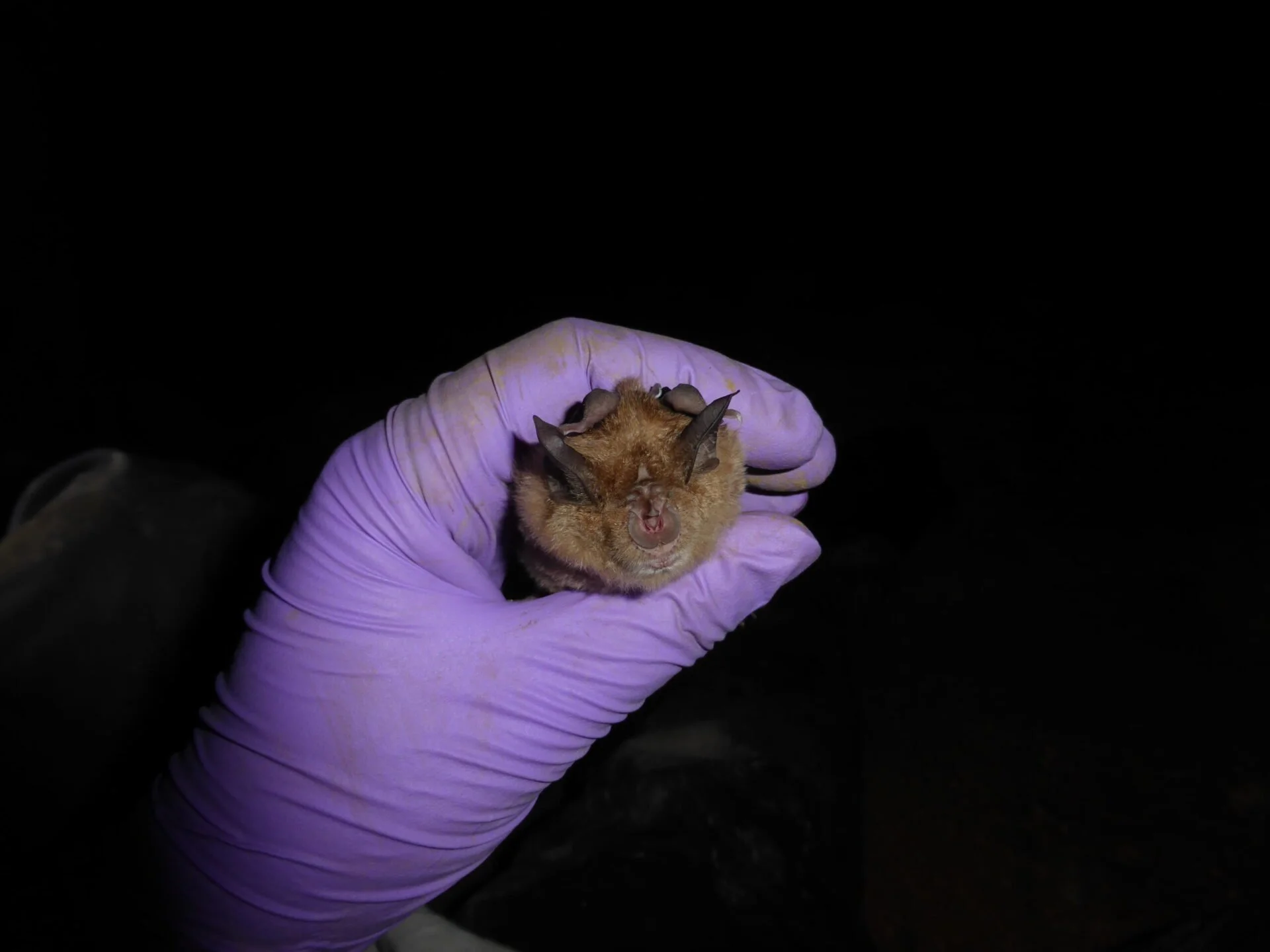
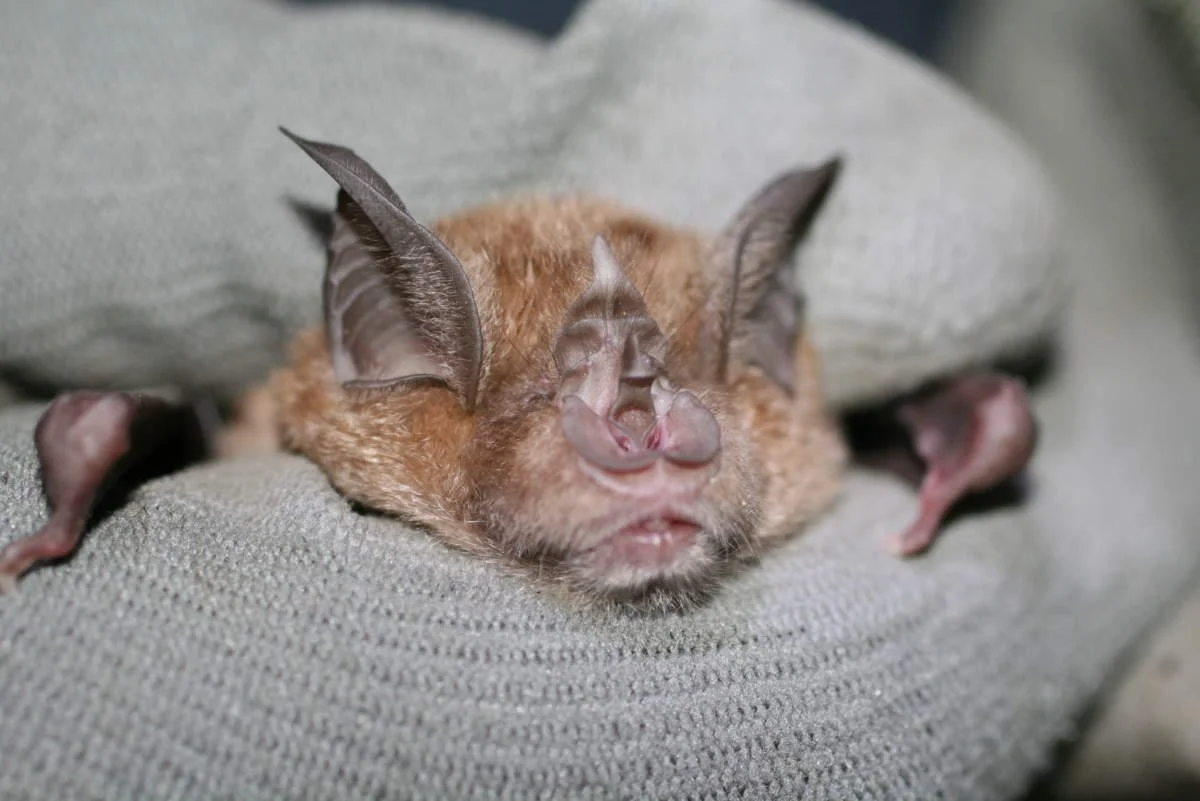
Description: Easily identified by its horseshoe-shaped nose-leaf. Brown fur that is often tinged red.
Size: One of the larger UK bat species, about the size of a pear.
Origin and distribution: Native. Declined during the early twentieth century and are now largely restricted to the south-west of England and Wales. Populations have expanded their range across Wales in recent years. They are absent from Scotland and Northern Ireland.
Diet: Preferentially eat large insects, such as, beetles and moths, but will eat smaller insects if larger become unavailable.
General ecology: Form maternity colonies during the summer months, generally in old buildings, although occasionally underground. During winter, they will hibernate in caves, mines or underground. They are usually found in areas with deciduous woodlands with grazing pastures. In the summer, they will forage for emerging dung beetles along the edges of cattle-grazed pastures. During spring and autumn, they shift to occupying semi-natural ancient woodlands. Avoid flying in open or well-lit areas, taking advantage of hedgerows whilst commuting.
Breeding: Mating roosts are often underground in cellars, tunnels or small caves. Roosts normally consist of fewer than seven individuals, one of which is a solitary male who are present from spring until autumn.
Conservation status: Least concern in Great Britain, however, they are regionally classified as Near Threatened in Wales on the IUCN Red List. They are regularly monitored as part of the National Bat Monitoring Programme. Despite a decline in the first half of the twentieth century, there are signs of recovery in UK populations. Populations have roughly doubled in their core habitat over the past 20 years. However, agricultural intensification resulting in a reduction in prey and inbreeding still pose a major threat.
Identification
Roughly the size of a pear, these are one of the larger bat species in the UK. They have a horse-shaped nose-leaf and are buff brown fur which is often tinged with red. During torpor/hibernation they wrap their wings loosely around their body.
Bat detector
Range: 69-83 kHz,
Most energy: 82 kHz.
Average duration: 37.4 ms.
Confusion Species: None