

Home / British mammals / Muntjac deer

Muntjac deer
Scientific name: Muntiacus reevesi
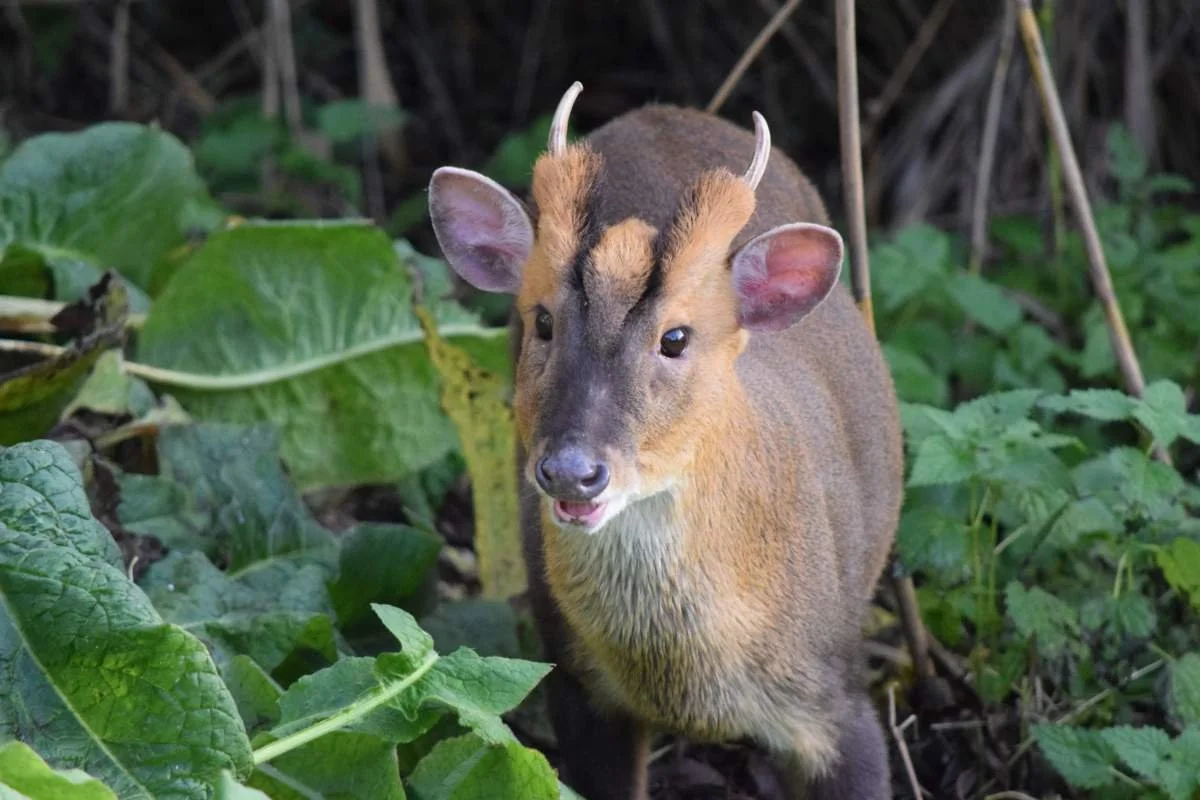
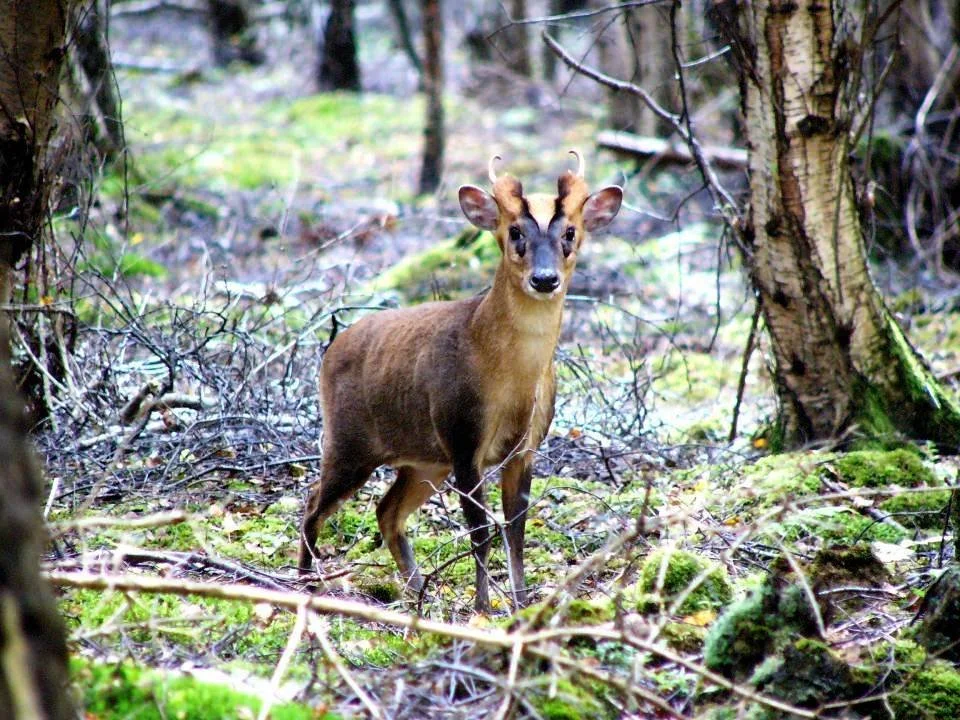
A small, hump-backed deer (a bit larger than a fox), with a small tail and not as much of a white “target” as with sika or fallow deer. Ginger pelage with dark stripes on the face. Males have short slightly hooked antlers born on long pedicels, sloping strongly backwards, and long protruding canines.
Conservation status: UK Red List
GB: N/A
England: N/A
Scotland: N/A
Wales: N/A
Global: Least Concern
Summary
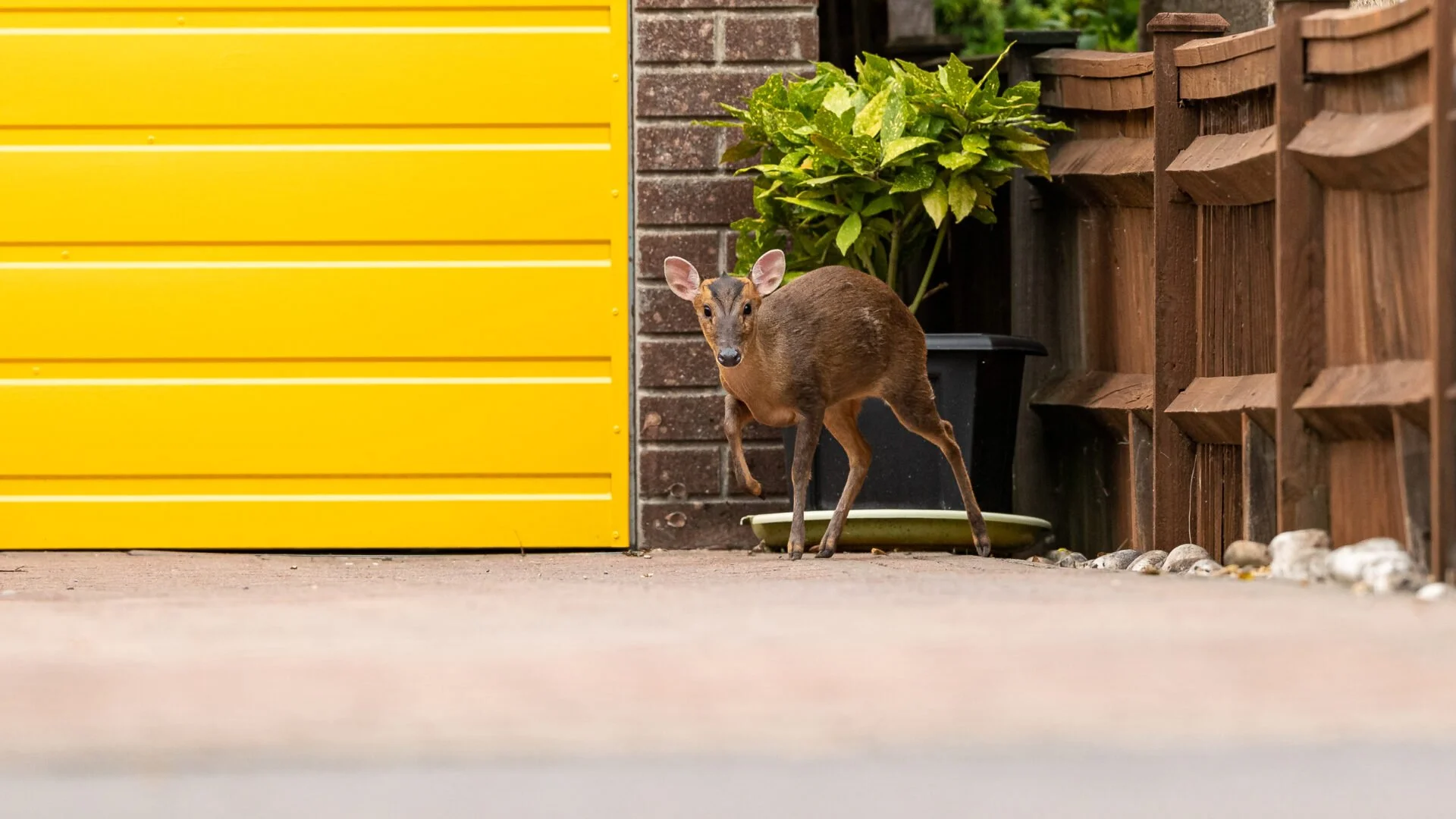
Habitat: Urban & gardens, deciduous woodland
Size: 77-91 cm; tail length 13-18 cm; shoulder height 45-52 cm.
Weight: Males 12-17 kg; females 10-16 kg
Lifespan: Up to 16 years for males in captivity and female >20 years. Wild males 10 years and 13 years for a female.
Origin and distribution
Reeves’ muntjac are native to the Hainan region in China and in Taiwan. Introduced to Woburn Park, Bedfordshire, in 1894, they were deliberately released into surrounding woodlands from 1901 onward. Releases, translocations and escapes from the 1930s onwards resulted in wide establishment in SE England, and they are still spreading. They are susceptible to severe winters, but their small size and preference for thick cover enables them to adapt to suburban habitats. In some parts of SE England, they are very abundant, reaching 100/km in prime habitat. Muntjac prefer deciduous woodland with a good understorey. Hedgerows, gardens, conifer plantations and railway embankments are also used, and in woods of conservation interest, they can do serious damage to important wild flowers (bluebells, primroses, oxslips, honeysuckle, orchids).
Diet
They feed on shoots of shrubs, woodland herbs and garden plants, but bramble and raspberry are their most important foods.
Ecology
Bucks are territorial, marking prominent tree trunks and boughs with scent from glands on their forehead. Their territories overlap the home ranges of several does. Does are slightly more tolerant of each other, but maintain an exclusive core area. Muntjac do not form herds, but are seen either solitary or in family groups of a doe with her fawn. Oddly for a deer in Britain, but reflecting their subtropical homelands, muntjac breed all year round.
Breeding
The female has just one fawn (rarely twins), after a gestation of 210 days. Fawns are born throughout the year, and the doe has an immediate oestrus. She can therefore be almost continuously pregnant, and produces around 3 fawns every 2 years. The young bucks start to develop antlers at around 25 weeks, whatever the month, and shed the velvet at 46-76 weeks. The first antlers are shed in late May (when the young buck may be anything from 52-112 weeks old) but then regularly each year at that time.
Conservation status
Reeves’ muntjac can be a serious pest in gardens, conservation woodlands and sometimes in forestry. Regular coppicing of deciduous woodland, either to produce a crop of firewood or for conservation of other plants and animals, can be severely compromised. Because they breed all year, it is difficult to suggest a sensible humane culling season; and because they are so small, and often in suburban habitats, shooting is difficult. Bucks can be shot at any time, as can young does, before they have reached sexual maturity. In late pregnancy, when the previous fawn should be independent, it may again be acceptable to shoot does. Muntjac are strong, and push through quite dense barriers and under fences. Strong wire fences will stop them, especially if dug into the ground at the foot. Many muntjac are killed in vehicle collisions.
Identification
Small dog sized deer. Red/brown coat in summer, darker brown in winter. Only one or two are seen together. Dark rump with conspicuous white underside of tail that is seen when held vertical when alarmed. Antlers of mature male small single spikes pointing backwards. Males have distinctive tusks (upper canine teeth) that protrude just below the lip.
Footprints: Muntjac have the smallest footprints of all deer species. They are 2cm in width and 3-4cm in length.
Droppings: Deer droppings do not have obvious coloration or smell. The droppings tend to be of a similar shape across all species, although muntjac droppings are the smallest of all species.
Tail: The muntjac has a dark rump with a short tail with no stripes. It holds its tail up when alarmed, showing a white underside.
Confusion species

Fallow deer (Dama dama)
Fallow deer have a heart-shaped white rump with a black horseshoe-shaped border and a black line down the tail, creating the appearance of the number 111, compared to the roe deer’s plain cream/white rump, which can flare up when alarmed, with no visible tail. Fallow coats can vary greatly but are typically brown with white spots in the summer, and paler brown with white spots in winter, whilst roe deer have a red/brown coat in summer and a grey/brown coat in winter, with no spots.

Red deer (Cervus elaphus)
Red deer are much larger than roe. They have a buff-coloured rump with a ginger buff tail. Roe deer have a similar coat colour, though red deer's appear more red. Red deer have very large branched antlers in mature males, whilst roe have much smaller antlers with usually no more than 3 points. Roe also have a distinctive black nose and white chin.

Sika deer (Cervus nippon)
Sika deer have a heart-shaped white rump with a black upper border, a white tail and a thin black vertical streak, whilst roe have a plain cream/white rump with no visible tail. Sika have a brown coat with distinctive spots in the summer with coat turning greyer in winter, whilst roe have a red/brown coat in summer and grey/brown in winter. Roe have a distinctive black nose and white chin which sika do not have.
Chinese water deer (Hydropotes inermis)
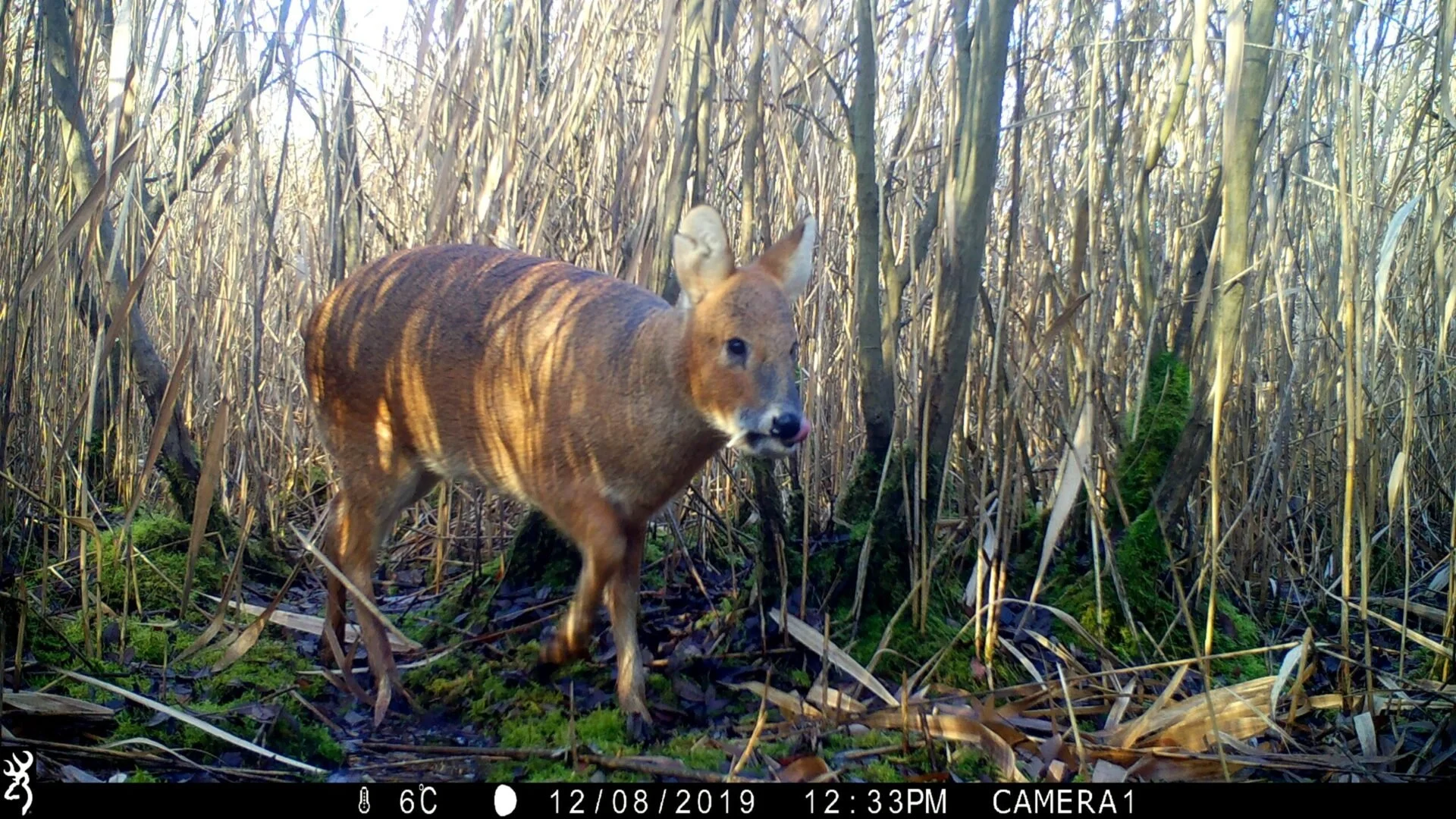
Chinese water deer have a rump the same colour as the rest of their coat and a stumpy tail, whilst roe have a cream/white rump with no visible tail. Chinese water deer has tusks (protruding upper canine teeth) whereas roe does not. Chinese water deer have no antlers, whilst roe have small, pointed antlers, with no more than 3 points. It is often said that the faces of Chinese water deer look like teddy bears, whilst roe have a distinctive black nose and white chin.