

Home / British mammals / Red deer



Roe deer
Scientific name: Cervus capreolus
Roe deer are the smaller of our two native deer species and our most common deer of the 6 species that inhabit the British Isles.
Taxonomy chart
Animalia – Chordata – Mammalia – Artiodactyla – Cervidae – Capreolinae – Capreolus –C. capreolus
Conservation status: UK Red List
GB: Least Concern
England: Least Concern
Scotland: Least Concern
Wales: Least Concern
Global: Least Concern
Summary
Diet: Herbivorous; deciduous trees and shrubs, bramble, rose, ivy, herbs, conifers, ferns, heather and grasses.
Habitat: Coniferous woodland, deciduous woodland, mixed woodland, heathland, arable land, urban & gardens.
Size: Weight: 10-25kg Size: 60-75cm at the shoulder, males slightly larger.
Lifecycle: Lifespan of 16 years, most live 7. Breeding (the ‘rut’) mid-July to late August, delayed implantation in January, and 1-3 young born in mid-May to mid-June.
Conservation concerns: Overgrazing due to lack of native predators leading to reduced woodland regeneration.
Terminology
The rut/rutting: The period during which stags fight to mate with does.
Geography
Roe deer are widespread throughout Scotland and much of England, and in many areas they are abundant. They are increasing their range, spreading southward from their Scottish refuge, and northward and westward from the reintroduced populations, but are still scarce in the Midlands and eastern Kent. They have never occurred in Ireland.
Roe deer are generally found in open mixed, coniferous or purely deciduous woodland, particularly at edges between woodland and open habitats.
Biology
Roe deer are quite small deer, with adults weighing 10-25kg and being usually 60-75cm tall at the shoulder, though males can be slightly larger.
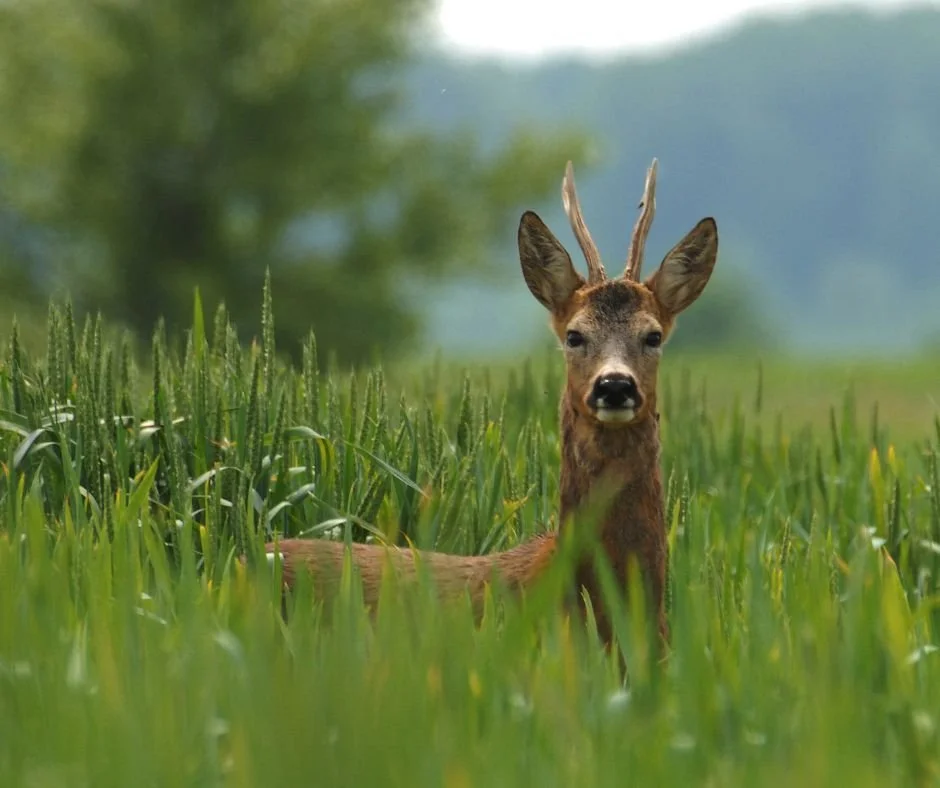
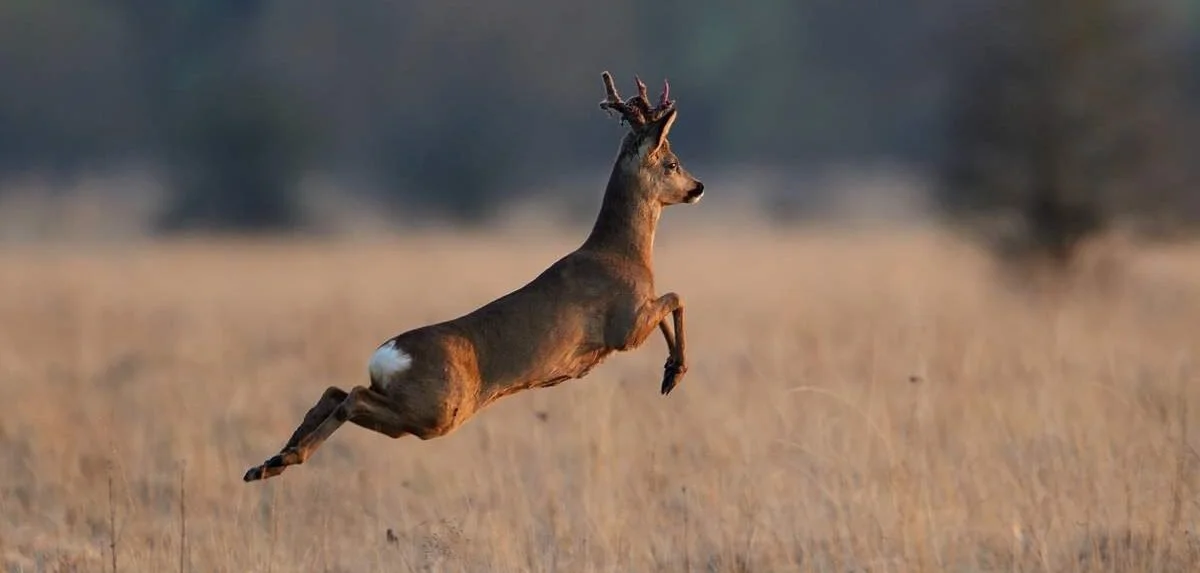
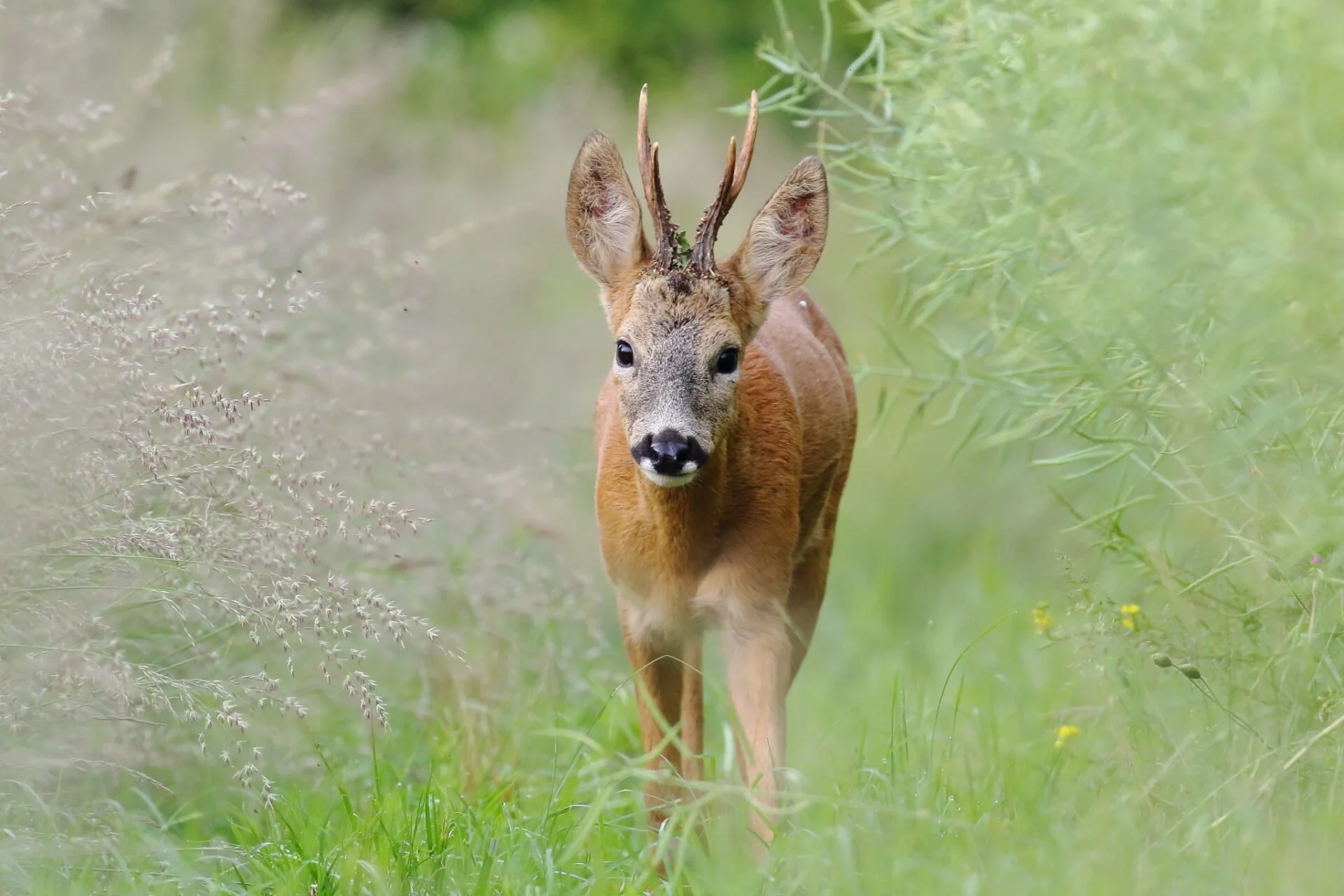
Covered in a reddish-brown coat in summer, and a grey one in winter, roe also have a distinctive black moustache stripe and a white chin. They appear tail-less, with a white/cream rump patch, which is especially conspicuous when its hairs are puffed out when the deer is alarmed. Males (bucks) have short antlers, which are erect with no more than three points.
Roe deer can live up to 16 years, though most live until 7 in the wild. The breeding season, known as ‘the rut’, is from mid-July to the end of August. During this time, males become very aggressive in defending their territories. They fight other males by locking antlers, pushing and twisting. Fighting may cause injuries and occasionally one or both males may die. Although the egg is fertilised at the time of mating, it does not begin to develop inside the female's uterus until several months later, in early January – this is called delayed implantation. The roe deer is the only hoofed animal in the UK in which delayed implantation occurs. Females give birth, usually to twins, but sometimes to single kids or triplets, between mid-May and mid-June. The young suckle within a few hours of birth. They are regularly left alone to lie still amongst vegetation; their coat, which is dappled for the first six weeks, helps to camouflage them. Twins are often left separately.
Ecology
Roe deer diets are varied and include buds and leaves of deciduous trees and shrubs, bramble, rose, ivy, herbs, conifers, ferns, heather and grasses.
Roe deer live solitarily or in small groups, with larger groups usually feeding together during the winter. At exceptionally high densities, herds of 15 or more roe deer can be seen in open fields during the spring and summer. Males are seasonally territorial, from March to August, and young females usually establish ranges close to their mothers; juvenile males are forced to disperse further afield.
Conservation
The UK has an overpopulation of roe deer due to a lack of native predators to control them – predators such as lynx and wolves, which would have predated them, are now no longer present in the British Isles.
Their high numbers have a range of impacts across forestry, agriculture, and horticulture; due to overgrazing of saplings and understorey, they can destroy woodland health and prevent forests from regenerating. Their numbers are now controlled/culled in the hundreds of thousands each year.
Since the 1970s, there has been an increased interest in exploitation of roe as a game species and for meat. As a result, they are now covered by various Acts of Parliament which impose close seasons (when deer may not be hunted), firearms restrictions and controls on poaching.
History
Roe deer have been hunted since prehistoric times and because of this almost went extinct in the 18th century in England, Wales, and southern Scotland. Populations were reintroduced to southern England and East Anglia in the 19th century.
Deer in general have been part of many European and British myths and legends, such as in association with woodland or hunting deities, such as the Greek goddess Artemis, though red deer were generally more prevalent across these tales.
The Modern English ‘roe’ is thought to originate from the Old English rá/ráha, from Proto-Germanic *raikhon, which ultimately could come from the Proto-Indo-European root *rei-, meaning spotted, streaked, or striped.
Identifying and surveying
Footprints: Width 3cm, length 4.5cm. Roe deer footprints are very similar to those of fallow deer, sheep, and goat - heart shaped (or splayed if running), setting them apart from the parallel and fairly rectangular slots of red deer.
Droppings: Deer droppings do not have an obvious coloration or smell, but droppings tend to be a similar shape across species. They can easily be confused with sheep droppings.
Tail: Roe deer have a cream white rump (an upside-down heart for females and an oval shape for males) with no visible tail.
Surveying period: Year-round, though March is a good time due to lack of vegetation leading to clearer visibility.
Recommended reading
Roe Deer - The British Deer Society
Managing deer in the nation’s forests | Forestry England
Frequently asked questions
-
Yes, roe deer are native to the UK.
-
Yes, roe deer shed the ‘velvet’ (furry skin) from their antlers in the spring.
-
Yes, they are protected under the 1991 deer act.
-
The sounds roe deer make can be described as ‘barking’, though Muntjac deer are more commonly known for the barking sound they make.
-
Roe deer live solitarily or in small groups, with larger groups usually feeding together during the winter. At exceptionally high densities, herds of 15 or more roe deer can be seen in open fields during the spring and summer.
Confusion species

Fallow deer (Dama dama)
Fallow deer have a heart-shaped white rump with a black horseshoe-shaped border and a black line down the tail, creating the appearance of the number 111, compared to the roe deer’s plain cream/white rump, which can flare up when alarmed, with no visible tail. Fallow coats can vary greatly but are typically brown with white spots in the summer, and paler brown with white spots in winter, whilst roe deer have a red/brown coat in summer and a grey/brown coat in winter, with no spots.
Red deer (Cervus elaphus)
Red deer are much larger than roe. They have a buff-coloured rump with a ginger buff tail. Roe deer have a similar coat colour, though red deer's appear more red. Red deer have very large branched antlers in mature males, whilst roe have much smaller antlers with usually no more than 3 points. Roe also have a distinctive black nose and white chin.

Sika deer (Cervus nippon)
Sika deer have a heart-shaped white rump with a black upper border, a white tail and a thin black vertical streak, whilst roe have a plain cream/white rump with no visible tail. Sika have a brown coat with distinctive spots in the summer with coat turning greyer in winter, whilst roe have a red/brown coat in summer and grey/brown in winter. Roe have a distinctive black nose and white chin which sika do not have.
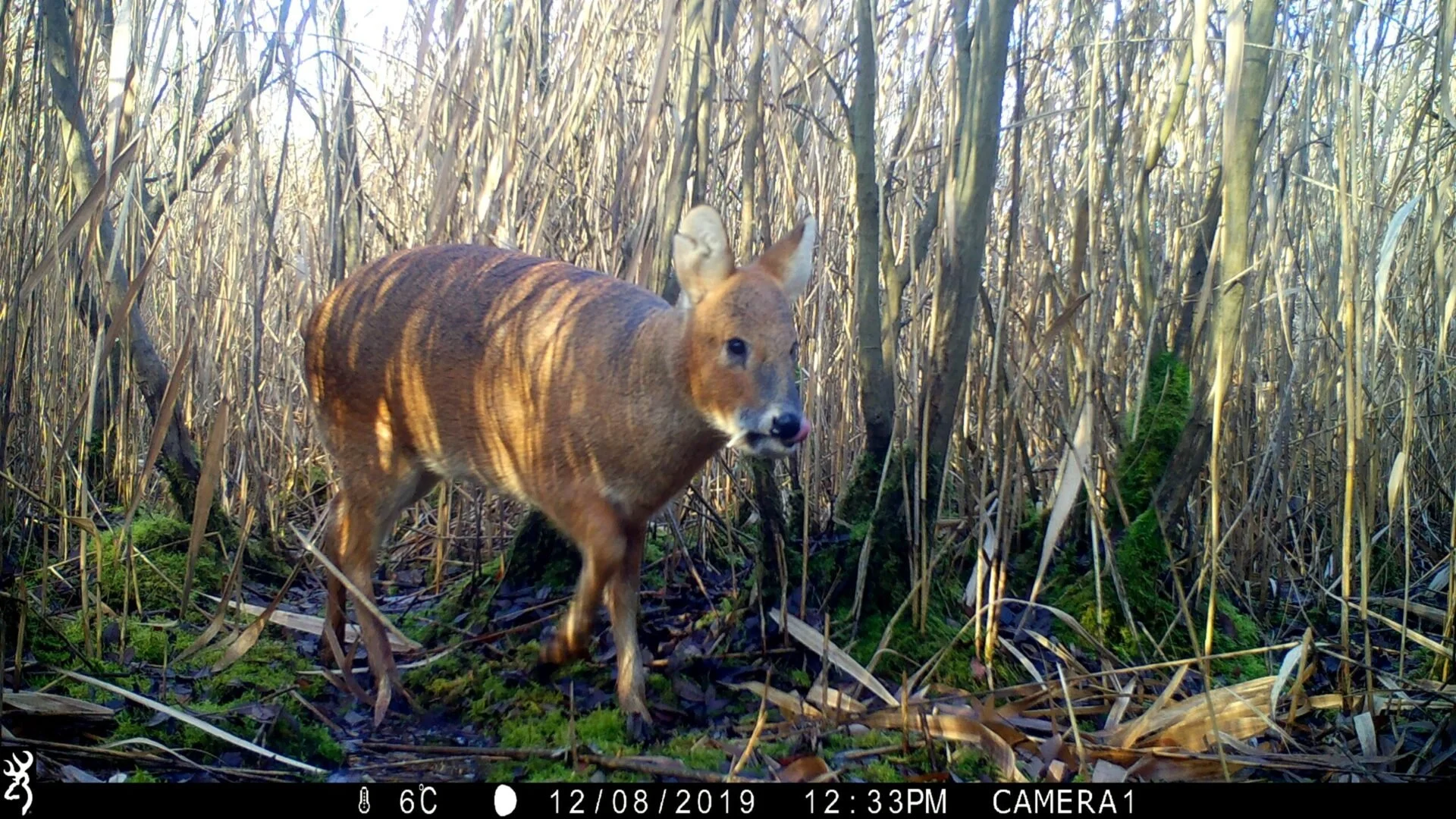
Chinese water deer (Hydropotes inermis)
Chinese water deer have a rump the same colour as the rest of their coat and a stumpy tail, whilst roe have a cream/white rump with no visible tail. Chinese water deer has tusks (protruding upper canine teeth) whereas roe does not. Chinese water deer have no antlers, whilst roe have small, pointed antlers, with no more than 3 points. It is often said that the faces of Chinese water deer look like teddy bears, whilst roe have a distinctive black nose and white chin.

Identify sounds
Heard a curious animal sound but no idea whose making it?

Wildlife identification FAQ
Still not sure what you’ve found? Head over to our FAQ for an answer.