

Home / British mammals / Whiskered bat
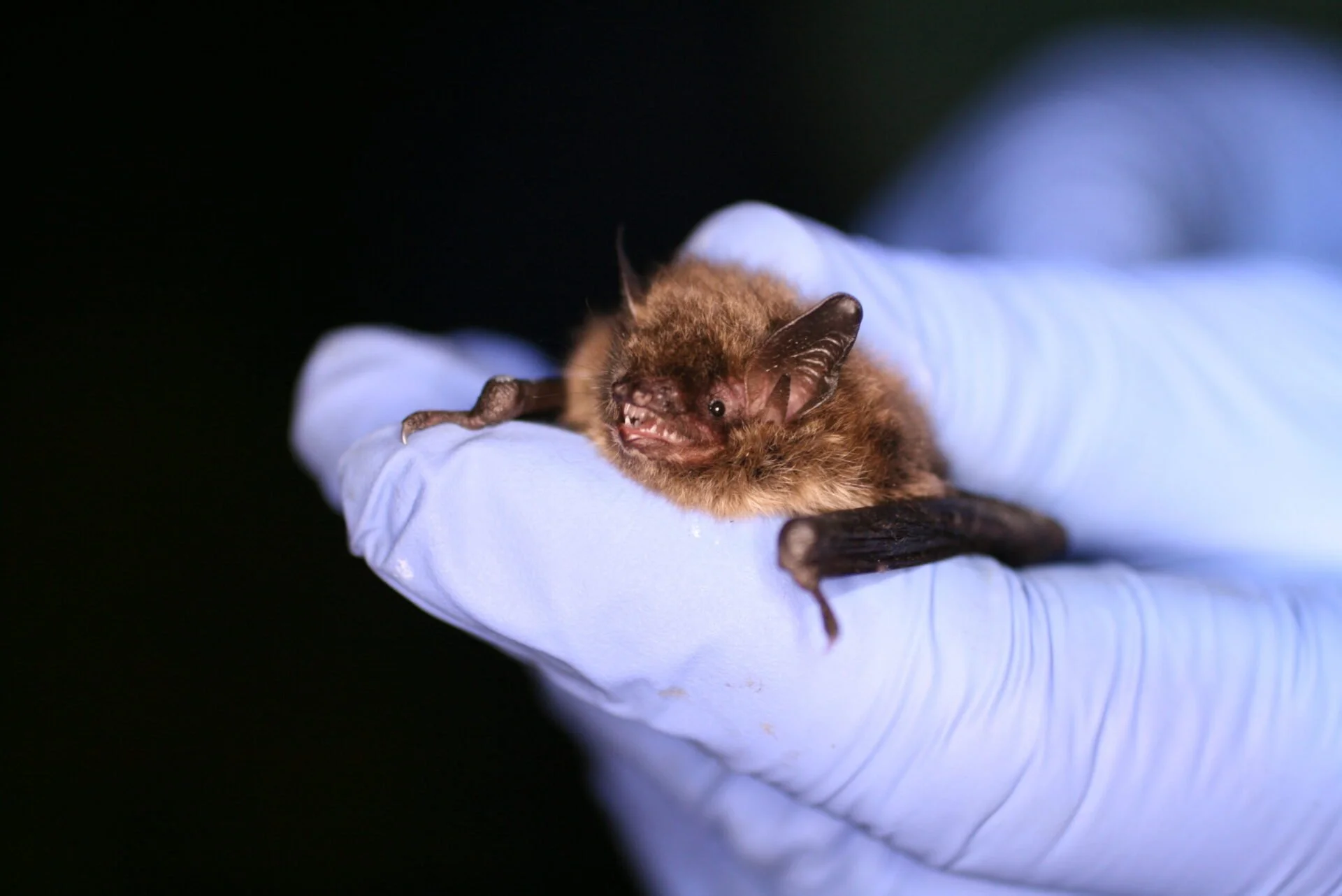

Whiskered bat
Scientific name: Myotismystacinus
Conservation status: UK Red List
GB: N/A
England: N/A
Scotland: N/A
Wales: N/A
Global: Vulnerable
Habitat: Woodlands, Orchards, Riparian, Grasslands with Hedgerows or Woodland Edges, Scrub
Description: Small Myotis species. Darker in the face than the other small Myotis species.
Size: Intermediate size between Alcathoe and Brandt’s bat.
Origin and distribution: Native. First recognised as a separate species in the UK in 1970. Widespread throughout England and Wales, although rare in East Anglia and in parts of the North-East coast. Records are patchy for Scotland and Northern Ireland, with records coming from the southern areas.
Diet: Catches on the wing (hawker) and off surfaces (gleaning) feeding on small moths, flies, and spiders. Considerable differences in prey selection between colonies, suggesting the species adapts depending on prey availability.
General ecology: An agile flyer adapted to foraging in cluttered environments. Found in a wide variety of habitats, but generally avoids urban and arable areas. Frequently caught in mist nets along linear features, such as tall hedgerows, woodland edge, and smaller waterways enclosed by trees. Foraging distances have been recorded by to 3.5km from maternity roosts. Hibernation sites include underground tunnels, icehouses, and caves. Generally considered a sedentary species and no long-distance movements have been recorded in Europe.
Breeding: Maternity roosts are in buildings, although they are sometimes found in trees and bat boxes. Frequently visit swarming sites such as cave entrances in autumn, which likely plays a role in their mating displays.
Conservation status: They are data deficient on the IUCN Red List across Great Britain and are classified as Least Concern globally. Future population trends in the UK are therefore unknown.
Identification
DNA analysis is required to confirm identification between the Whiskered bat and the other small Myotis species (Alcathoe and Brandt’s). Darker in the face than the other small Myotis species, with a small penis of uniform width and can be distinguished by their dentition.
Bat detector
Range: 34-102 kHz
Most energy: 53 kHz
Average duration: 3.0 ms
Confusion species
Other Myotis bats, particularly, M. alcathose (Alcathoe bat)and M. brandtii (Brandt’s bat).