The Mammal Society sits on the steering group for the Missing Lynx Project, which has already conducted research that shows that lynx reintroduction is ecologically feasible - with lynx released in Northumberland likely to thrive and stretch into bordering parts of Cumbria and southern Scotland.
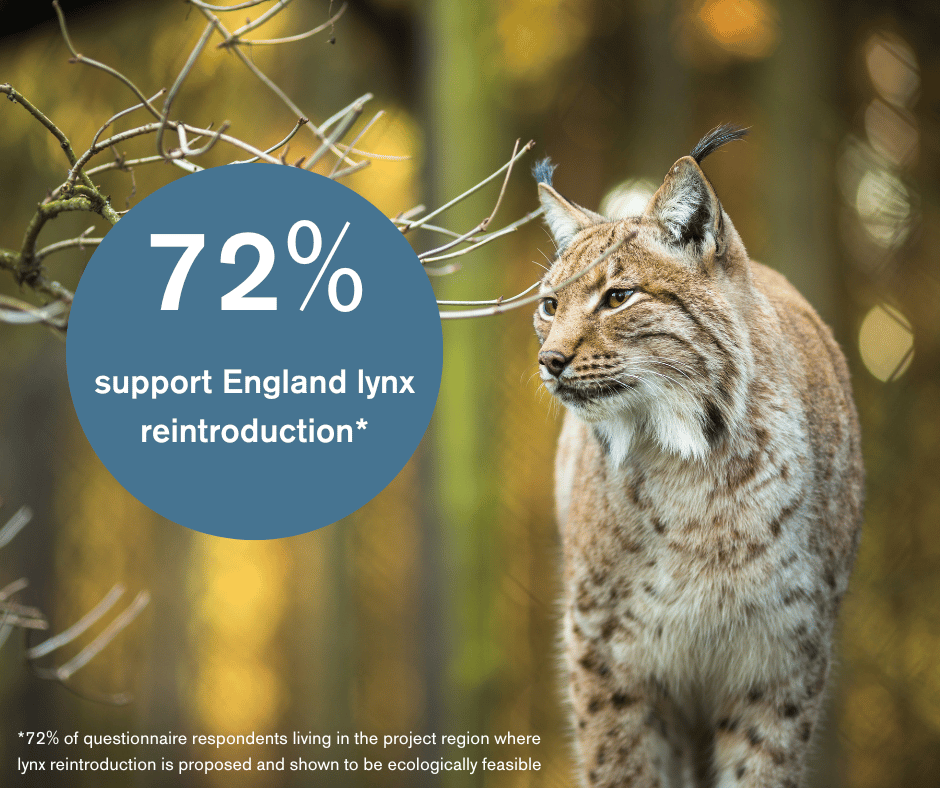
A year-long social consultation has now found that 72% of people in the project area of Northumberland, bordering areas of Cumbria and southern Scotland, support potential lynx reintroduction. Lynx used to live in Britain until the medieval period when they died out due to hunting and habitat loss.
The consultation was run by The Missing Lynx Project, led by The Lifescape Project in partnership with Northumberland Wildlife Trust and The Wildlife Trusts. The consultation report provides the initial findings of local people’s attitudes towards lynx reintroduction and their level of support.
Now the project is working with people in the region to discuss how a potential reintroductioncould be managed if it were to progress further. The partners are also urging people across the UK to find out more and have their say through a national questionnaire.
Over a thousand people in the project area filled in a detailed questionnaire in the project area. The regional consultation – which is ongoing – included:
• Almost 10,000 visitors attended the touring Missing Lynx exhibition over 103 days
• >100 stakeholder meetings and one-to-one interviews with community, farmers, landowners, foresters and businesses; 12 workshops were also held
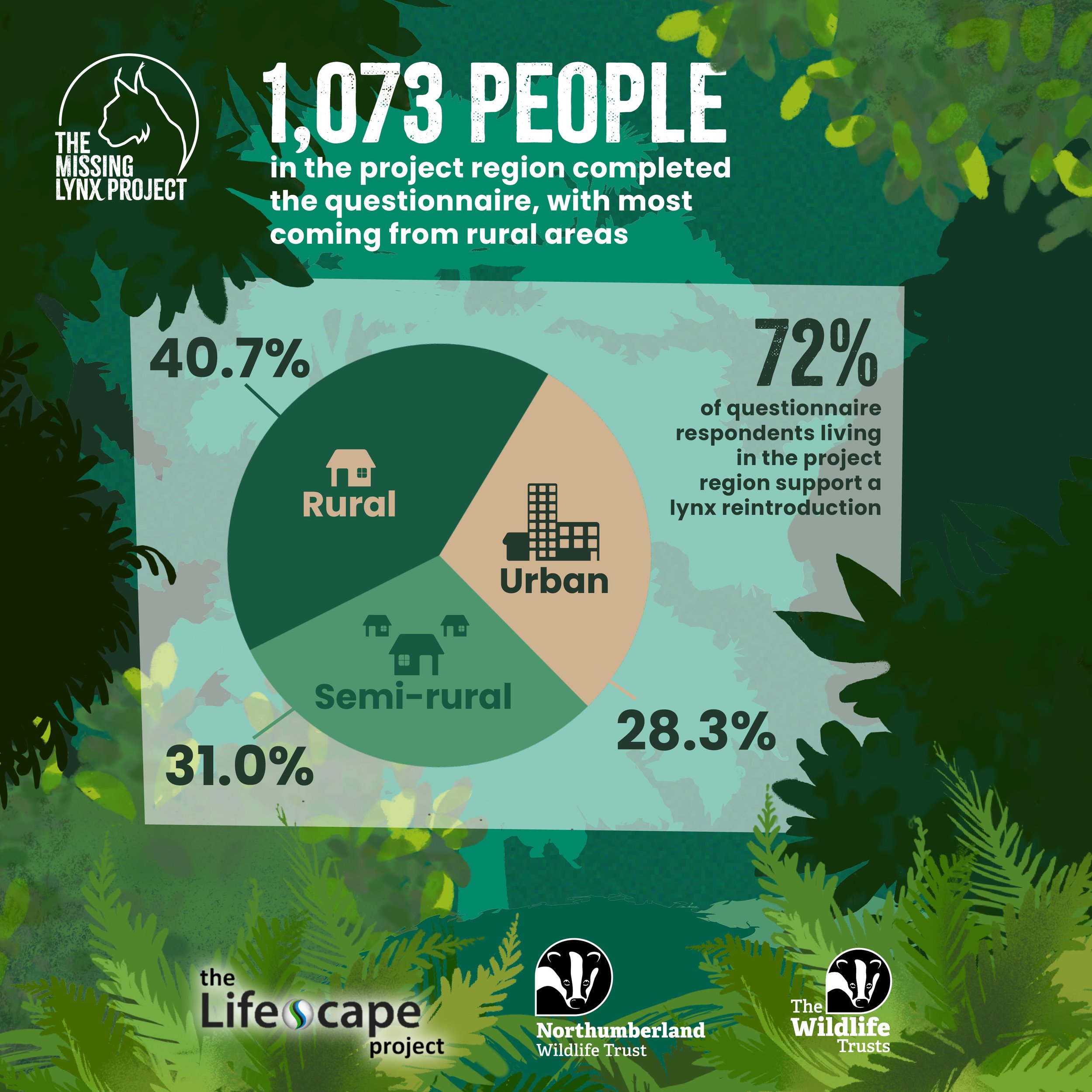
• 1700 people completed individual questionnaires (of these, 1073 respondents lived in the project region)
The results coincide with the publication of a new peer-reviewed paper produced by the project, ‘Exploring the ecological feasibility of restoring Eurasian lynx to Great Britain using spatially explicit individual-based modelling’. This research shows that a release of 20 lynx over several years into the Kielder forest area would, over time, create a healthy population of about 50 animals covering north-west Northumberland, the edge of Cumbria and the bordering areas of southern Scotland. It also reveals this is the only area of England and Wales with enough extensive woodland for lynx to thrive.
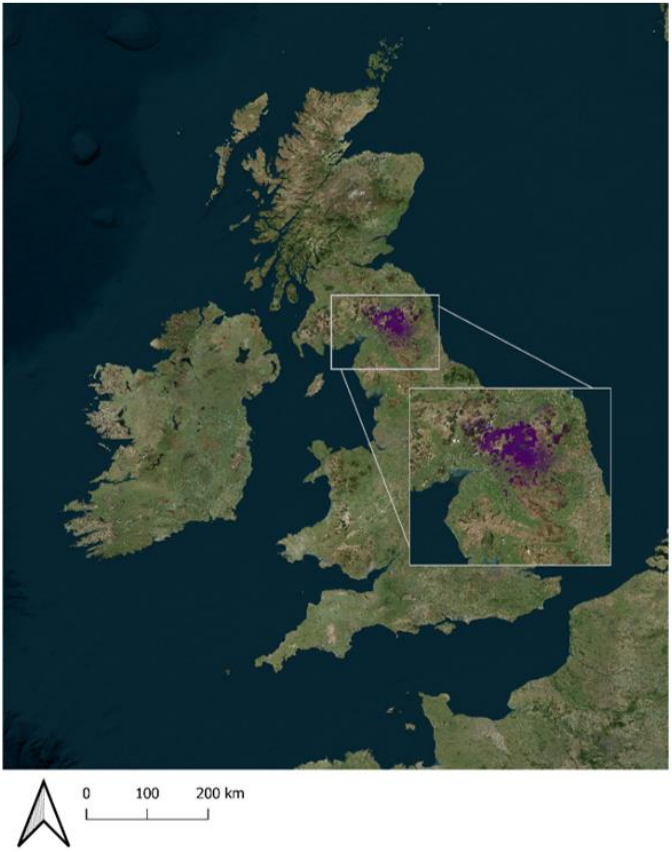
Below: map of project area and predicted growth of a lynx population 5 years after release (purple shading), used to plan the location and extent of the Missing Lynx Project’s social engagement and consultation.
Dr Deborah Brady, project manager and lead ecologist, The Lifescape Project, says:
“We’d like to thank the thousands of people who visited the exhibition, filled in the questionnaire or spoke to us over the last year. Now we know that the majority of local people support lynx reintroduction and we also have the scientific evidence showing that a release of lynx in north-west Northumberland could work.
“We will continue to work with local communities to consider how a reintroduction project could be managed to maximise benefits and reduce risks. We hope to apply for a licence but only once we have a plan that’s collaboratively designed with local people which sets out measures that are acceptable, feasible and can be implemented.”
Matt Larsen-Daw, CEO of the Mammal Society, says:
“The reintroduction of this top predator to British landscapes could benefit the restoration and function of our damaged and unbalanced ecosystems at a time when nature restoration should be a top priority in order to address an escalating biodiversity crisis. The Missing Lynx project is taking a measured, scientific and consultative approach towards achieving this transformative objective, and the Mammal Society is fully supportive of their aims and methods. There is a place for the lynx in our landscapes, and the British public overwhelmingly support this objective.”
Editor’s Notes:
Images and a short film are available on request for the purposes of reportage.
The Mammal Society’s position on lynx reintroduction can be found here: The Reintroduction of the lynx to Britain — Mammal Society
Further information on The Missing Lynx Project: www.missinglynxproject.org.uk
Research article published in the Journal of Environmental Management: Exploring the ecological feasibility of
restoring Eurasian lynx to Great Britain using spatially explicit individual-based modelling
Missing Lynx Project ambassadors: missinglynxproject.org.uk/about-project/ambassadors
Parallel project in Scottish Highlands: Lynx to Scotland
About The Lifescape Project:
The Lifescape Project works toward a world rich in wild landscapes, providing a sustainable future for life on earth. As a registered charity, our multidisciplinary team works on projects globally which catalyse the creation, restoration and protection of wild landscapes. Those projects bring together team members with backgrounds in science, technology, law, economics, and culture, to have the greatest possible chance of succeeding for the benefit of both people and nature. www.lifescapeproject.org
About the Mammal Society:
Established in 1954, the Mammal Society is Britain’s leading charity devoted to the science-led conservation of mammals. They work to raise awareness of the issues mammals face, sharing scientific research so that populations can be protected and restored across the British Isles and Ireland. Ensuring a bright future for British mammals, the Mammal Society inspire conservation projects, empower stakeholders through training and resources, and raise public awareness through education and campaigns.
Mammal Society | Website | Instagram | LinkedIn | Facebook
About the Northumberland Wildlife Trust
Northumberland Wildlife Trust is the largest environmental charity in the region working to safeguard native wildlife. One of 46 Wildlife Trusts across the UK, Northumberland Wildlife Trust has campaigned for nature conservation for over 53 years. It aims to inform, educate and involve people of all ages and backgrounds in protecting their environment in favour of wildlife and conservation. Supported by over 12,000 individual and 40 corporate members in the region, Northumberland Wildlife Trust manages and protects critical species and habitats at over 60 nature reserves throughout Newcastle, North Tyneside and Northumberland. www.nwt.org.uk
About The Wildlife Trusts
The Wildlife Trusts are making the world wilder and helping to ensure that nature is part of everyone’s lives. We are a grassroots movement of 46 charities with more than 910,000 members and 35,000 volunteers. No matter where you are in Britain, there is a Wildlife Trust inspiring people and saving, protecting and standing up for the natural world. With the support of our members, we care for and restore over 2,000 special places for nature on land and run marine conservation projects and collect vital data on the state of our seas. Every Wildlife Trust works within its local community to inspire people to create a wilder future – from advising thousands of landowners on how to manage their land to benefit wildlife, to connecting hundreds of thousands of school children with nature every year. www.wildlifetrusts.org