

Decline in Fieldwork Opportunities in UK Life Science Courses – Campaign Update
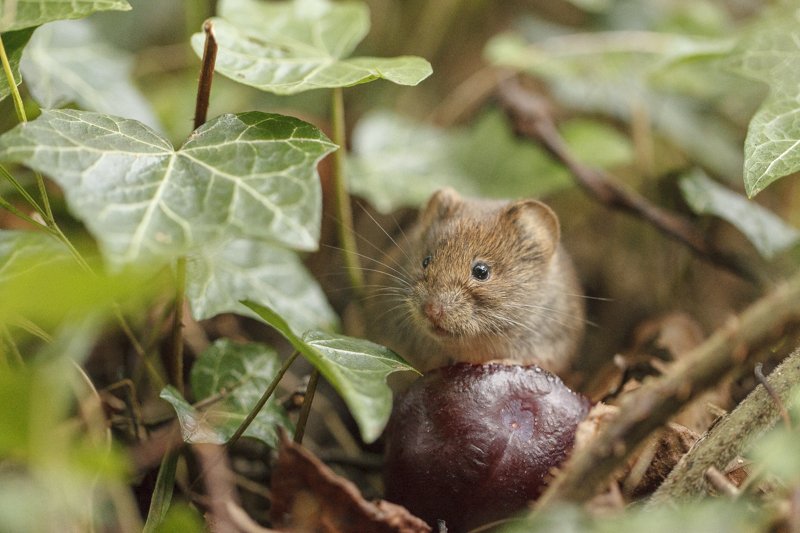
Photo credit: Sarah Darnell
In May, the Mammal Society convened more than 20 signatories across the conservation, ecology, education and museum sectors to highlight to government and public the worrying trend of fieldwork opportunities disappearing from life science courses at UK universities. An open letter was sent to government ministers across all four nations on Monday 12th May, signed by representatives of conservation organisations, the ecological consultancy sector, universities and young people including Mammal Society Youth Ambassadors, UK Youth4Nature and award-winning author Dara McAnulty.
Fieldwork provides opportunities for undergraduates to gain hands-on experience of applying ecology knowledge and skills in a real-world context, ensuring that they can solve real-world challenges and recognise species, signs of wildlife presence and habitat health indicators.
Fiona Day, Mammal Society’s Education and Community Engagement Lead and instigator of the open letter campaign, feels strongly that the decline in opportunities to gain fieldwork skills is a serious issue.
“Fieldwork isn’t a nice-to-have—it’s a vital skill for anyone entering ecology and conservation. Time in nature builds knowledge, confidence, and connection, yet it’s often those from the most disadvantaged backgrounds who miss out. Universities should be leading the way, not cutting back. Students are asking for these experiences. It’s time we stepped up and ensured everyone has access to the field skills they need to tackle today’s environmental challenges.”
Ecology consultancies have already reported to the Mammal Society a growing trend of career starters with life science degrees demonstrating insufficient field skills to be able to start working on projects without a period of shadowing experienced ecologists in the field. Dr Steph Wray, Mammal Society Chair, observed that the value of practical ID and wildlife handling skills may be considered less important due to advances in technology, but that this would be a dangerous assumption. “I worry that the focus on AI and remote monitoring is leading to a mistaken shift in thought around this, when in fact we will need those skills even more to make sure that AI models learn from those with real skills.”
The government is committed to achieving a number of nature recovery targets set out in the Environment Act 2021 and Environmental Improvement Plan 2023, including the halting of species decline by 2030 and increasing species abundance by 10% by 2042, restoring 75% of terrestrial and freshwater protected sites to favourable condition by 2042, and ensuring all sites of special scientific interest (SSSIs) have an up-to-date condition assessment, with 50% of SSSIs on track to achieve favourable condition by 31 January 2028. This represents a huge amount of work in the coming years, for which a workforce of skilled ecologists will be essential. As Ellen Bradley of UK Youth4Nature commented in her statement of support for the letter, “Spending time in nature is fundamental to developing an understanding of natural processes. Cutting back on fieldwork means cutting back on our understanding of the natural world exactly at a time when we need it most.”
Some institutions offer fieldwork opportunities to undergraduates but at an additional cost above course fees, or leave it up to students to find or create their own opportunities. This leads to an inequality of opportunity where students from more affluent backgrounds gain more skills valued by employers. A lack of inbuilt fieldwork can also make life science courses less attractive and have less perceived value for students considering a career path in ecology, at a time when we need more skilled people from all backgrounds entering the workforce to address the challenges of the biodiversity crisis.
“Everyone deserves the chance to get out into nature and learn by doing – no matter who they are or where they come from. First-hand field experience is essential for anyone hoping to work in conservation. You wouldn’t expect a nurse to qualify without clinical training – and the same should be true for those entering the environmental sector. If we want a future that’s fair, skilled, and diverse, we have to make access to fieldwork equal for all.”
Lyndon Howson, Youth Board Member, Chester Zoo and former Mammal Champion Award winner
The letter was sent to government ministers across the devolved parliaments on Monday 12th May and published on the Mammal Society website. Many of the organisations co-signing the letter raised awareness of the issue on their own channels.
The letter calls for the following:
Recognition of field courses as essential training.
Commitment to maintaining and expanding field opportunities.
Financial support to ensure equitable access so that no student is excluded due to cost.
Sustainable alternatives, such as UK-based fieldwork options, rather than eliminating courses in response to carbon footprint concerns.
You can read the letter in full, and see the full list of supporting organisations and experts, here: https://tinyurl.com/MSfieldworkletter
Written responses were received from Scotland, Wales and Northern Ireland, but no response was received from Baroness Smith, the Minister of Skills, regarding the issues in England and the role of Central UK Government in helping to address the concerns we raised.
The full responses from the devolved nations can be read below, and share the common theme that institutions are responsible for managing their own budgets and for decisions around course content and delivery. All three responses did acknowledge the financial pressure on higher education institutions, and recognised the importance of widening access to higher education to ensure that lower-income students are not denied opportunities to pursue career pathways in which they can find fulfilment and make a positive contribution to society. Each response outlined some measures being undertaken by that devolved government to support equality of opportunity in higher education.
What next?
While government ministers express that this issue is outside of their remit, it is important to put the decline of fieldwork in life sciences in the context of the biodiversity crisis and the ambitious nature recovery targets to which the government is committed in the coming years.
A general funding crisis for higher education institutions inevitably leads to some tough decisions that only the institutions themselves can make around delivery and content of their courses. Fieldwork is often the first ‘luxury’ to go when institutions are forced to deliver the same educational service with less (in real terms) funding per student than a decade ago. If universities are already under-writing the cost of a student’s educational experience and are in an increasingly vulnerable financial position, they may not feel able to justify including the cost of fieldwork trips unless the full costs are covered by students on top of course fees. This is when fieldwork may become an ‘optional extra’ available only to affluent students, or can make life science courses less attractive due to the soaring additional costs required to make the most of the experience.
The implications to the UK economy of a smaller and less prepared pipeline of ecologists and other life science professionals are significant, if the government is serious about its commitment to nature restoration targets in the years ahead. Investing in higher education is a key way that the government can put down the foundations required to meet the challenges of the future and bring benefits to society and the economy from the necessary increasing focus on green infrastructure.
In the meantime, it is important for institutions to hear from the nature sector, and from prospective students of life science courses, just how important fieldwork is to the value of these courses. Heads of Department may find it hard to make a case for seemingly expensive fieldwork when under competing for limited funds, and testimonies from potential employers in the relevant sectors, and from students considering applying for a place, can be useful to demonstrate the need to prioritise such experiences. There may be creative ways that fieldwork can be enabled through local partnerships with ecological consultancies and conservation organisations, and models for such collaborations could be piloted and shared across the HEI and private sectors.
The Mammal Society and partners in this campaign will be providing resources to enable young people to approach institutions to enquire about fieldwork opportunities and express how important they feel they are to their future career prospects. We will also explore opportunities to encourage cross-sector partnerships that enable fieldwork for life science students – regardless of personal means - at a time of restricted budgets for higher education.
Wales response
Thank you for your letter and email of 12 May regarding the decline in fieldwork opportunities in life science courses in higher education.
I appreciate your concerns about the decline in fieldwork opportunities and particularly the impact this may have on students from lower-income backgrounds. Widening access to higher education is something I am committed to. My officials work together with Medr, the Commission for Tertiary Education and Research in Wales, who work with the sector to support equality of opportunity and promote tertiary education.
These are difficult times for the higher education sector not only in Wales, but in the whole of the UK. I fully appreciate the tough decisions our Welsh Higher Education Institutions (HEIs) are having to make during these financially challenging times. I am pleased to have had the opportunity to engage with the Vice Chancellors at all the Welsh universities, to further understand the pressures facing the sector and explore how Welsh Government can provide support through this difficult period. These discussions build upon the ongoing dialogue I have had with the sector since I was appointed in September.
As autonomous bodies, HEIs in Wales are responsible for their own academic affairs, including decisions on course content and delivery. It would not be appropriate for Welsh Ministers to intervene in these matters. I would, however, encourage you to raise your concerns with the institutions themselves.
Yours sincerely,
Vikki Howells AS/MS
Y Gweinidog Addysg Bellach ac Uwch
Minister for Further and Higher Education
Scotland response
Thank you for writing to the Cabinet Secretary for Education and Skills, on 12 May 2025, on the subject of the importance of fieldwork in life science courses. Your correspondence has been passed to me for a response as I work in the unit with responsibility for higher education governance.
Universities are autonomous institutions, responsible for their own admissions, courses and
governance. Universities, as degree awarding institutes design the curriculum for the degrees they award and set the conditions on which they are awarded. The Scottish Government has no authority over the content of university courses; however the Scottish Government and Scottish Funding Council continue to work closely with the sector. Universities across the UK are facing financial challenges due to a range of factors. Ministers have listened closely to the sector in the development of this year’s budget, and are investing over £1.1bn in university teaching and research in 2025-26.
I note that your letter expresses some concern for students from less advantaged backgrounds. Widening access is a priority for this Government, ensuring that the opportunity of a university education is available to everyone, regardless of their background. The Scottish Government's commitment to free tuition together with enhanced student support means that access to university remains based on the ability to learn and not the ability to pay. The Scottish Government has increased the student support package available to students and continue to provide the Widening Access & Retention Fund to universities with high SIMD20 intake and lower retention rates.
Once again thank you for writing to the Cabinet Secretary for Education and Skills on this subject.
Yours sincerely
Mary Maxwell
GAD : Institutional Governance and Reform UnitSt Andrew's House, Regent Road, Edinburgh EH1 3DG
www.gov.scot
NI response
Your letter to the Minister for Education, Paul Givan, regarding fieldwork in life science courses (attached) was passed to me for response. Policy for Higher Education falls under the remit of the Department for the Economy rather than the Department for Education.
While the Department for the Economy provides the HE sector here with funding for teaching and research purposes the higher education institutions are autonomous and so are responsible for their own curriculum design and course content including the extent to which courses include fieldwork. The structure and content of courses provided by the universities is outside the remit of this Department.
In response to the points you made about the financial challenges faced by students and the HE sector more generally, I would say that an inclusive, high quality and sustainable HE sector is central to economic development, prosperity and quality of life. Both the Department and the Minister for the Economy recognise the financial challenges facing both universities and students and are committed to working in partnership with the HE institutions and students to find a sustainable long-term solution. To this end the Minister has committed to undertaking a review of higher education funding.
Thanks
Michael Weatherup
HE Policy
Department for the Economy
Adelaide House
39-49 Adelaide Street
Belfast, BT2 8FD