

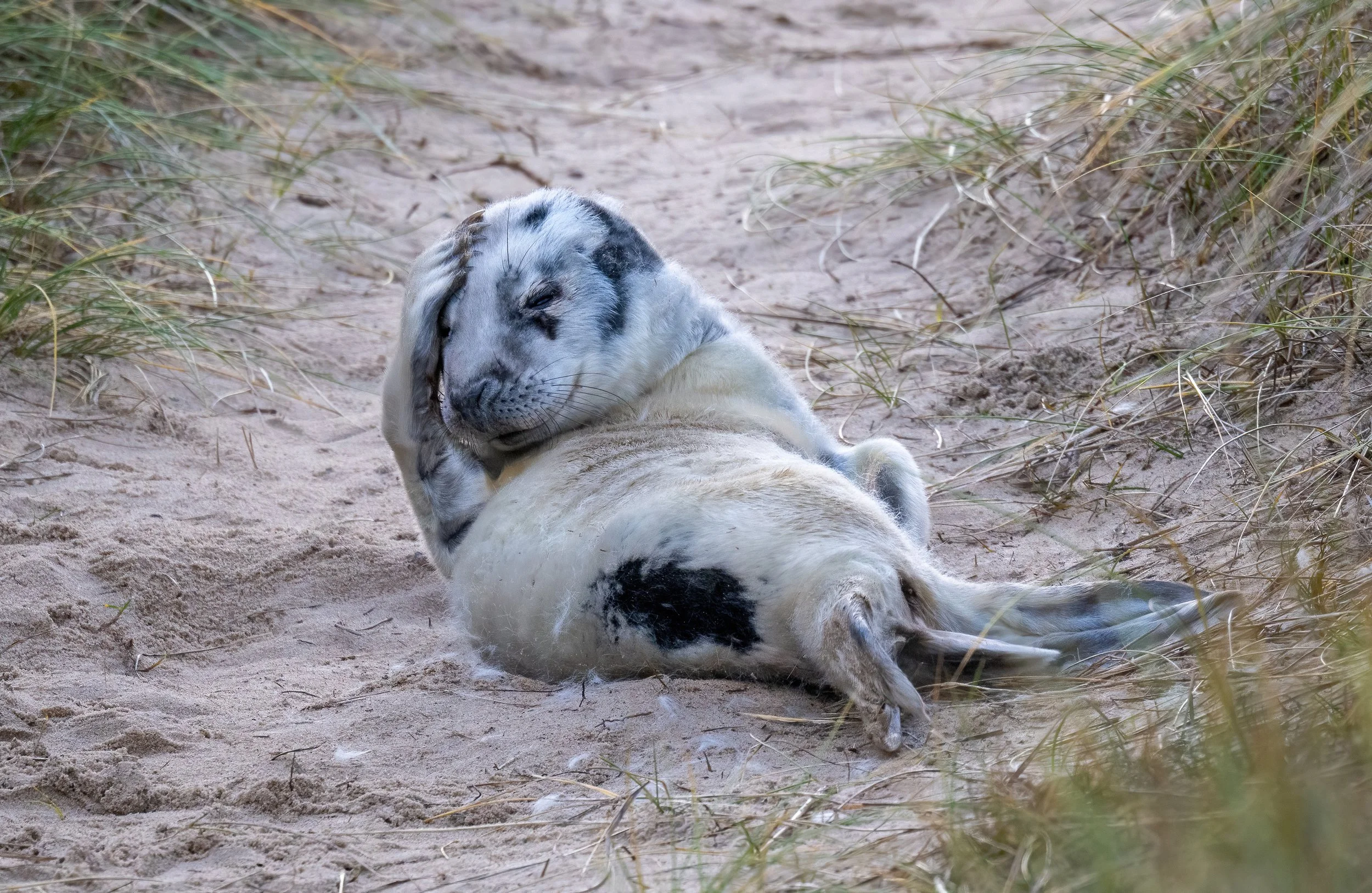
Image credit: Jon Kelf
This consultation response is on behalf of the Mammal Society.
The Mammal Society is a British charity, founded in 1954, devoted to the study and conservation of mammals. We work to ensure a bright future for mammals in the British Isles and Ireland by:
Inspiring, supporting and enhancing conservation projects and policies that protect and restore native mammal populations and their habitats.
Empowering conservationists, students, citizen scientists and nature champions to play a key role in mammal conservation now and in the future through providing training, resources and survey activations.
Building public awareness of and support for mammal conservation through education, communications and campaigns.
Our work is supported by the advice of our Trustees and Science Advisory Committee, who include many national and international experts on mammal ecology, environmental law, nature conservation, and environmental impact assessment.
Summary
The Mammal Society strongly opposes Ofgem’s draft determination to reduce the ambition of environmental commitments, particularly the decision to reject funding for 10% or greater Biodiversity Net Gain (BNG) in non-statutory construction projects and to reject commitments to deliver additional biodiversity compensation beyond 10% BNG for planning consent. This approach undermines work on in-flight projects begun during RIIO-T2, and is inconsistent with Ofgem’s and National Grid's statutory duties under the Environment Act and Levelling Up Act.
We understand that there needs to be a consideration of cost for consumers, however the approach taken for this and any infrastructure project must be seen in the context of a biodiversity crisis that has implications for the future – including economic. The most low-income households are liable to be most severely impacted by issues caused by environmental breakdown, so suggesting that doing less of nature can ever be in the interest of poorer households is to misunderstand the nature of the biodiversity and climate crises. Investing in landscape resilience brings tangible benefits to all customers while also helping to prevent the need for costly projects to mitigate against preventable infrastructure failure and damage resulting from extreme weather and climate change. Such future costs will impact consumer bills, while the problems cause other hardships for citizens and policy alike. The Mammal Society calls on Ofgem to:
Reverse its position on rejecting funding for 10% or greater BNG in non-statutory developments
Require TOs to set targets that go beyond the statutory minimum e.g. with a target for 20% BNG
Use incentive mechanisms to reduce transmission losses and promote wider environmental benefits
Explicitly recognise and fund biodiversity outputs that exceed legal baselines
The statutory minimum target for BNG should be considered a baseline, and any opportunity to exceed this in a way that takes advantage of existing project development and management infrastructure should be supported and encouraged. We are past the point when we should seek to minimise impact on nature – we need to pursue any and all opportunities to bend the curve and restore nature to good health in order to deliver for citizens and minimise future threats to this and other infrastructure.
Responses to selected consultation questions:
ETQ9. What are your views on our consultation positions for the TOs' EAP commitments in RIIO-ET3?
We are deeply concerned by Ofgem’s draft determination to reduce the ambition of environmental commitments within the Environmental Action Plans (EAPs) of Transmission Operators (TOs), particularly the decision to reject funding for 10% or greater Biodiversity Net Gain (BNG) in non-statutory construction projects and to reject commitments to deliver additional biodiversity compensation beyond 10% BNG for planning consent. This approach undermines the momentum built during RIIO-T2, is inconsistent with Ofgem’s own statutory duties under the Environment Act and Levelling Up Act, and fails to deliver on stakeholder expectations and evolving environmental imperatives.
Large-scale infrastructure projects, and especially those with linear features and a footprint that is spread across wide and varied landscapes, offer particularly valuable opportunities for ecological benefits if nature can be prioritised from the beginning to the end of projects. Benefits for landscape connectivity and resilience can be leveraged in a way that is often difficult and costly to accomplish, if planned and delivered alongside large-scale infrastructure that itself will span and connect landscapes. Some mammal species present in small numbers and ranging over large distances to fulfil their role in a balanced and resilient ecosystem can continue to lose out even when BNG targets are met for projects that deliver at a local scale but are not connected by wildlife corridors to other strategically aligned landscape regeneration projects. In a biodiversity crisis characterised by a global mass extinction event and increasing pressures caused by a warming climate, plans should not only be judged by whether they meet statutory minimum targets, but whether they fulfil their potential as a component of a national strategic drive to restore nature as quickly and effectively as possible. The National Grid Electricity Transmission (NGET) is an example of a project with such heightened potential to support national biodiversity recovery targets, and the plans put forward by National Grid recognise this potential, as well as the moral duty and fiscal prudence of delivering on this potential. These plans align with public sentiment, stakeholder advice, and long-term environmental sustainability goals. Reversing this progress risks undermining the credibility of the RIIO framework as a driver for proactive environmental action.
Both Ofgem and National Grid have statutory requirements to have regard to biodiversity (Environment Act) and to protected landscapes (Levelling Up Act). Ofgem’s draft determination rejects a clear opportunity to deliver on these duties. Moreover, there is clear customer support for the prioritisation of nature. In the current regulatory period, Ofgem supported and incentivised biodiversity actions beyond legal compliance, as has Ofwat’s recent price review. This determination therefore represents a step backwards, and could lead to an increase in local and national objections to infrastructure projects that could be much more favourably received if they come with substantial landscape regeneration benefits.
Specifically, we oppose the rejection of funding for biodiversity enhancement across the following development types that often fall under permitted development or exemptions from formal planning consent:
Substation extensions
Tertiary connections and cables
Cable tunnels
New or replacement cable works
Overhead line (OHL) construction and new towers
These development types contribute significantly to the spatial and ecological footprint of transmission infrastructure, and offer some of the most important opportunities to achieve greater landscape connectivity and landscape resilience. To exclude them from funded BNG obligations is to miss a critical opportunity for widespread environmental improvement.
The total costs of the changes proposed by National Grid would cause bills to be increased by a relatively small margin, whereas the cost of achieving comparable landscape-scale biodiversity benefits through projects that are decoupled from the infrastructure development and maintenance would be considerably higher and would be likely to take longer to achieve comparable results.
We support Wildlife & Countryside Link’s call for TOs to adopt a minimum of 20% BNG, particularly for Nationally Significant Infrastructure Projects (NSIPs), which carry long-term impacts on biodiversity and should exceed mere legal compliance. A target of 10% net gain is a scale of ambition that does not reflect the level of urgency defined by the current biodiversity crisis. The original 2018 impact assessment for the policy highlighted that 10% gain in theory would be chipped away in practice by a number of factors, including habitat degradation between initial assessment and construction completion, pressures from occupation (such as light and sound pollution) and the possible loss of gains over decades. As such the impact assessment described 10% as the ‘lowest level of net gain that the department could confidently expect to deliver genuine net gain, or at least no net loss, of biodiversity and thereby meet its policy objectives.’1 Our position reflects the broader consensus expressed across the stakeholder community, as documented in National Grid’s own engagement summaries.
We urge Ofgem to reconsider its stance and restore support for higher BNG/NBB commitments. A capped or minimalist regulatory approach is a betrayal of public trust and expectations at a time when achieving nature recovery and landscape resilience should be a guiding priority for all projects enabled by public funds.
ETQ11. Do you have any views on our proposed approach to biodiversity funding, notably whether it is appropriate or not for consumers to fund biodiversity outputs beyond legislative requirements?
We reject Ofgem's position that consumer funding is inappropriate for biodiversity outcomes beyond minimum legal thresholds. This demonstrates a complete failure to understand the nature of the climate and biodiversity crises, reducing it to a 'tick box' exercise where minimum legal compliance is all that is required. Whilst an important plank of Government policy, the statutory BNG requirements of the Environment Act are only one aspect of the UK's commitments on biodiversity.
In February this year, the Government re-confirmed its commitment that the UK would achieve all 23 of the targets in the Global Biodiversity Framework, to which it is a signatory, by 2030. This includes targets to:
Expand protected areas to at least 30% of land and sea
Restore 30% of all degraded ecosystems
Plan and manage ALL areas to reduce biodiversity loss
Halt species extinction, protect genetic diversity and manage human-wildlife conflicts
Enhance green spaces for human wellbeing and biodiversity
These challenging targets will not be met by paring back investment into nature to a legal minimum.
Whilst we understand and respect the need to be prudent in planning investment using consumer funding, it is consumers, particularly the economically disadvantaged, who will be most harmed by the effects of the biodiversity crisis. This has been clearly demonstrated in the Dasgupta report, commissioned by the Treasury, published by the UK Government, and - despite its very dire warning of the economic impacts of the biodiversity crisis - ignored in all subsequent UK Government policy. The very small increase in costs to consumers that will be saved by this aspect of the draft determination is a false economy, storing up bigger problems for the future.
When the Government published its biodiversity commitments only a few short months ago, Tony Juniper, Chair of the Government's own nature conservation advisor, Natural England, said:
"Nature underpins our economy, health and security. We rely on ecosystems for food, water and air, for resilience in the face of climate change and in sustaining our physical and psychological wellbeing. Just five years remain for us to meet the ambitious but critical Global Biodiversity targets agreed by world leaders at COP15. It is crucial that we ramp up action and work together to protect and restore our natural environment, including for the benefit of future generations." (my emphasis)
It is alarming in the extreme that this very clear message issued by UK Government is not reaching policy action. Ofgem's draft determination, in rejecting any significant betterment of the environment that is not legally mandated, contributes to the increasingly rapid loss of biodiversity we observe, and contributes nothing to the Government's stated policy on biodiversity.
We strongly oppose Ofgem’s position that consumer funding is inappropriate for biodiversity outcomes beyond minimum legal thresholds. Every member of society stands to benefit from nature restoration outcomes – and will lose out from the impact of biodiversity loss and the resulting loss of landscape resilience and ecosystem benefits. Furthermore, it has been demonstrated that the public has overwhelming support for infrastructure projects delivering environmental and societal benefits.
Ofgem’s and National Grid’s have statutory requirements to have regard to biodiversity under the Environment Act, and to protected landscapes under the Levelling Up Act. Both would be undermined by the approach outlined in the draft determination.
Public support for nature recovery is high2, and consumers increasingly expect regulated infrastructure to deliver environmental and societal benefits as part of their core operations. Investment in biodiversity through energy infrastructure projects delivers long-term value: it improves resilience, enhances public goods, and contributes to national and international biodiversity targets. In the current regulatory period, Ofgem has supported and incentivised biodiversity actions beyond legal compliance, as has Ofwat’s recent price review. Any reversal represents a step backwards.
The decision to reject funding for 10%+ biodiversity enhancement on non-statutory projects undermines years of constructive stakeholder engagement and weakens the integrity of the EAP process. Likewise it runs counter to the sentiment of the recent joint statement made by the Government on the 14th of July regarding the importance of joint nature and climate ambition.3 This position is further contradicted by the UK Government’s July 2024 report Actions to jointly address climate change and biodiversity loss in England, which emphasises the need for integrated, ambitious, and cross-sectoral action to meet nature recovery and climate goals simultaneously.4 As presented in National Grid’s stakeholder webinar “Landing the Right Deal for Nature” (18 July 2025), strong support exists for integrating BNG into all types of construction, with recognition of wider environmental and community benefits. Ambitious proposals could have particularly strong benefits in rural areas—helping to reduce opposition to new infrastructure and creating ‘biodiversity corridors’ that connect habitats across landscapes.
We urge Ofgem to reinstate and expand funding for voluntary and non-statutory BNG projects, and to consider the duty to deliver for public interest at a time of escalating environmental crisis, as well as the considerable long-term cost savings and ecosystem services such investments provide, such as flood resilience, pollination, and improved public amenity.
Signed on behalf of the members, trustees and Science Advisory Committee of the Mammal Society
Matt Larsen-Daw, CEO
26th August 2025