

Home / British mammals / Common pipistrelle bat
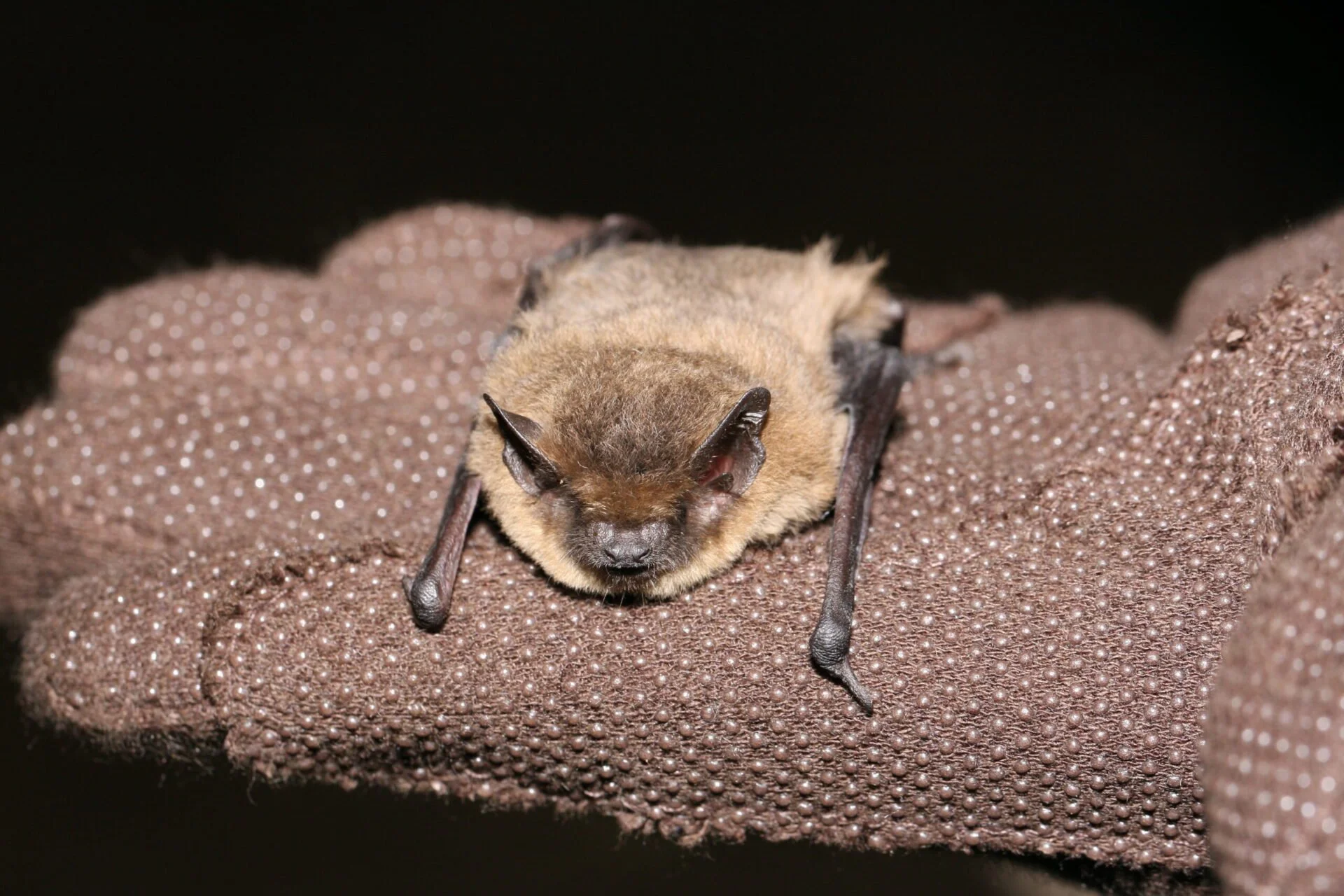

Common pipistrelle bat
Scientific name: Pipistrelle pipistrellus
Conservation status: UK Red List
GB: Least Concern
England: Least Concern
Scotland: Least Concern
Wales: Least Concern
Global: Least Concern
Habitat: All habitat types, ranging from grasslands to urban and suburban.
Description: Small bat with medium brown fur, distinctive rounded nose shape, and short, blunt ears.
Size: One of the smallest British bats.
Weight: 4-6g
Origin and distribution: Native. Present across the UK. Gaps in known distribution usually indicate a lack of survey effort.
Diet: Mainly feeds on flies.
General ecology: Found at across all habitat types and even at high altitudes and highly urban areas. Emerge early from roosts to feed. Summer roosts are mainly in buildings, including barns, churches, and domestic houses. Roost switching is common. Few winter roosts are known, however, the rare sites that have been found are underground or in buildings.
Breeding: Maternity colonies are large, sometimes including several hundred animals, and are noisy.
Conservation status: Registered as Least Concern on the IUCN Red List both globally and in Great Britain. Possible negative impacts on populations include collisions with wind turbines and vehicles, predation by cats, and changes to the structure and insulation of buildings. However, legislative protection does have a positive impact on these bats.
Identification
Like other pipistrelle species, the common pipistrelle has a rounded tragus and short, blunt ears. Their fur has little variation between their dorsal and ventral side and is of medium brown colour. It varies from the soprano pipistrelle bat by its smell, nostril shape, wind venation and echolocation call profile. They produce small droppings which may be confused with those of small Myotis bats.
Identification Definitions
Dorsal: back, or upper side of an animal
Tragus: piece of skin near the ear canal.
Venation: structure or pattern of veins.
Ventral: on or relating, to the animal’s underside.
Bat detector
Range: 45-76 kHz
Most energy: 47 kHz
Average duration: 5.6 ms
Confusion species
None. Distinguished reliably from other pipistrelle bats based on the peak frequency of their call.