

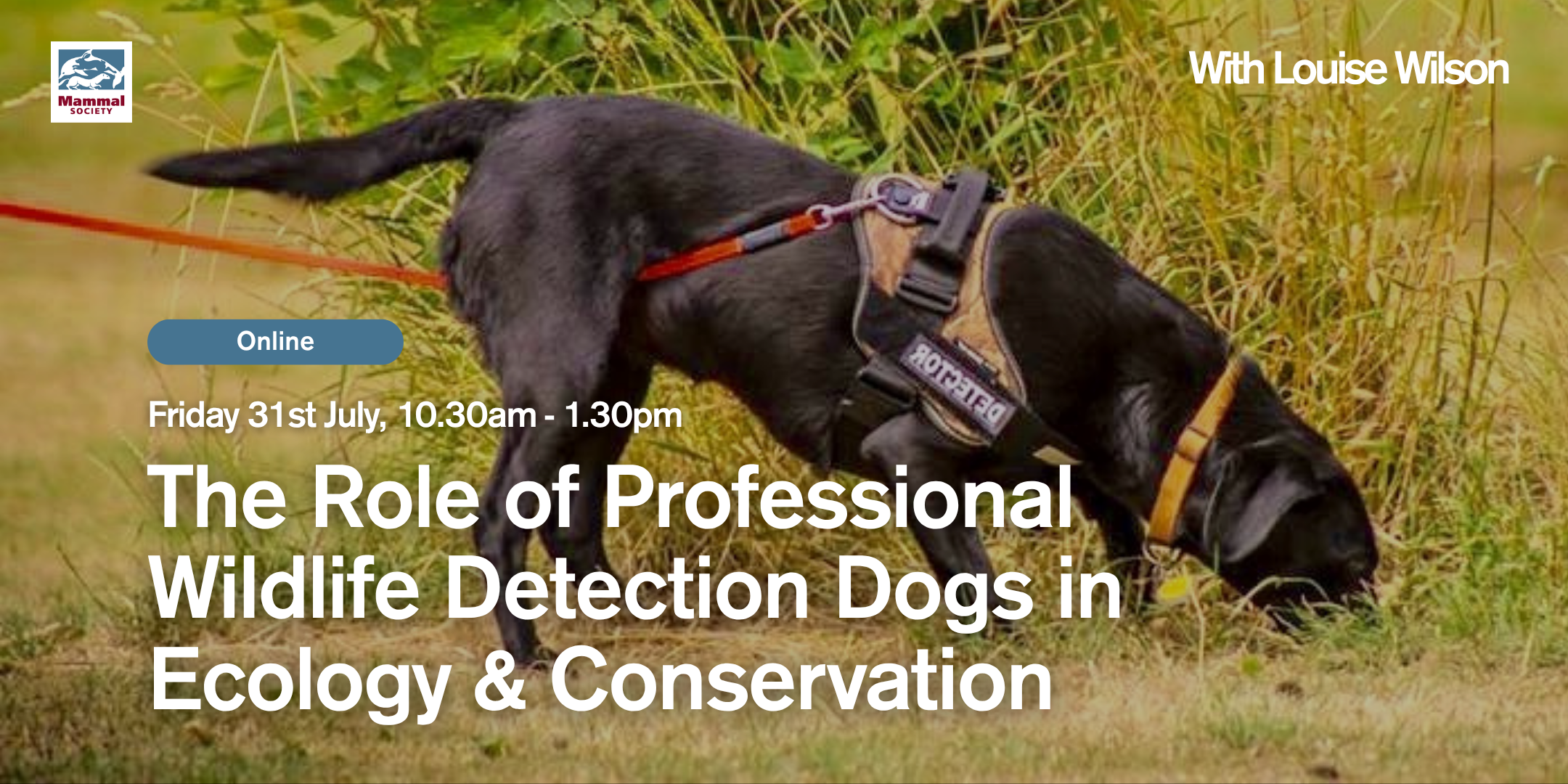
Discover the world of conservation detection dogs with Louise Wilson. History, ethics, and practical insights.
Join us for a comprehensive course on the invaluable role of detection dogs in ecology and conservation, led by Louise Wilson, Director of Conservation K9 Consultancy.
This online course will equip you with the knowledge and skills to effectively utilize conservation dog teams in ecological and conservation efforts. This is not a dog training course.
Louise will cover:
1. Background to Detection Dogs: The course delves into the history of the methodology of using detection dogs for conservation purposes.
2. Case Studies: Participants will learn from real-world case studies of successful conservation projects that have utilized detection dogs effectively.
3. Why Use Detection Dogs: This section explores the advantages and reasons for employing detection dogs in conservation efforts.
4. Conservation Dog Considerations: Various considerations related to the selection and training of conservation dogs are discussed, including physicality, breed, natural search style, predatory behavior, individual characteristics, likes, and dislikes.
5. Project Considerations: Detailed insights into project planning are provided, with a focus on the use of leads in conservation dog teams, safety, efficiency, aims, reasons, risks, limitations, expectations, logistics, and practicality.
6. Ethical Considerations: Ethical considerations, including smart and swat assessments, are addressed. The course also discusses the potential impact of bad practice and misuse.
7. Utilizing/Hiring Conservation Dog Teams: Guidance is provided on what to look for when utilizing or hiring conservation dog teams. The release of guidelines and discussions related to the ADDC (Association of Detection Dogs for Conservation) formation are covered.
8. Plenary and Q&A: The course concludes with a plenary session where attendees can ask questions and engage in discussions related to the training content.
The course will take place via zoom.
A CPD certificate will be available on completion of the course.
Entry level: This event can be attended by people who have little to no pre-existing knowledge of the topic and wish to develop an initial understanding.
Concession tickets: available for those in education or those on a low income/in receipt of universal credit.
Accessibility:
We are committed to ensuring the accessibility of our training courses. If you require accommodations or have any accessibility concerns, please contact training@themammalsociety.org in advance, and we will be happy to assist you.
For booking terms and conditions click here.
*Please note - If not enough delegates book on to this course it may be postponed with two weeks notice, this is because we are a small charity and need to make sure our events are viable.