

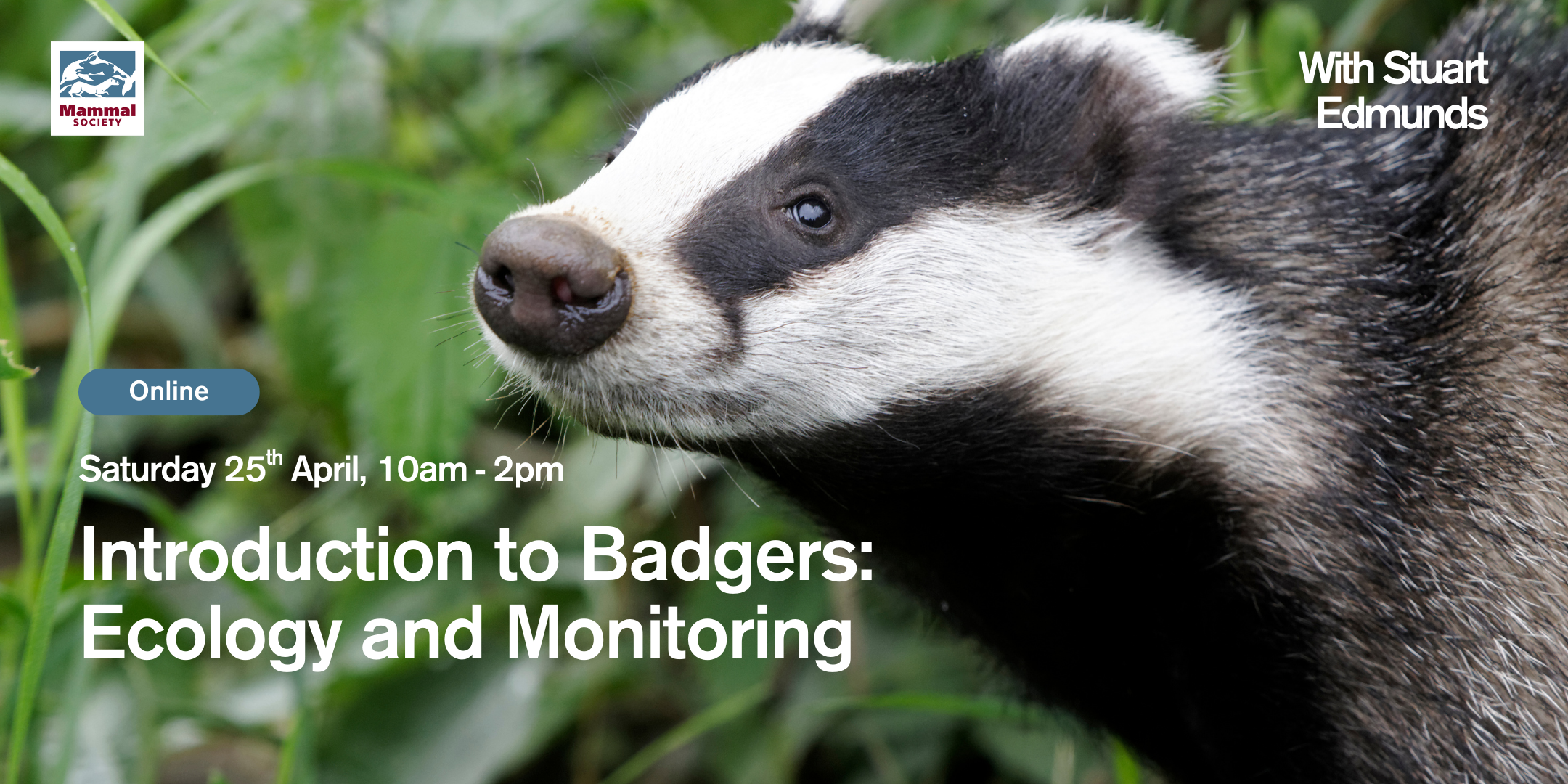
Behold the badger! Join expert Stuart Edmunds to learn all about one of our largest mustelids.
Learn all about the interesting world of badgers, from their behaviour and eating habits to habitat needs and conflict with humans. Badgers are one of our largest mustelids but they act very differently to stoats, weasels and martens.
This course will delve into badger ecology to enable people to understand the species better and use that knowledge to successfully monitor badgers themselves.
Delivered by Stuart Edmunds.
Stuart Edmunds is a self employed wildlife conservation specialist with a particular interest in carnivores. In 2009, he set up Shropshire Pine Marten Project with the intention of verifying or rejecting historic records of the mammal in the county. The project successfully recorded pine martens in 2015 and has been conducting further surveys across Shropshire ever since.
He has been chairman of Shropshire Mammal Group since 2013 and has worked for Natural England, The National Trust and Shropshire Wildlife Trust while running independent training on wildlife tracking and monitoring for universities and ecology consultancies. He was awarded a conservation award by International Fund for Animal Welfare in 2019.
A CPD certificate will be available on completion of the course.
Entry level: This event can be attended by people who have little to no pre-existing knowledge of the topic and wish to develop an initial understanding.
Concession tickets: available for those in education or those on a low income/in receipt of universal credit.
Accessibility:
We are committed to ensuring the accessibility of our training courses. If you require accommodations or have any accessibility concerns, please contact training@themammalsociety.org in advance, and we will be happy to assist you.
For booking terms and conditions click here.
Please note - As a small charity, we need to ensure our events are viable. Because of this, events may be postponed with two weeks' notice if not enough delegates book onto a course.