Reintroducing a native species to a landscape where it has disappeared can be one of the most powerful and rewarding tools in nature conservation. But moving animals or plants from one place to another can do more harm than good if the implications are not researched and addressed responsibly and with the backing of scientific expertise. There are no shortcuts to doing this properly.
Conservation translocations carry ecological, genetic, socio-economic animal welfare and biosecurity risks, which is why following best practice is essential. That’s why the IUCN, and the UK and Irish Governments’ current guidance emphasises the need for evidence-based planning, risk assessment, appropriate sourcing, legal permissions, monitoring and long-term evaluation.
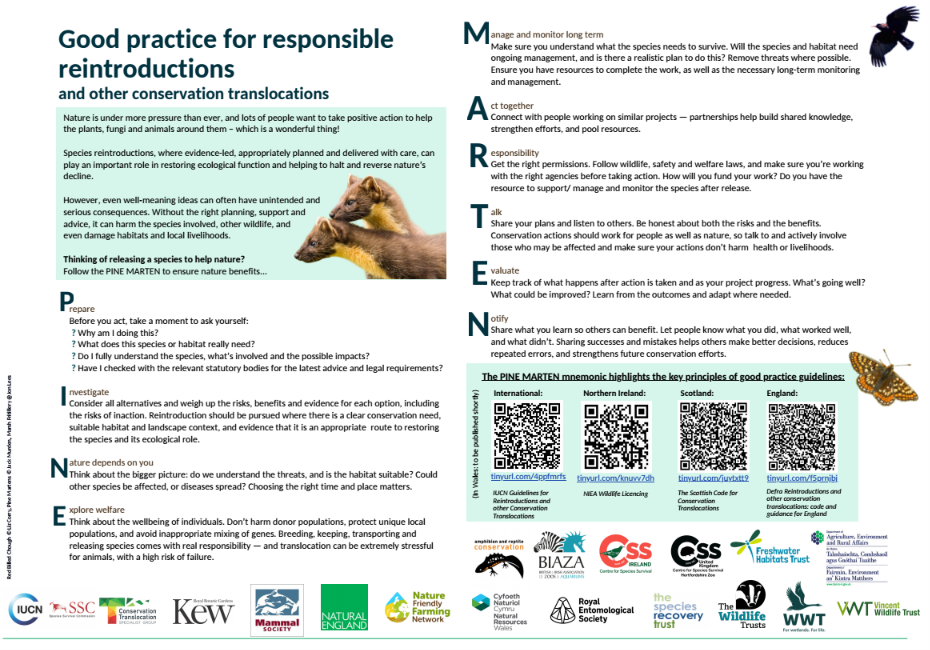
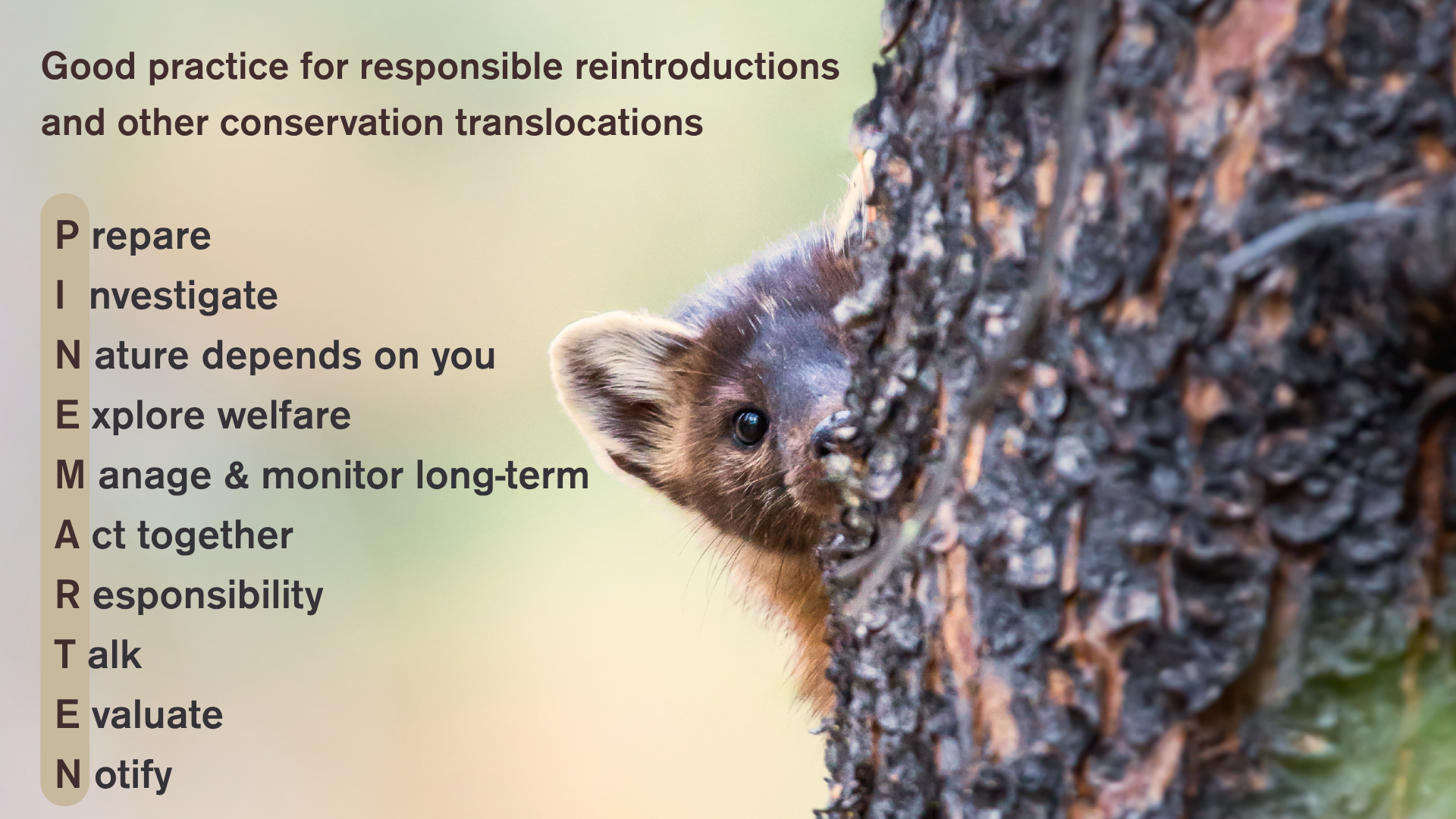
The Mammal Society has worked with BIAZA’s Reintroduction Advisory Group and a number of other leading environmental NGOs and government authorities, to set down some principles for responsible translocations, set out in this printable poster format guide using the mnemonic PINE MARTEN.