Mammal Society Press Release 07/05/2026
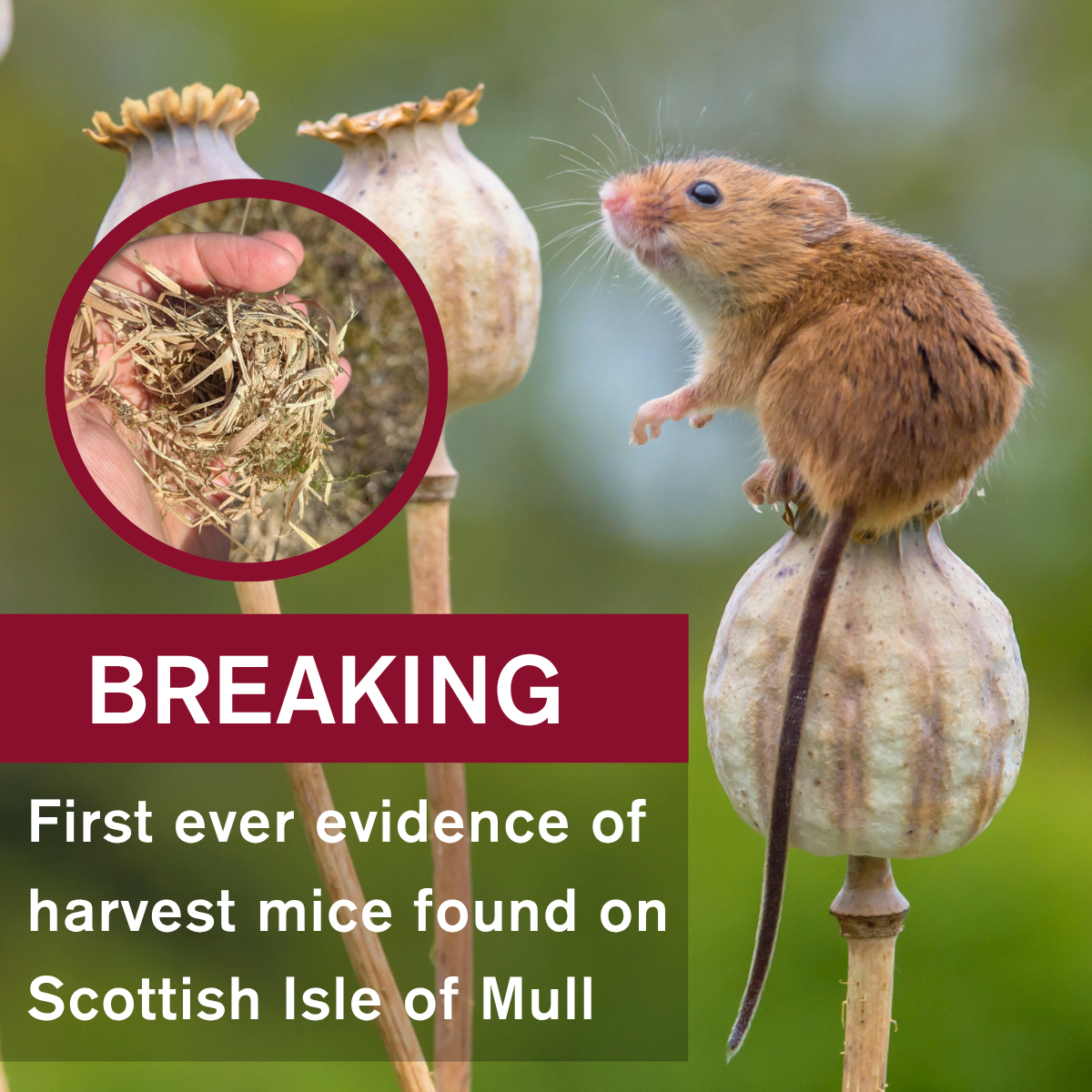
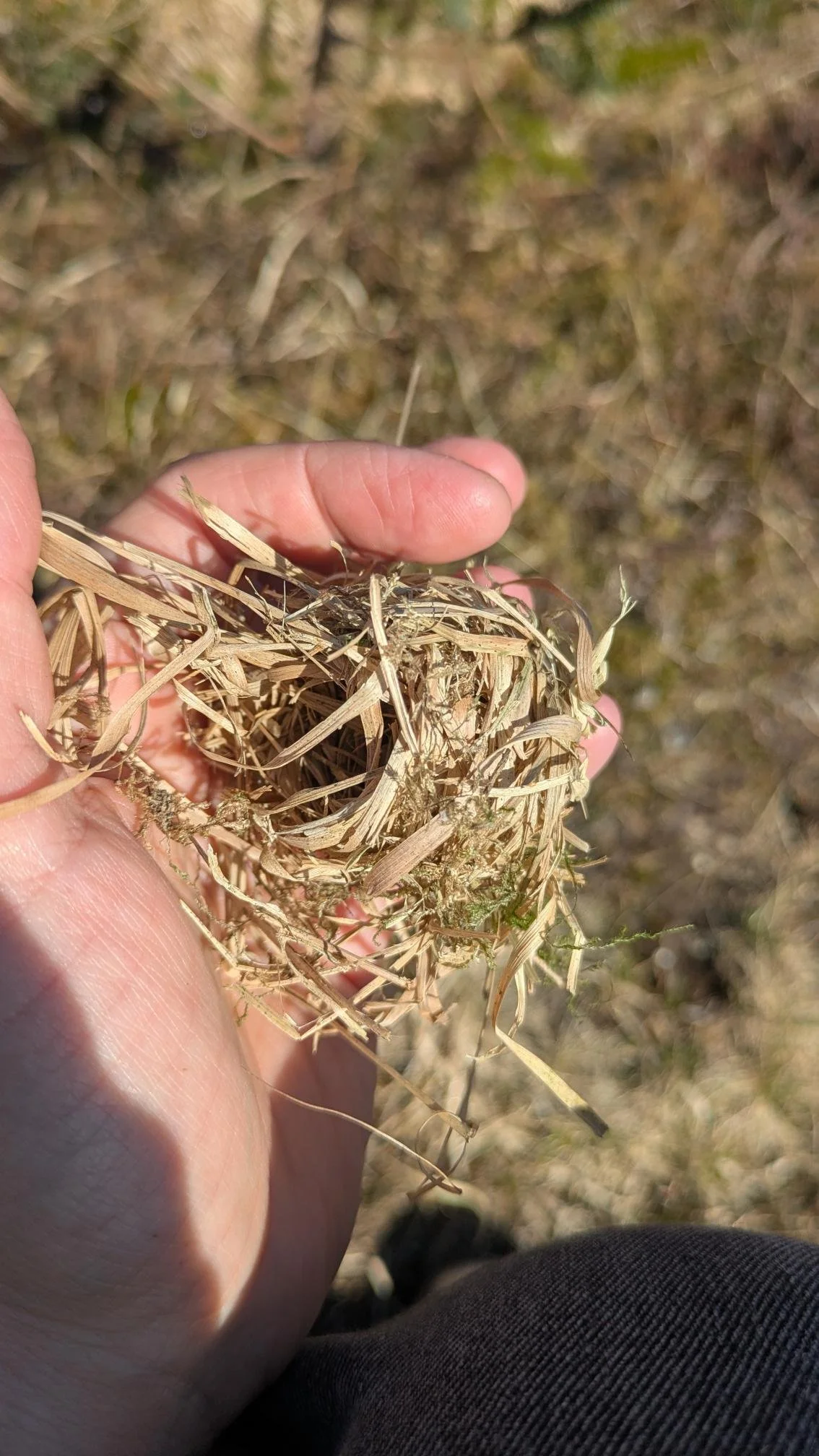
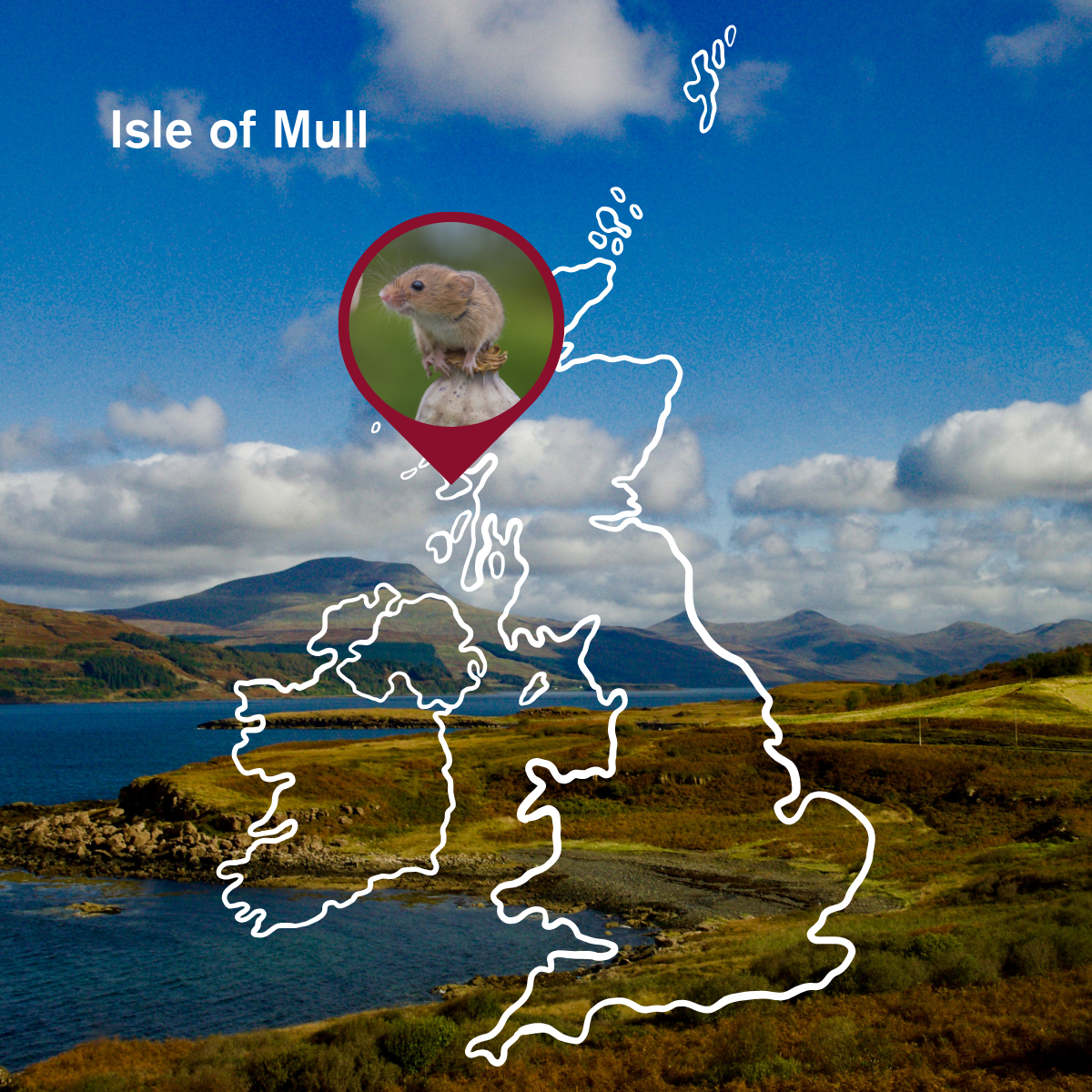
In April 2026 an eagle-eyed Mammal Society volunteer, Anna Martlew, spotted an abandoned harvest mouse nest while walking on the West coast of the Scottish Isle of Mull.
This is the first ever record of this species on any Scottish island. The harvest mouse (Micromys minutus) is Britain’s smallest native rodent, and it is known to be present across much of England and Wales, where it is considered to be an indicator of healthy ecosystems. Though it was historically assumed that harvest mice were not present further North than Southern Scotland, surveying in recent years has revealed unexpected populations present in the Highlands. The species is not thought to be present on the island of Ireland, and was thought to be absent from all Scottish islands until this discovery.
Anna Martlew has extensive experience of surveying for harvest mouse nests, having participated for several years in the Mammal Society’s annual Volunteer Harvest Mouse Survey as a member of Cornwall Mammal Group. She has already been responsible for discovering evidence of harvest mouse presence in the Highlands of Scotland, when she found a nest in Glenfeshie in the Cairngorms in 2022.
Anna gave this account of her discovery: “This spring I visited the Isle of Mull, staying in a remote cabin near Fionnphort. I watched barn owls hunting at dusk and although the chances seemed very remote, I wondered if harvest mice were on the menu. The next day I went and looked in some nearby Molinia tussocks and sure enough I soon found an abandoned nest from the previous summer, raised off the boggy ground but safely tucked under the top layer. I left the Isle of Mull heading north on the mainland, stopping off for a break on the Morvern peninsula near Liddesdale. I found a smaller day nest in some Molinia next to a layby. On a previous trip to Scotland I found a nest in the Cairngorms. It is my belief that these animals, who are so rarely seen but leave behind these distinctive nests, are widespread but under-recorded. By raising awareness and sharing survey skills we can improve our knowledge of their distribution, especially in more remote and potentially challenging environments such as islands and high-altitude areas.”
Accurate data on where harvest mice are present is vitally important to inform conservationists and land managers looking to make informed decisions that support nature recovery.
Due to their small size and elusive nature, harvest mice are difficult to spot in the wild. The best way to determine if they are present is therefore to look for the spherical nests made of woven grass in which female harvest mice give birth to their young during the Summer months. By October these nests are abandoned and can be found through a careful search of potential habitat (tussocky fields, reed beds and hedgerows) in the Winter and early Spring, without fear of disturbing harvest mice families.
Anna’s find was confirmed by Derek Crawley, a verifier of mammal records on iRecord (a tool for collecting records of wildlife sightings) and Vice Chair of the Mammal Society Council. He noted key identifying features such as splits in the grass blades. Harvest mice slice grass blades lengthwise as they weave the tennis ball sized nest in which they will give birth to up to seven young.
The status of harvest mice on the Isle of Mull requires further research following this find. It is possible that harvest mice have always been present in small numbers but never recorded due to not having been spotted by wildlife surveyors, and no one having specifically searched for evidence of the species. However it is also possible that harvest mice have recently been introduced to Mull by accident (eg as stowaways in a delivery of hay from the mainland), or deliberately by someone who breeds them in captivity. Introducing animals into an ecosystem is something that should only be undertaken after extensive research to ascertain that it would have no negative impact, and island ecosystems can be especially vulnerable to such changes. Releases of animals to the wild outside their native range in Scotland is illegal without a ‘non-native species licence’ from NatureScot.
The Mammal Society will be focusing survey effort on Mull in the next survey season starting October 2026, in order to gather more insight into the current status of the species, and potentially to shed light on the circumstances that led to this sighting.
Whatever the outcome of this further research, this find serves as a reminder that assumptions about wildlife cannot be relied upon, and should always be tested. It is hoped that this discovery will inspire careful surveying in new areas of the Highlands and on other Scottish islands to check in case this charismatic small mammal has more surprises in store for us.
Derek Crawley, Mammal Society Vice Chair of Council & Mammal Verifier on iRecord said: “Finding signs of harvest mice takes some expertise, as their nest blend into the surrounding vegetation. In recent years the Mammal Society has championed the search through its annual volunteer-led survey for harvest mice nests, and have been finding evidence of presence of the species across a wide area in Scotland, but this is the first record on one of the islands. We need to find out just how widespread they are on Mull, and this will be a focus for the next survey season starting in October 2026.”
NatureScot Mammal Specialist, Rob Raynor said: “Harvest mice are critically endangered in Scotland and so this discovery on Mull is very exciting for the species. It’s important we build up an accurate picture of how this rare and tiny creature is faring, so we encourage people get involved with this year’s national harvest mouse survey in October.”
Afrika Priestley, Mammal Society’s Data & Research Officer, said: “This discovery shows the importance of people being tuned in to the signs of wildlife in the landscape around them, and submitting records of the wildlife they encounter to help scientists protect and restore habitats and species. It’s easy, fun and rewarding to do, and there’s training and resources available from the Mammal Society and other nature organisations to help you spot the clues in your local landscape.”
Information about harvest mice
Biology: Covered by sandy-golden/russet fur, harvest mice have a blunt nose, small eyes, and small hairy ears. They are much smaller than our other mice species and are the only mammal in Britain to sport a prehensile tail, which means it can grasp or hold objects, such as grass stalks.
Diet: Omnivorous. Seeds, berries, insects, moss, roots, fungi, and cereal heads.
Habitat: Tall grass and other vegetation in grasslands, hedgerows, field margins, road verges, reed beds and ditches.
Size: Weight: 4-6g Size: 50-70mm long with a tail of 60mm.
Lifecycle: Live up to 18 months. Breed from late May to October, having 2-3 litters a year, which are weaned after about two weeks.
Conservation concerns: Harvest mice are classified as ‘Critical’ in Scotland, ‘Vulnerable’ in Wales, and ‘Near Threatened’ in Great Britain overall. Harvest mice are listed as a BAP (Biodiversity Action Plan) species because they are thought to have become much scarcer in recent years, and they require conservation plans to reverse the decline.
More information about harvest mice
More information about the Mammal Society’s National Harvest Mouse Survey and how to get involved.
A range of images of harvest mice, nests and surveyors at work released for press specifically for illustrating a media article on this story can be accessed here: Harvest Mouse Mull 2026
Photos should be credited as follows:
© <the photographer’s name (in the filename)> / The Mammal Society