

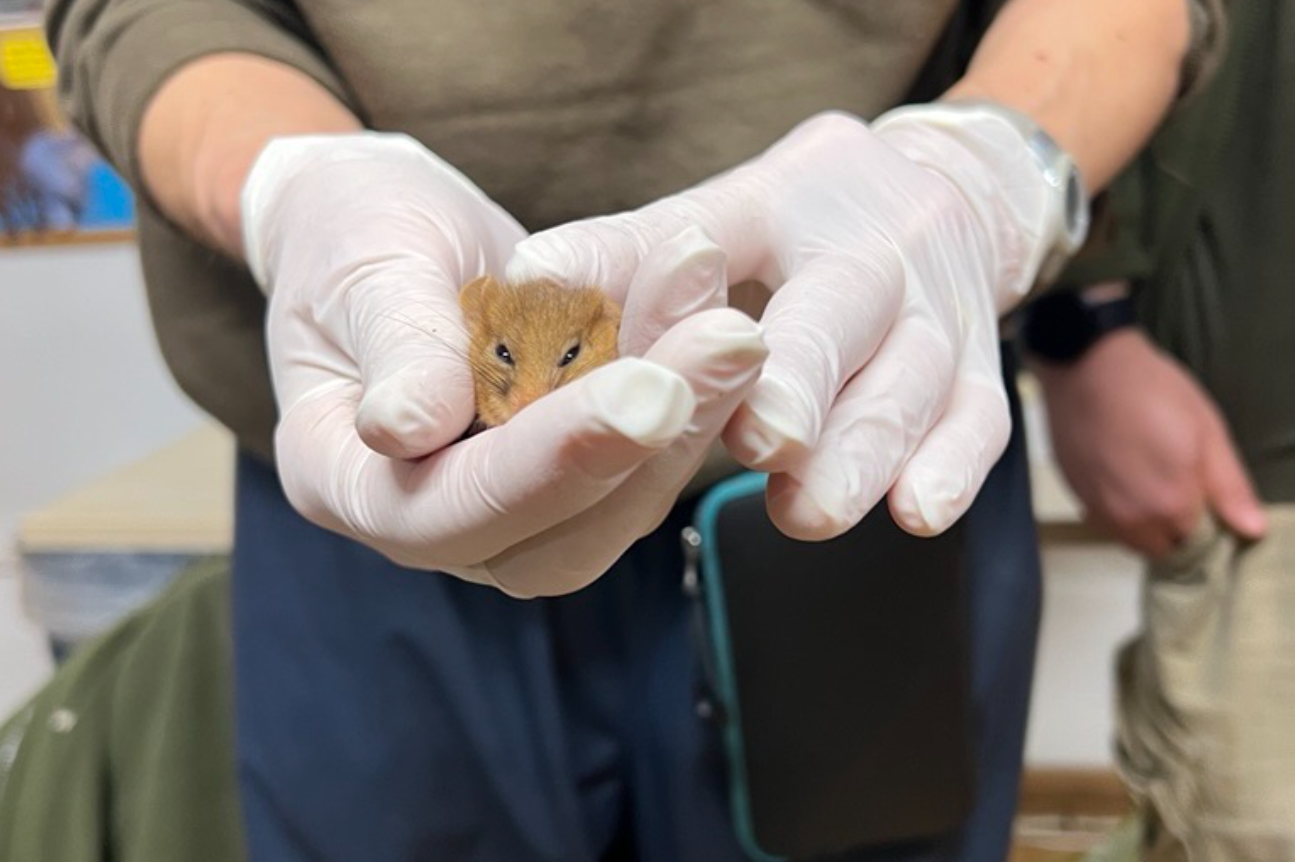
Small Mammal Trapping by Hope Nothhelfer
Mice, voles and shrews may be our smallest mammals, but they play a vital role in maintaining healthy and balanced wild, agricultural and urban landscapes. They cycle nutrients and aerate soil, leading to improved soil quality, better drainage and the creation of suitable sites for seed germination. They spread seeds, fungal spores and pollen, and keep populations of insects in balance. However small mammals are under-monitored and overlooked in land management strategies, and they now face pressure from a range of threats.
The Mammal Society has formed a Small Mammal Research Working Group - reporting to the Science Advisory Committee (SAC) - to define and deliver research into populations of our smallest mammals across the varied habitats of the British Isles. This group will identify knowledge gaps that currently obstruct conservation strategies and prevent the role of small mammals being fully considered in policy and practice. The Mammal Society will seek to encourage, support and where appropriate lead research into these areas.
Potential areas of research are still being defined but include:
Small mammal population abundance and composition in different landscapes
The relationship between small mammals and soil health
The optimal habitat features that maximise healthy and sustainable populations of small mammals
The relationship between small mammal abundance and predator behaviour (see Project Peewit below)
The use of bio-acoustic monitoring to reveal species presence and population dynamics in habitats
Small Mammal Research Working Group
Afrika Priestley, Data & Research Officer, Mammal Society
Dr Amy Louise Hall, SAC
Dr Dave Groves, Cornwall Mammal Group
Professor Dez Delahay, Chair of SAC
Dr Gavin Wilson, RSK Biocensus
Hannah Le Morvan, University of Exeter
Hope Nothhelfer, Mammal Society
Matt Larsen-Daw, CEO, Mammal Society
Michelle Henley, SAC
Dr Richard Yarnell, SAC
Dr Robyn Grant, SAC
Ross Clifton, Data & Research Officer, Mammal Society
Dr Stuart Newson, BTO
Current Research Projects
Project Peewit
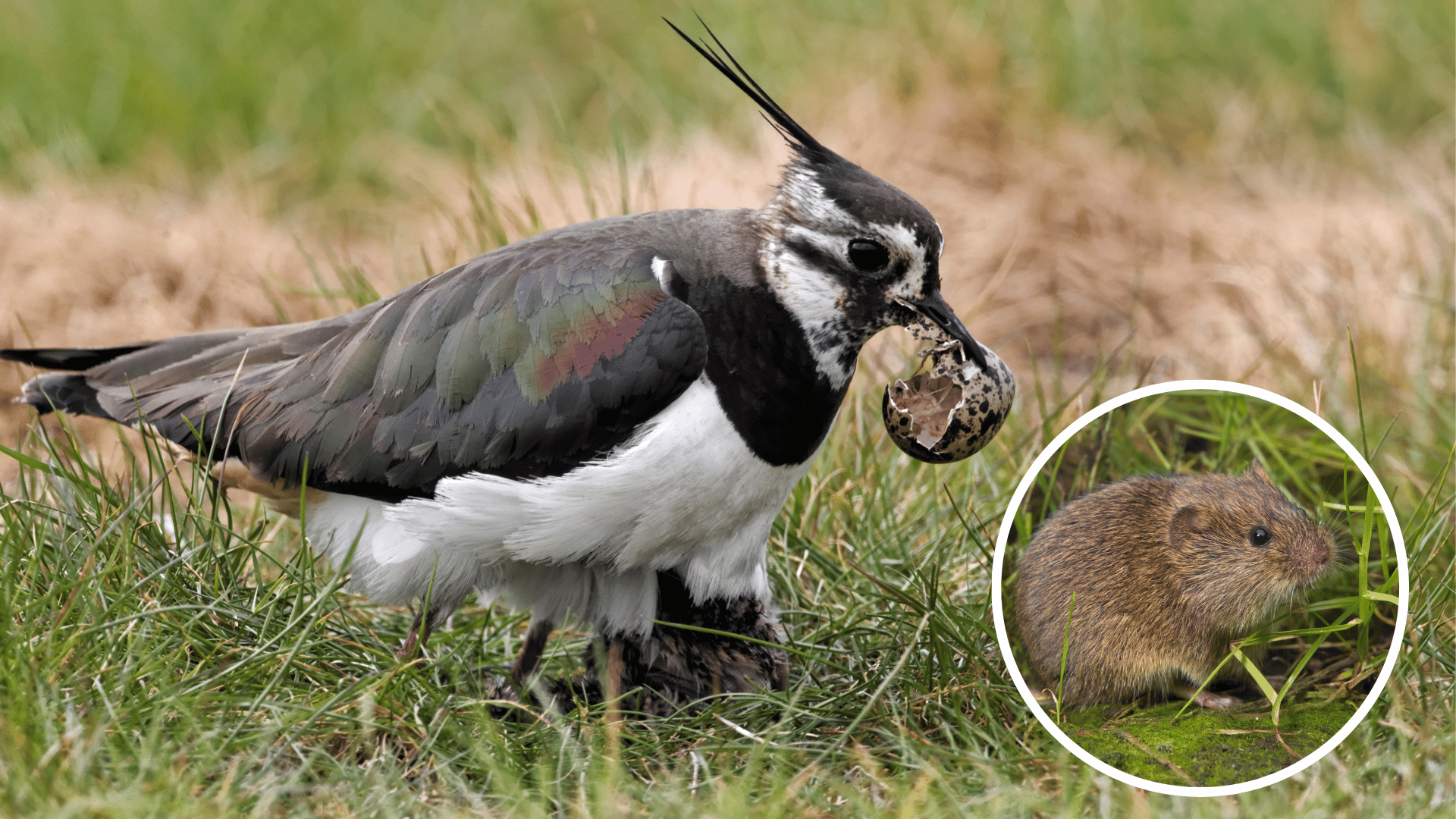
Northern Lapwing (Vanellus vanellus) female with young on nest, picking up eggshell. Photo: Mike Lane / Getty
Inset: Field vole (Microtus agrestis)
The Mammal Society is pleased to support Project Peewit, a collaborative initiative led by Wiltshire Wildlife Trust and the Wiltshire and Swindon Biological Records Centre (WSBRC). The project aims to investigate the distribution of breeding lapwings (Vanellus vanellus) in Wiltshire and better understand the pressures they face, particularly the potential impact of small mammal predators.
Project Peewit uses field surveys and new technologies to identify lapwing nesting sites and assess their vulnerability. One area of exploration is whether bioacoustics can be used to monitor predator activity and build a more complete picture of the pressures affecting lapwing breeding success.
Recognising that small mammals play a role in broader ecosystem health, The Mammal Society is keen to support research that explores their ecological interactions. We have connected the project team with local mammal experts and offered to loan bioacoustics equipment and camera traps, where available, to support their pilot work. If successful, this could open the door to a more widespread and scalable approach to monitoring predator presence across lapwing breeding sites.
We are particularly excited that small mammal abundance is being considered alongside predator activity in this study. As an organisation committed to evidence-based conservation, we believe projects like this can offer valuable insights that support conservation efforts across taxa.
This kind of initiative aligns closely with our new research priorities, with small mammals forming a key focus of The Mammal Society’s 2025–2030 Research Strategy. As outlined in the strategy, we are prioritising research that improves understanding of small mammals' roles in ecosystem health and resilience, particularly projects that test novel monitoring methods like bioacoustics. By supporting initiatives like Project Peewit, we aim to address data deficiencies, encourage innovative methodologies, and strengthen the evidence base for mammal conservation across the UK.