Contributing Authors
Louise Wilson (Conservation K9 Consultancy)
Nikki Glover (Amphibian and Reptile Detection Dogs)
Willow West (Conservation K9 Consultancy)
At the time of writing, the use of wildlife detection dogs as a survey tool within the UK is in its infancy. A growing interest in the application of this technique suggests there is likely to be a rapid growth in the use of wildlife detection dogs as survey tools (Grimm-Seyfarth 2021 & Beebe et al 2016). Wildlife detection is complex and can be influenced by a multitude of factors. Therefore, inadequately trained detection dog teams can be a potential threat to wildlife as well as demote the effectiveness of this tool. The following guidelines aim to maintain high operating standards within this field.
This document has been produced to assist:
• Those wanting to become wildlife detection dog handlers and trainers;
• Companies/Researchers/Non-Government Organisations looking to procure wildlife detection dog teams;
• Governing bodies tasked with reviewing licence applications to train wildlife detection dogs to detect protected species for the purpose of research, conservation and ecological surveys;
• Local planning authorities reviewing planning applications that have used wildlife detection dogs as survey tools and;
• Researchers planning and reviewing data derived from wildlife detection dog teams.
These guidelines do not aim to either override or replace knowledge and experience. The guidelines do not provide a step-by-step guide to become a wildlife detection dog handler, nor do they provide guidance on training a wildlife detection dog. Wildlife detection dog teams require individual training from specialist wildlife detection dog trainers who have operational experience within this field.
Contributing Authors
Louise Wilson (Conservation K9 Consultancy)
Nikki Glover (Amphibian and Reptile Detection Dogs)
Willow West (Conservation K9 Consultancy)
At the time of writing, the use of wildlife detection dogs as a survey tool within the UK is in its infancy. A growing interest in the application of this technique suggests there is likely to be a rapid growth in the use of wildlife detection dogs as survey tools (Grimm-Seyfarth 2021 & Beebe et al 2016). Wildlife detection is complex and can be influenced by a multitude of factors. Therefore, inadequately trained detection dog teams can be a potential threat to wildlife as well as demote the effectiveness of this tool. The following guidelines aim to maintain high operating standards within this field.
This document has been produced to assist:
• Those wanting to become wildlife detection dog handlers and trainers;
• Companies/Researchers/Non-Government Organisations looking to procure wildlife detection dog teams;
• Governing bodies tasked with reviewing licence applications to train wildlife detection dogs to detect protected species for the purpose of research, conservation and ecological surveys;
• Local planning authorities reviewing planning applications that have used wildlife detection dogs as survey tools and;
• Researchers planning and reviewing data derived from wildlife detection dog teams.
These guidelines do not aim to either override or replace knowledge and experience. The guidelines do not provide a step-by-step guide to become a wildlife detection dog handler, nor do they provide guidance on training a wildlife detection dog. Wildlife detection dog teams require individual training from specialist wildlife detection dog trainers who have operational experience within this field.

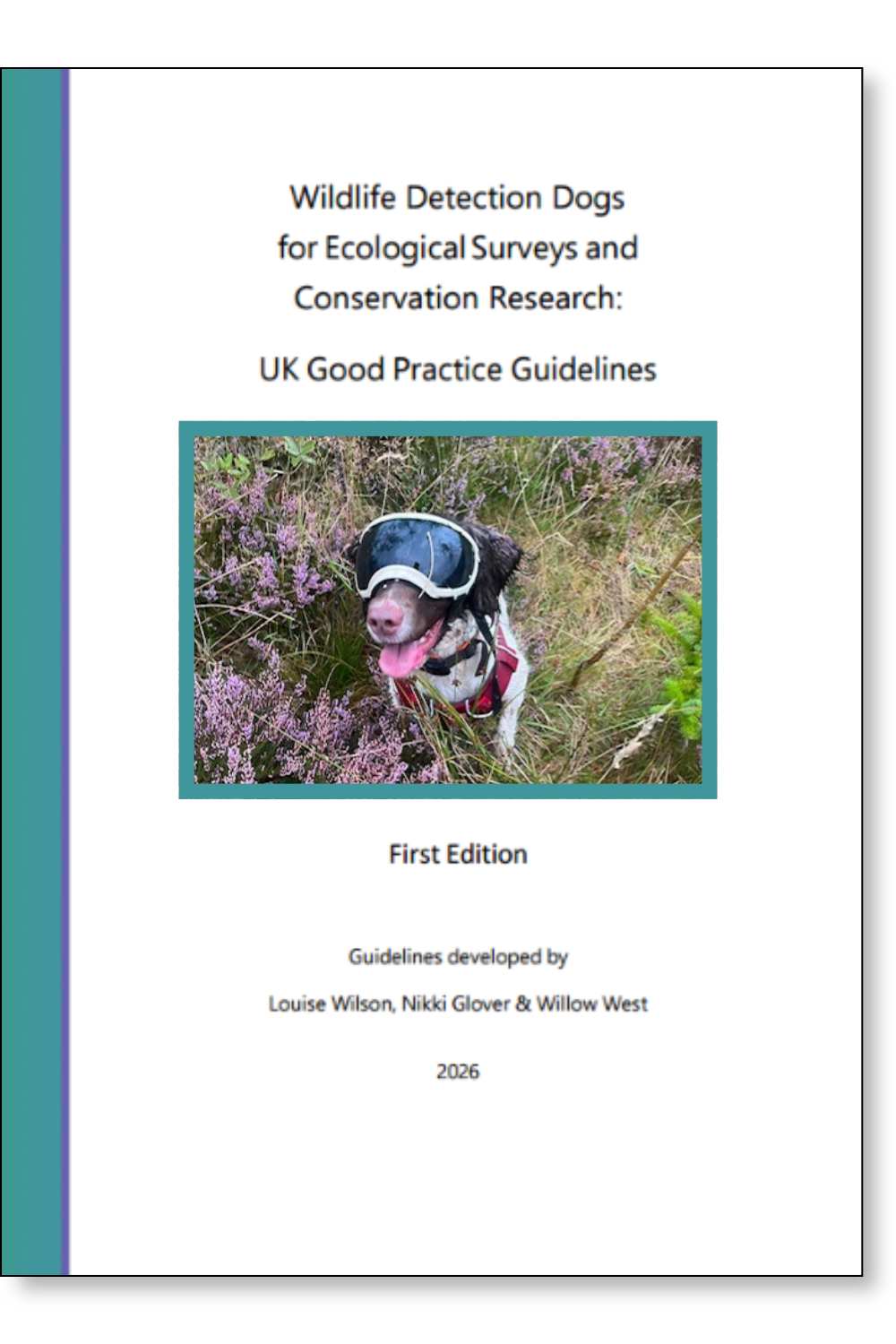 Image 1 of 1