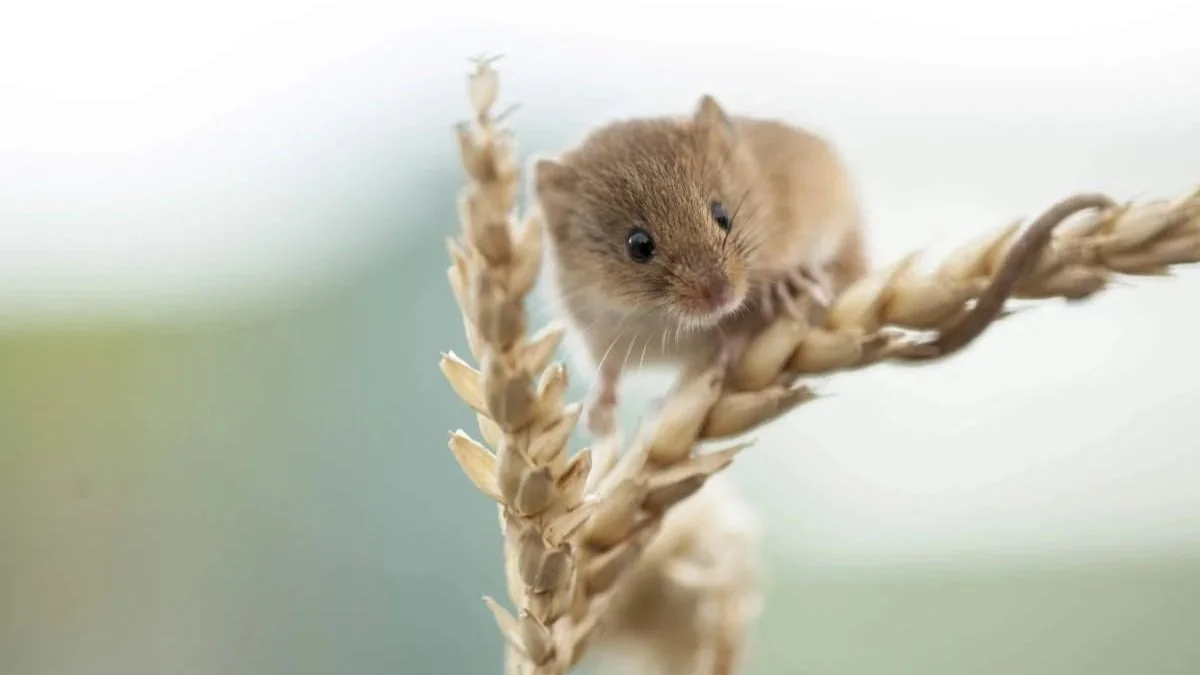
Photo credit: Dulcie Fairweather
Monday 19th October is National Harvest Mouse Day – a chance to celebrate this well-loved British native mammal.
To mark this day, the Mammal Society is calling for volunteers to do their bit for this iconic species and support in the largest ever survey of harvest mice across Britain.
The annual survey season for the Mammal Society’s National Harvest Mouse Survey runs from October-March.
Results will help scientists assess the impact of the 2026 heatwaves on this species and the wider ecosystem.
A lack of data on small mammals such as mice can mean that the impact of climate change on the species is not known until it is too late.
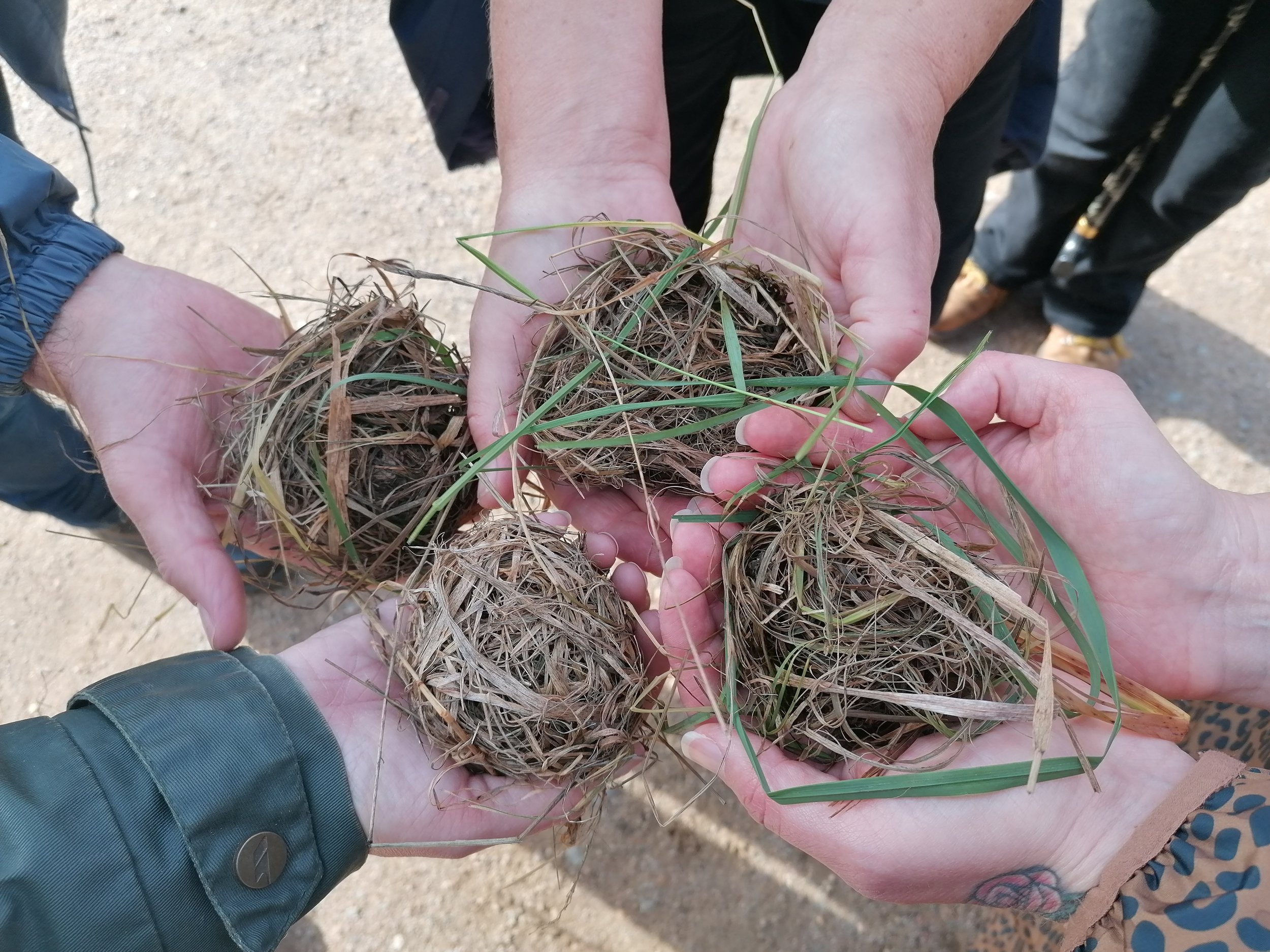
No expertise is needed to take part – volunteers search patches of long grass and hedgerows for distinctive spherical nests woven from grass, and record their findings on a free app.
Surveyors will also help the Mammal Society build a model that can predict harvest mice presence to improve understanding of the status of the population, and to inform land management strategies and policies that safeguard Britain’s declining mammals.
With six heatwaves from May to August, and temperatures as high as 38.2C in parts of Britain, the summer of 2026 was the UK’s hottest on record. The impact on British wildlife is not yet understood, but with such seasonal extremes likely to become more common it is more important than ever that we build a clear picture of the impact of such extended periods of hot weather on species and ecosystems.
There are concerns especially for small mammals, such as the UK’s smallest rodent, the harvest mouse, which can grow up to 7cm and weighs about the same as a single sheet of A4 paper. While most of our small mammals (voles, mice and shrews) seek refuge from extreme heat (and predators) in underground burrows, the harvest mouse stays above ground and weaves spherical nests from living grass steps in which to sleep and breed.
Small mammals are often especially affected by drought and extended hot spells, and a much larger-than-average number of dead shrews and moles were found by Mammal Society volunteers in the summer months of this year, having expired from heat exhaustion and/or dehydration. Harvest mice could be especially vulnerable to heat since they sleep and breed above ground. The heat over summer has caused grasses and vegetation to dry and die back early, which could greatly impact the nesting behaviour and reproduction of harvest mice.
A sudden decline in harvest mouse populations could have serious repercussions for the wider ecosystem. Harvest mice play an important role as prey species for larger predators including birds of prey, stoats, weasels and foxes. They also play an important role regulating invertebrate populations, dispersing seeds and cycling nutrients to improve soil health.
The Mammal Society is calling for volunteers to get out between now and March 2027 to survey for harvest mouse nests in their area, and help scientists study and protect this important species. Volunteers of all ages are welcome to take part. Searching for the nests in fields and hedgerows is fun and easy. Training and instructions are available from the Mammal Society. Anyone interested in taking part can find out more at mammal.org.uk/current-research/national-harvest-mouse-survey
Background
The harvest mouse (Micromys minutus) is Britain’s smallest rodent – and the only mammal in the UK to have a prehensile tail which acts as an extra limb for grasping objects. Harvest mice are mainly nocturnal and eat seeds, fruit and invertebrates. Small mammals are often overlooked for their role in ecosystem health, but contribute to improving and maintaining soil quality, as well as dispersing seeds, controlling insect populations, and providing vital prey for raptors and larger mammals.
More info: mammal.org.uk/british-mammals/harvest-mouse
Accurate data on the size and range of harvest mouse populations in Britain has been lacking in the past, making the status of this unique rodent difficult to assess. This lack of data is due to them being difficult to survey due to their small size and localised populations. They favour areas of long grass and reeds, especially alongside hedgerows, and such habitat tends to exist in small and fragmented pockets at the edge of agricultural fields, along roadside verges, and near rivers and wetland areas. Identifying and accessing these potential pockets of habitat can be difficult and time consuming.
For this reason, the Mammal Society initiated the National Harvest Mouse Survey in 2021. Volunteers across Britain go out to local sites that might support harvest mice between October and March, and check in grass tussocks, hedgerows and reed beds for the distinctive tennis ball sized breeding nests. By October most breeding nests, in which litters of 3-8 pups are born and weaned in the summer months, are empty, but remain attached to the grass stems around 30cm from the ground. Finding nests on a site is evidence of presence, and the number of nests give some indication of the size of that year’s population. After 5 years of surveys, results suggest that harvest mice are present in more sites and over a larger range than had previously been assumed. This insight is important as it can inform land management decisions – especially on farms where simple changes to the timing and methods of hedge trimming and field edge strimming can make a big difference to the survival rate of harvest mice. It can also help scientists to understand what this species needs in order to thrive, and what can adversely affect them. Conservation of this important species relies on better understanding of their needs and current status.
This year, the Mammal Society is calling for the greatest volunteer survey effort ever to assess whether harvest mice have been affected by the extreme weather, by surveying sites previously shown to be home to harvest mice to check if they are still there, and how their numbers and behaviour may differ from previous years.
This year the Mammal Society is also asking volunteer surveyors to record details of the habitats they survey – such as the height and density of vegetation. This will help define the conditions harvest mice need, and allow the Mammal Society to build a map of Britain based on a ‘Species Distribution Model’ that indicates the likelihood of harvest mice being present even in areas that have not been surveyed. When completed and tested, this map will be a huge help for assessing population and considering harvest mice in site and landscape scale land management plans. The more data collected to inform and test the model, the more accurate it will be. As well as informing wildlife-friendly land management, this model can ensure any attempt to establish new populations of harvest mice where they are found to be absent is based on good data. With a growing interest in captive breeding of harvest mice for reintroductions, it is becoming more crucial to know where there are already populations of harvest mice, and whether a habitat is suitable for released harvest mice to survive and thrive without unbalancing the existing ecosystem. Captive-breeding for release of any wild animals introduces a number of risks for the welfare of animals and the health of ecosystems, and should only be undertaken after careful consideration of these risks, and by those with the expertise needed to do it responsibly.
Quotes
“Work to protect and restore nature depends on good data that reveals what is happening in our ecosystems. Every volunteer who dons their wellies and gets out in a field to search for harvest mouse nests is a conservation hero. Just as with the important role of the smallest mammals in our ecosystems, lots of small actions add up to big impact.”
Matt Larsen-Daw, CEO of the Mammal Society
“The alternative to citizen science is structured surveys conducted by researchers, and there’s one major problem with that – there are not nearly enough researchers! Interested, curious, keen citizens? That’s a different story.”
Beatriz Sousa, Science Projects Officer, The Mammal Society
“Species distribution models (SDMs) are machine learning mathematical models that attempt to predict which geographical areas across Britain represent suitable habitat for the Harvest Mouse. You can think of environmental variables like pasta sheets in a lasagna, where each variable is a sheet. The model places sheets of various recorded environmental data (eg average summer temperature) over a map of the UK. The data on each sheet is looked at for sites where harvest mice are present, and those where they are not. From that information, the model can start to predict where harvest mice are likely to live.”
Beatriz Sousa, Science Projects Officer, The Mammal Society
“When we finally have the habitat suitability map, we can better guide surveyors, so that we can get data in areas where predicted suitability is high but that haven’t yet been surveyed.”
Beatriz Sousa, Science Projects Officer, The Mammal Society
Notes to editors
For more quotes and details, or images of harvest mice and surveyors in action, please contact Beatriz Souza, Data & Research Officer: bea@mammal.org.uk or Taylor Bi, communications Intern, taylor@mammal.org.uk
Mammal Society representatives and/or local volunteer surveyors (including young surveyors) are available for interview on request.
More information about the survey can be found on the Mammal society website, including a field guide for surveying and recorded training webinar:
· Harvest mouse — Mammal Society
· National Harvest Mouse Survey — Mammal Society
· Getting Involved with the National Harvest Mouse Survey
· Join a Local Group to Survey for Harvest Mice — Mammal Society
National Harvest Mouse Day will be celebrated on October 19th 2026
The Mammal Society was founded in 1954 and has been leading on research into mammals, raising awareness of the issues they face, sharing scientific research and providing training and guidance for professional ecologists and conservation volunteers to ensure a bright future for native British mammals. www.mammal.org.uk
The public can get involved with the Mammal Society’s work by joining as a member, and by using the free Mammal Mapper app and make their mammal spots valuable to scientists.
Photos
A range of images of harvest mice, nests and surveyors at work released for press specifically for illustrating an article on this story can be accessed here: Sharepoint link