

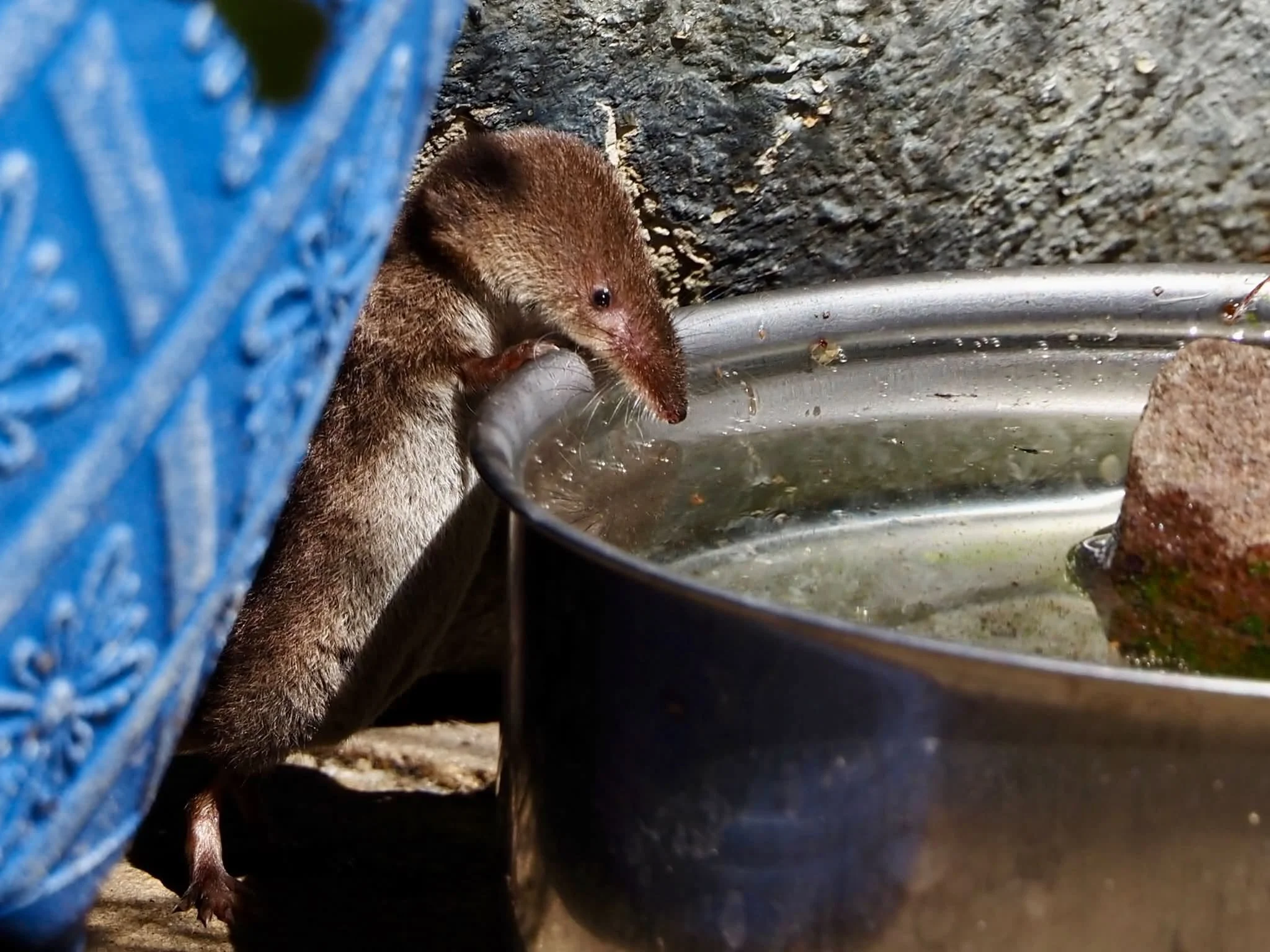
Photo credit: Jenny Beaney
The UK has suffered extreme heatwaves this summer, with 2026 being the first year on record to reach 35 degrees C in May, June, and July. As our summers continue to heat up every year due to climate change, it isn’t just people that are struggling with the high heat, but also our most overlooked wildlife, such as our small mammals.
Shrews, voles, and mice all have very high metabolisms; shrews, for example, have to find food every 2-3 hours to stay alive. This means they also cannot cope well with high temperatures and become easily dehydrated. With the rise of heatwaves, these small mammals will die trying to find water and food, as vegetation drying up leads to a lack of insects, which means they have to spend more time foraging out in the fierce sun.
Across the country, findings of mass deaths of small mammals is becoming more common from mammal recorders. One recorder regularly reports finding 5-10 dead shrews a day throughout the month of July on a tarmac footpath in Stirlingshire. These summer mass casualties are occurring during peak breeding season for these species, when small mammal species boost their populations ahead of a winter decline. This means the impact of heatwaves could have significant ripple effects in the ecosystem, with implications that will be felt months and even years after the initial die-off.
Small mammals, such as shrews and voles, are often overlooked yet are incredibly important for the health of our ecosystems. They cycle nutrients and aerate soil, leading to improved soil quality, better drainage and the creation of suitable sites for seed germination. They also spread seeds, fungal spores and pollen, and keep populations of insects in balance. Finally, they are an important prey species for many predators, such as birds of prey and foxes.
In general, small mammal numbers have been decreasing due to a rise in intensive farming and loss of habitat, though the scale of the loss remains unknown. This is why the Mammal Society organizes citizen science monitoring to galvanize the public to record both live and dead small mammals they find on the free Mammal Mapper app, or through participating in more specific citizen science surveys like the National Harvest Mouse Survey and the Searching for Shrews owl pellet dissection project. These schemes help the Mammal Society to monitor the impact of heatwaves and other threats on the populations of our small mammals.
To help small mammals survive the summer heatwaves, the Mammal Society recommends leaving out water for small mammals as well as recording any sightings of small mammals on the Mammal Mapper app.
“Our smallest mammals are, collectively, among the most important. They are the tiny cogs in the machine of a balanced ecosystem without which the whole thing can stop working as it should. Difficult to see and easy to overlook, their plight can go unnoticed, but it is vital that we understand the impact of extreme weather on these tiny ecosystem heroes – and we can only do that with the help of grassroots surveyors.” - Matt Larsen-Daw, CEO, The Mammal Society
However, these heatwaves don’t just affect small mammals, but also our larger mammals such as rabbits, who suffer from dehydration and heatstroke, and bats, who face mass mortality if their roosts get too hot. Even our marine mammals, such as seals, may be affected as heat waves move prey species, which impacts their foraging.
Editor’s Notes:
The Mammal Mapper App can be downloaded from the IOS or Google Play store.
See here for links to two photos of small mammals drinking water. Please credit Jenny Beaney whenever using these photos.
About the Mammal Society:
Established in 1954, the Mammal Society is Britain’s leading charity devoted to the science-led conservation of mammals. They work to raise awareness of the issues mammals face, sharing scientific research so that populations can be protected and restored across the British Isles and Ireland. Ensuring a bright future for British mammals, the Mammal Society inspire conservation projects, empower stakeholders through training and resources, and raise public awareness through education and campaigns.