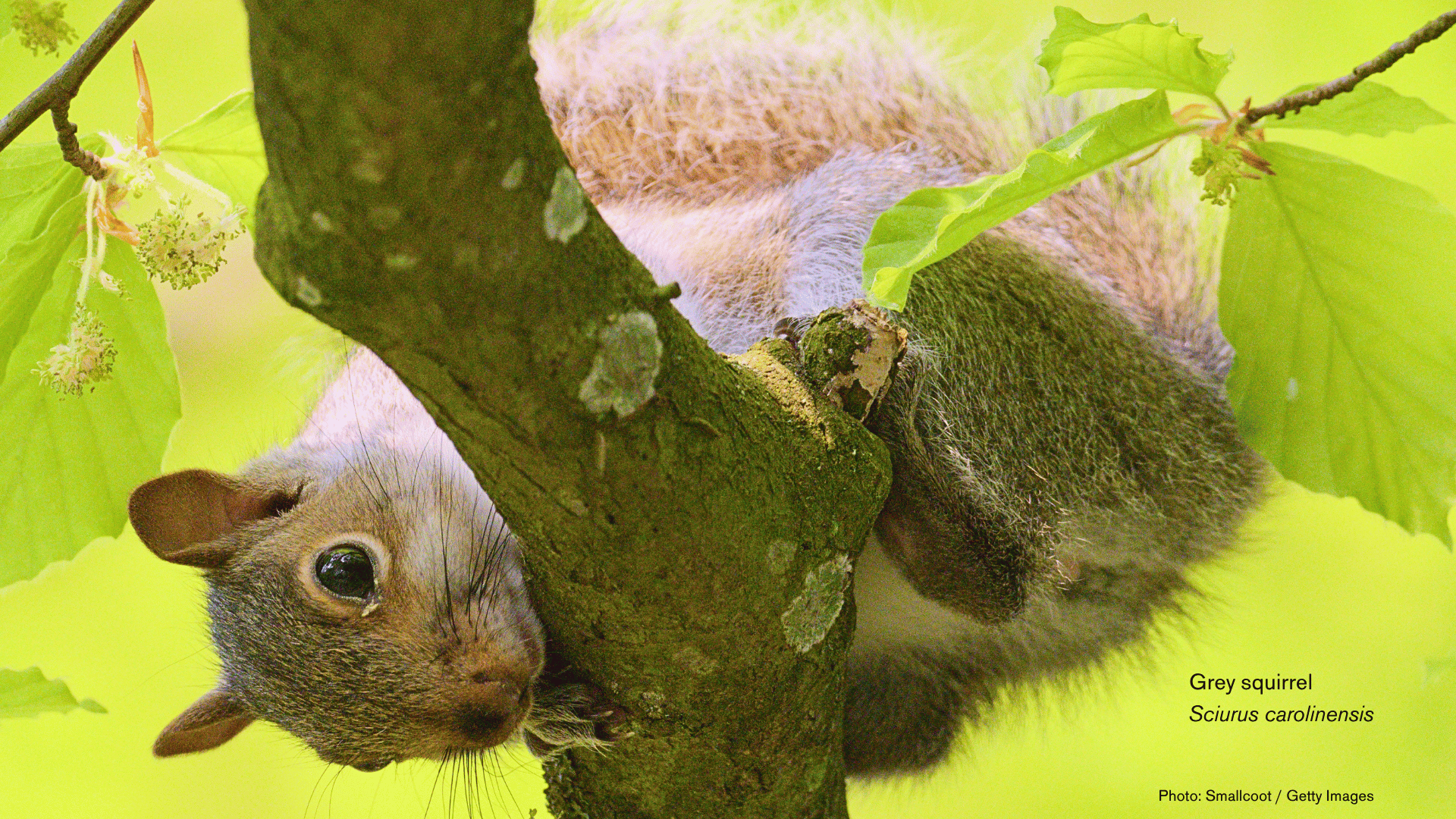
Grey squirrel. Photo: Smallcoot / Getty
By Matt Larsen-Daw
This Invasive & Non-Native Species (INNS) Week, when we consider the causes and impact of introduced species on native ecosystems, Mammal Society CEO Matt Larsen-Daw summarises one of the biggest conservation battles of our time.
The iconic red squirrel is one of Britain's best-loved native species, but though they once would have been present in woodlands the length of Britain, there are many parts of the Britain where they have been absent in living memory. This is partly due to past human persecution and a huge loss of habitat and landscape connectivity, but the biggest threat to their survival and recovery is now the presence of grey squirrels - non-native invasive species introduced to the UK by humans from North America as ornamental additions to estates. Grey squirrels are bigger and reach denser populations than red squirrels, so they outcompete the native species in most woodlands. The association between red squirrels and pine forests is a modern one due to the fact that red squirrels have been able to find refuge in plantation forests that appeal less to the grey squirrels dominating much of red squirrel preferred habitat - mixed native woodland. Furthermore, grey squirrels can carry a disease called squirrelpox virus that is fatal to red squirrels, but has no detrimental effect on the greys who transmit it.
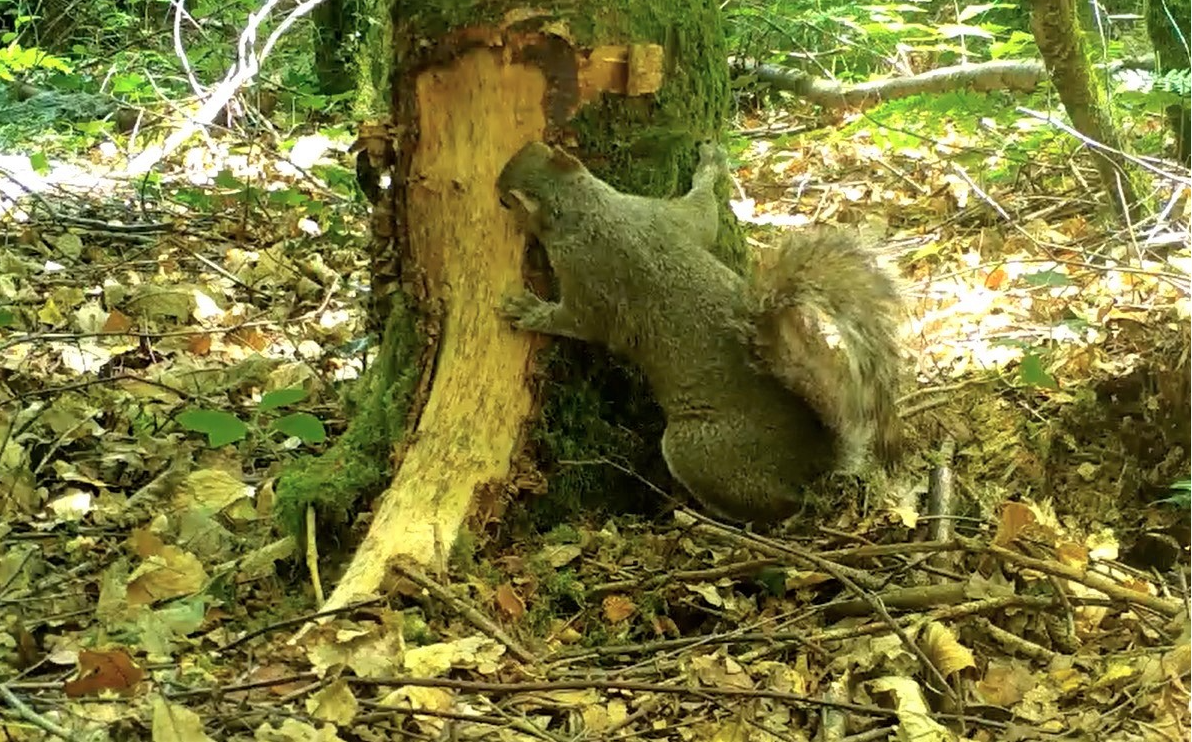
Grey squirrel bark stripping. Photo: UKSA
Grey squirrels are one of the most problematic non-native invasive species in the UK, not solely due to the threat they pose to red squirrels, but also due to the enormous damage they inflict on trees. Grey squirrels strip bark from trees, potentially to access sugary sap, and the resulting damage can cause trees to weaken or die from lack of nutrients or disease sustained as a result of the damage. A recent report by UK Squirrel Accord signatories estimates the cost of grey squirrel damage to trees in England and Wales to be at least £37m a year in lost timber value, reduced carbon capture, damage mitigation, and trees to replace those that died due to grey squirrel bark stripping. Plus future cost of imported timber because we don't have any grown in UK.
This video from the forestry commission, created in partnership with the UKSA, gives insight into the damage caused in woodlands.
At a time when we desperately need to be protecting existing woodlands and restoring lost tree cover to our denuded landscapes, the impact of grey squirrels is a real threat to nature recovery in the UK. They put habitats, and all the wildlife that depend on them, under threat, and set back attempts to increase the resilience of our landscapes to climate change.
In many areas of the country, volunteers have been generously giving their time to minimise the impact of grey squirrels in their local woods. In Scotland and the North of England, (Cumbria, Northumberland, parts of Lancashire, Yorkshire and Durham) where there are still populations of red squirrels, the work by volunteers over the last 40 years to control grey squirrels by trapping and shooting has literally prevented the local extinction of that native species. Further South, where in many areas there are no red squirrels and no prospects for natural repopulation due to the dominance of grey squirrels, volunteers conduct grey squirrel control in order to help prevent irreversible damage to their local habitats and biodiversity.
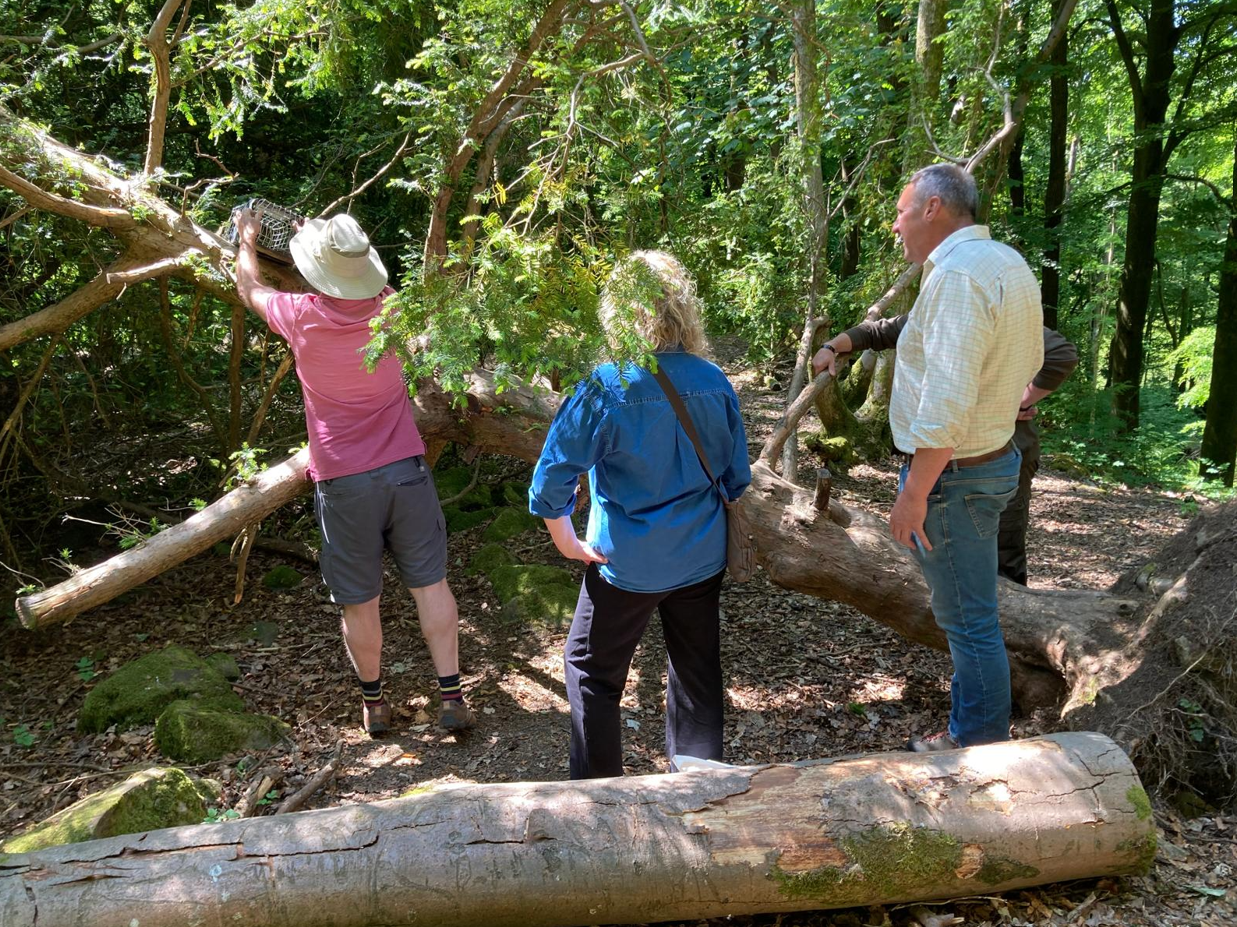
Training for grey squirrel control volunteers, Cornwall.
Culling a non-native species that is present through no fault of its own is not the work that any nature loving conservation volunteer would like to be doing, but it is essential work that protects native wildlife and helps restore balance to ecosystems damaged by past human actions and decisions. Government funding is available through various schemes across the UK to support woodland owners to control grey squirrels as part of their woodland management plan, but there is no legal obligation to do so and many do not yet undertake such work. When only parts of the landscape have grey squirrel control in place, the numbers of squirrels are kept high due to the safe havens in which they can breed before spreading out across the wider landscape. Community groups therefore have their work cut out to lower the impact of grey squirrels, and their hard work often goes unnoticed or even negatively perceived by wildlife lovers who prefer not to think about squirrels themselves being victims of a cull.
Research is underway to develop a fertility control for grey squirrels that could become another tool in the fight to lower their impact on the landscape. When fully tested and ready for deployment, this could help to capitalise on the decades of work by community groups to hold the line against the proliferation of grey squirrels. This is not expected to be a 'silver bullet' that will get rid of grey squirrels from our landscapes, but could help reduce their impact on woods, and balance the scales in favour of red squirrels in some areas where currently they are absent or severely under threat. Given that even small numbers of grey squirrels currently pose a huge threat to red squirrel populations due to the squirrelpox virus, some groups are calling for more investment in research to develop a vaccine for the virus so that red squirrels are less vulnerable to contact with grey squirrels.
The Mammal Society is a proud signatory of the UK Squirrel Accord, which exists to convene key national stakeholders in taking a strategic approach to addressing the threats to woodlands and wildlife from grey squirrels, and restoring red squirrels. A new strategy sets out the priorities for the next 5 years: Strategy 2026-2031 - UK Squirrel Accord
Read more about grey squirrel control in this excellent blog by Baroness Hayman of Ullock, Parliamentary Under-Secretary of State (Minister for Biosecurity, Borders and Animals) for the Forestry Commission: Grey squirrels: managing an invasive species to support woodlands and our native red squirrels – Forestry Commission
Ways to help
Get involved in community grey squirrel control groups
Training is available, and there are roles to suit different abilities and interests. Deploying and monitoring live traps, shooting (for those with the necessary licence), monitoring trailcams to detect grey squirrel incursions into cleared woodland are examples of ways to get involved in this valuable grassroots conservation activity.
Find a local group: https://www.britishredsquirrel.org
Survey grey squirrel damage
Surveying for bark-stripping in your local woods can provide vital data for scientists seeking to understand and address the scale of grey squirrel damage. Woodland owners who struggle to find the time to participate may be happy for local volunteer groups to conduct a survey.
Tree damage survey 2026 - UK Squirrel AccordTree damage survey 2026 - UK Squirrel Accord
Raise awareness
The negative impact of grey squirrels on biodiversity and nature recovery is still not well understood by the public, and many land owners and managers could be doing more to help tackle this issue through their management plans. Anything you can do to spread the word and initiate conversations with land owners, local decision-makers, and potential volunteers can help in this important issue.
Record squirrel sightings
Whether you are lucky enough to live in an area where red squirrels are present, recording any sightings of red or grey squirrels using the freeMammal Mapper app or via a dedicated regional monitoring programme can help inform conservation efforts aimed at protecting and restoring native wildlife.