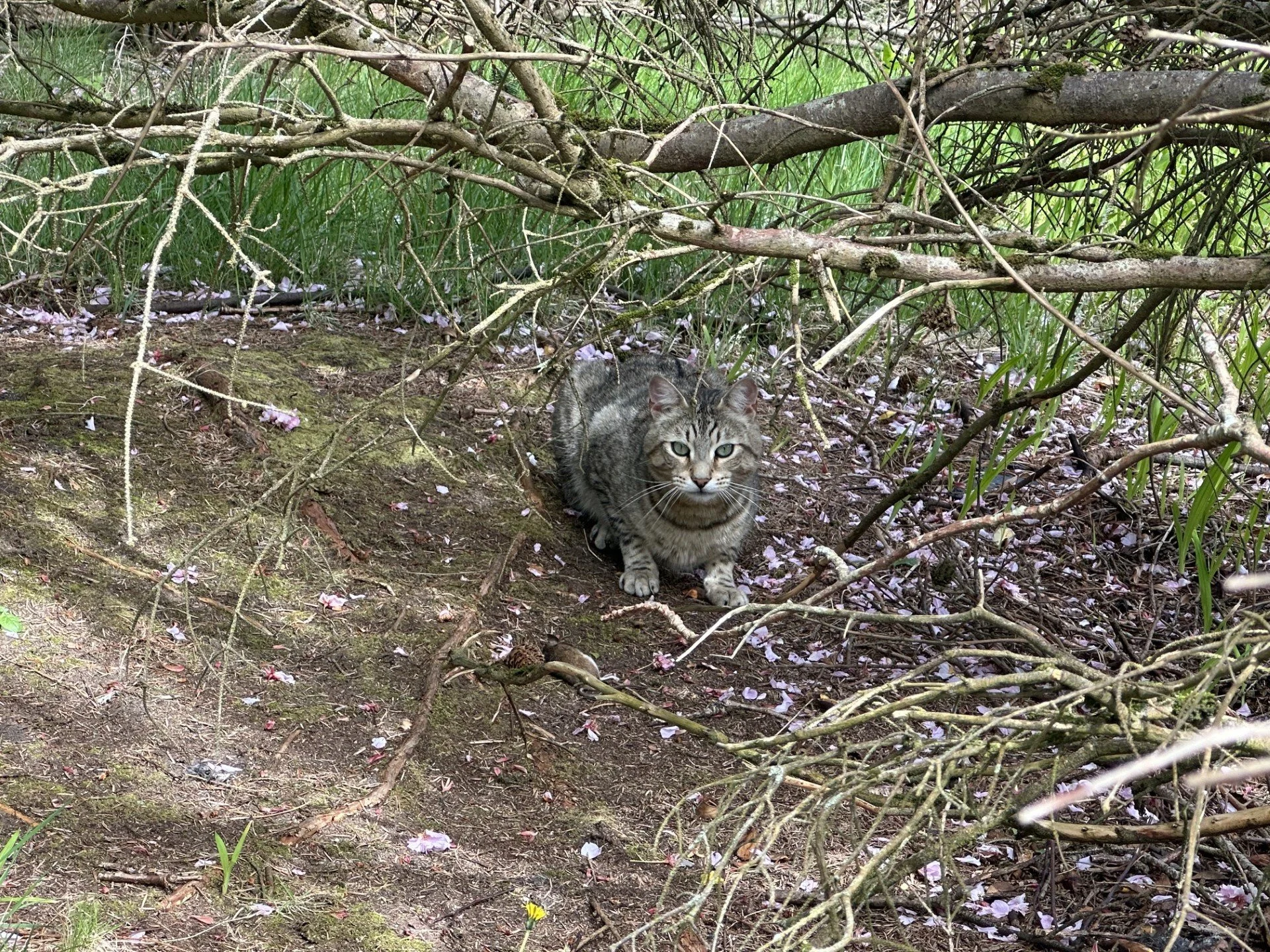
Cats are naturally inclined to hunt, with the majority of prey being small mammals. Photo: Matt Larsen-Daw
By Matt Larsen-Daw
The Mammal Society is often cited in discussions in the press and on social media when there is discussion of the charged issue of cats and their impact on wildlife. (eg BBC Wildlife Magazine June 2026). Recently debate about the impact of domestic cats and the responsibility owners should have in reducing it has been reignited by comments by David Attenborough in a show focused on garden wildlife. (Guardian March 2026).
A study funded and published by the Mammal Society in 2003 (Woods, M., McDonald, R. & S Harris (2003) Domestic Cat Predation on Wildlife) analysed the results of a questionnaire survey conducted between 1st April and 31st August 1997 which asked cat owners to report every instance of cat predation by their pet. Of course, this relied on the cat bringing prey back to the house or being witnessed making the kill, but it was a substantial study that recorded 14370 prey items brought home by 986 cats in 618 households, and could at least be deemed to demonstrate minimum prey numbers for those months. 69% of the prey items were mammals, and 24% were birds. Amphibians, reptiles, fish and invertebrates made up the rest. From the data it could be extrapolated that a UK domestic cat with access to the outside brings back an average of 2.04 prey per month.
The conclusions of this paper have been extensively referenced by press and social media commentators over the intervening years, sometimes in a rather non-scientific way. The total predation estimate has been cited out of context and as clear evidence of the negative impact of cats on British wildlife in and of itself, and at times an eye-watering updated current figure for predations has been extrapolated by scaling up the predation rate by the current estimated number of domestic cats in the UK. There is no doubt that the study demonstrated what most would already suspect – that cats are active and successful predators with an unquestionable impact on the ecosystem in which they hunt. However there are a number of issues with the way the findings have been used to suggest the role cats play as a pressure on wildlife populations and a driver of local extinctions.
Firstly, when the predation numbers are provided without the context of the population numbers for the prey species, and the fatality rate from other causes, the impact on the population is not easily ascertained. There are a number of factors that would need to be assessed to determine if the predation rate was leading to population decline in any prey species, especially where the most common prey animals (shrews and voles) are also those with the highest breeding rates designed to compensate high mortality rates from a large number of causes. It would also be fair to assume that the weakest and most vulnerable animals are more prone to being predated on by cats, and therefore it is difficult to be sure how many predated animals recorded in the study would have survived to breed if not taken by a cat. Predation of chicks that have fallen from nests before fledging, for example, is unlikely in most cases to have changed the outcome for that individual, and could account for a significant number of seasonal avian prey returns. The scaling up of the predation figure to match the larger estimated number of domestic cats allows for a large margin of error since it fails to account for how the increased domestic cat numbers and decline in many of the prey species over the intervening years might impact the prey return per cat. Likewise, it does not allow for any changes in pet ownership behaviours and the results these could have on the average cat prey return. From an increase in the percentage of cats kept indoors, kept in at night, to different approaches to food and feeding schedules and the use of collar bells, there are many factors that could be changing the trend.
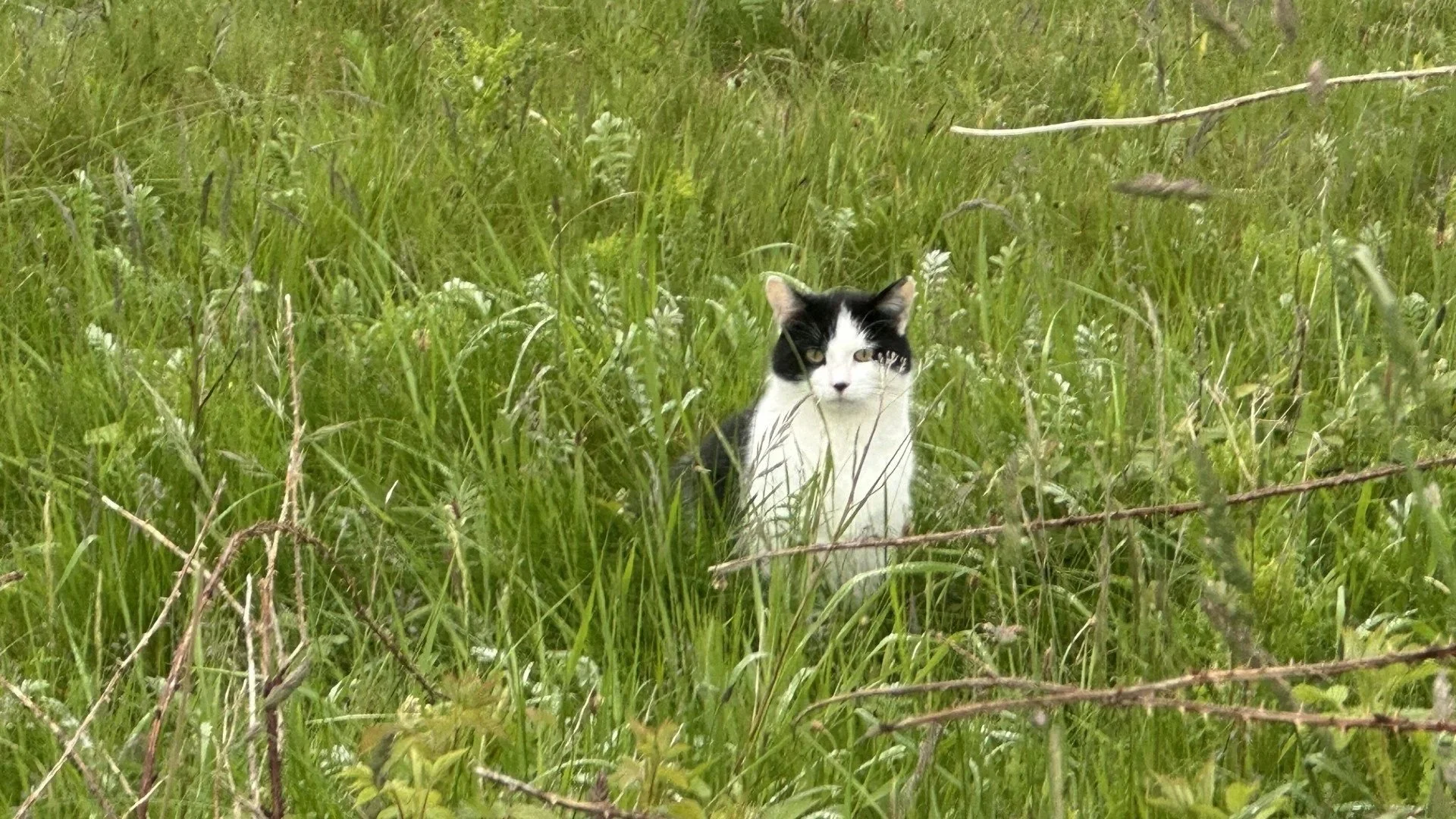
Photo: Matt Larsen-Daw
While some strategies have been shown to be largely ineffective in reducing predation – such as bells on collars –there are some techniques that have been proven to make a difference in many cases. These include ensuring cats receive a complete, meat-rich diet, playing with them daily to satisfy their instincts, and using a BirdsBeSafe cover on a quick-release collar. Limiting their time outside through implementing a night-time curfew can also bring predation down by reducing opportunity, without limiting a cat to experience of indoors life only.
It would be wrong to deny that cats can and do have a significant and detrimental impact on wildlife. However the scale and mechanics of this ecological impact cannot be ascertained purely from the numbers of prey (and the report cited above does not profess to do this). If we wish to be constructive in considering if and how cat predation as a pressure should be mitigated against, we must ensure we have the scientific evidence to inform our conclusions. Scientific evidence is needed to convince those who would be reticent to put any restrictions on cat ownership or the behaviour of the animals themselves, and to ensure that the measures proposed are actually ecologically positive in their impact.
The problems caused by the reliance on this 30 year-old data has now been addressed somewhat thanks to a study published in March 2025 that presents new data collected from cat owners between June 2018 and December 2021. (Lockwood, H.L., Bulling, M. and Huck, M. (2025), What the Cat Dragged in: Quantifying Prey Return Rates of Pet Cats (Felis catus) With Outdoor Access in the UK)
This study collected predation data for 533 cats across the UK, with higher densities in highly populated areas. Owner estimates of time spent outside and information about the age and condition of each cat was collected to inform analysis. This study results in an estimated average of 1.5 prey per month per outdoor going cat, with PDSA estimates (2024) of 7.45 million outdoor-going cats currently in the UK resulting in an estimated current figure of around 140.4 million prey returned by domestic cats each year. This might not reflect a drop in average kill rate, since the data used for the 2003 research reflected Spring and Summer activity only – whereas Lockwood et al. brought in data from all seasons, giving a monthly average that can be considered to be more representative of impact spread over 12 months. Prey availability and time spent outside by cats would be likely to drop dramatically in winter. However it is worthy of note that the more recent study also showed an even greater skew towards mammals as a percentage of prey – 83% compared with 69% in the 2003 study.
The impact of cats on wildlife is a divisive and emotionally charged topic. Many of those most passionate about conserving nature are the same people who treasure the experience of animal companionship offered by a pet cat. The sight of a cat carrying an animal they have killed can incite anger and sadness in those who see this as preventable death of native species that need protection and conservation. however predation by native birds of prey, foxes, pine martens, stoats etc are affecting many of the same species as part of the natural balance of the ecosystem, along with other causes of early death, but take place generally out of sight. A cat’s proximity to human habitation and their tendency to bring home their kill means that their impact is uniquely and disproportionately visible to us, and of course feels inexcusable and unnatural since the cat has access to food at home and is only killing to exercise natural instincts.
Whatever their true impact on nature, the relationship built between humans and domestic cats is now so ingrained into society and culture that it would be as futile to suggest that cat ownership should be completely eradicated as it would be to suggest that no housing or infrastructure should be developed due to the loss of habitat and connectivity it can cause. Rather, we should be looking to understand if and how the impact is felt by native wildlife, and mitigate against it where needed as we also should when planning and delivering infrastructure projects.
Studies such as those outlined above are therefore vital, as they provide us with the means to include cat predation behaviour and some of the conditions that influence this in future research that explore impact and causal relationships with other environmental factors. It may be most useful to examine the nuances of the impact of domestic cat at a more local level than countrywide, given that they have the potential to be devastating in their impact on vulnerable species such as ground nesting birds, but may have no significant negative impact (and may even play a role in maintaining a healthy balance) in landscapes where such vulnerable species are not present. An accurate assessment of their actual or potential impact could inform area-specific rules around ownership, public education for cat owners, or species protection interventions to address the risk they pose.
Needless to say, regardless of whether they can be shown to have a significant impact on ecosystems, most cat owners would like to do what they can to minimise the instances of predation on native wildlife by their pet. It cannot be said to be a natural death for a native animal to be hunted by a non-native predator, present in artificially sustained numbers as a result of humans. In recent years some work has been done to assess and compare the effectiveness of various strategies to lower predation rates. While some have been shown to be largely ineffective in reducing predation – such as bells on collars –there are some techniques that have been proven to make a difference in many cases. These include ensuring cats receive a complete, meat-rich diet, playing with them daily to satisfy their instincts, and using a BirdsBeSafe cover (bright-coloured ruffs that really do look snazzy) on a quick-release collar. Naturally, limiting their time outside through implementing a night-time curfew can also bring predation down by reducing opportunity, without limiting a cat to experience of indoors life only.
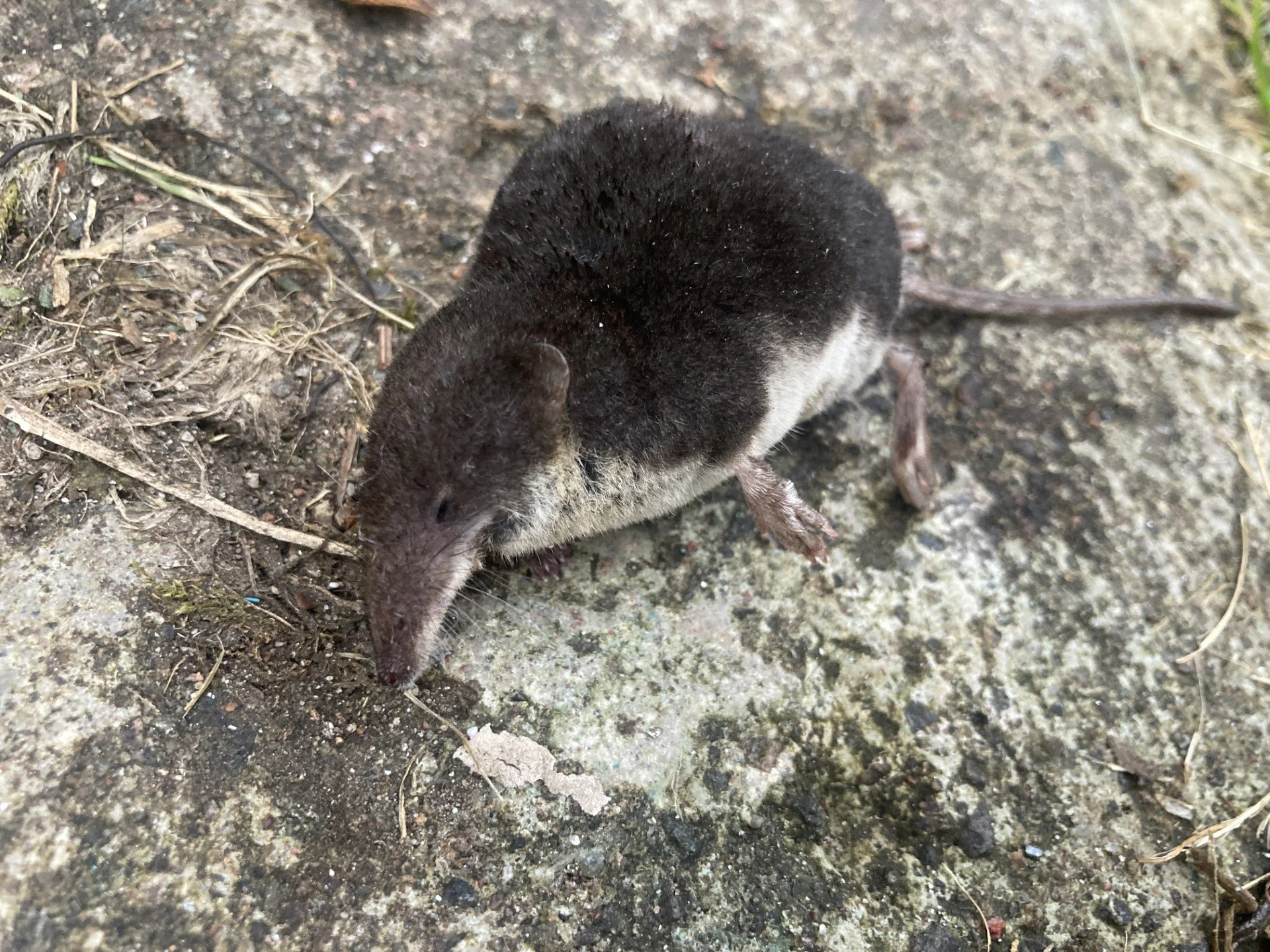
Predated water shrew. Cats will follow their hunting instinct regardless of their interest in eating the prey.
Photo: Matt Larsen-Daw
The most important thing that any cat owner can do, however, is ensure that their cat is neutered before being allowed to roam freely outdoors. This is partially to ensure that native wildlife does not have to contend with predation from a growing population of non-native apex predators (feral domestic cats) that are unconstrained by any of the measures above and reliant on hunting for food. However it is also important because the presence of sexually active domestic cats in a landscape – owned or feral – threatens the return of native wildcats. Hybridisation with domestic cats made our native population of wildcats functionally extinct in the recent past, and the current and planned reintroductions of wildcats into the Cairngorms and other areas of the UK in the future would be for nothing if the same thing happened again due to irresponsible pet ownership.
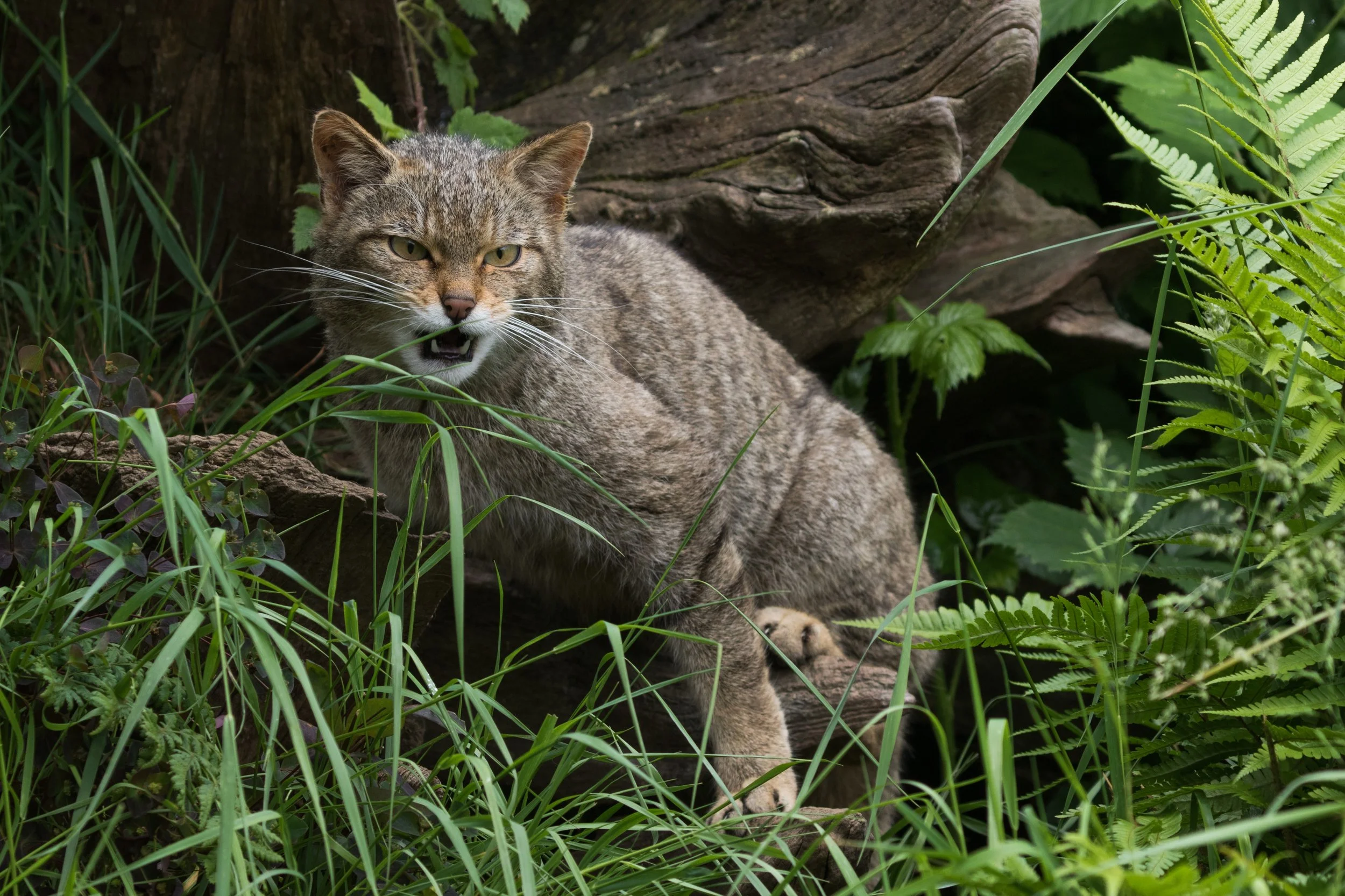
Wildcat, Scotland. Photo: Mark Evans
Further study of the current and future impact of domestic cats on wildlife is vital for the planning and prioritisation of conservation in the UK. Public discussion and education around the impact of cats and the role of responsible owners in limiting this should not be shied away from simply because they are tricky and divisive issues. A fairly uncontroversial report by the Scottish Animal Welfare Commission hit headlines in February 2025 because one of its theoretical scenarios in a list of potential measures was some restrictions on cat ownership for certain new-build developments where there are particularly vulnerable species or ecosystems nearby that could otherwise be impacted. The misleading reports that a ‘ban on cat ownership in Scotland’ was being proposed received understandable outrage until the limits of the report’s scope were explained. However it served to underline the strength of public feeling around this issue, and the need for careful and nuanced research and communication. The Mammal Society is committed to encouraging and supporting research in this area, and is part of a network of organisations, including conservation and animal welfare groups, who are working together on shared guidance around managing hunting behaviour in cats. If this is an area of interest or expertise for you and you would be interested in joining a working group or feeding in evidence or concerns, please contact science@themammalsociety.org to get involved.
References
Provision of High Meat Content Food and Object Play Reduce Predation of Wild Animals by Domestic Cats Felis catus Cecchetti, Martina et al. Current Biology, Volume 31, Issue 5, 1107 - 1111.e5
doi.org/10.1016/j.cub.2020.12.044
Our Wild Companions: Domestic cats in the Anthropocene Crowley, Sarah L. et al. Trends in Ecology & Evolution, Volume 35, Issue 6, 477 – 483
doi.org/10.1016/j.tree.2020.01.008
Domestic Cat Predation on WildlifeWoods, M., McDonald, R. & S Harris (2003) tinyurl.com/CatPredationStudy2003
What the Cat Dragged in: Quantifying Prey Return Rates of Pet Cats (Felis catus) With Outdoor Access in the UK Lockwood, H.L., Bulling, M. and Huck, M. (2025). Ecol Evol, 15: e71063. doi.org/10.1002/ece3.71063